Fast, Reliable Specialty Roofing Across Spring Valley
If you own a home or commercial property in Spring Valley, NV, and you’re dealing with a flat roof, a solar prep question, or a membrane system that’s past its prime, you’re in the right place. Our Specialty Roofing team at Total Roof Protection Specialists has spent 18 years working on exactly the kind of roofs that define this part of the Las Vegas Valley — aging BUR systems, low-slope apartment complexes, and 1980s concrete-tile homes whose underlayment has quietly failed beneath tiles that still look fine from the street. When you call us at (725) 529-9119, you’re talking to a team that knows Spring Valley’s roofing inventory building by building.
Why Total Roof Protection Specialists Is Spring Valley’s Preferred Specialty Roofing Company
Spring Valley homeowners and property managers who’ve been burned by anonymous crews and vague proposals keep coming back to one fact: Jose Diaz doesn’t just run the company — he runs the job. As both Owner and Lead Technician, Jose is on-site for every specialty roofing project we take in Spring Valley, which means the person who assessed your roof is the same person overseeing the membrane installation or the solar-ready underlayment tear-off. That accountability doesn’t get delegated.
Nearly two decades and nearly 800 five-star roofs later, our 788 verified reviews at a 4.9-star average aren’t a marketing headline — they’re a track record built one completed job at a time across Spring Valley, Las Vegas, Paradise, and beyond. Homeowners near West Flamingo Road, property managers on West Sahara Avenue, and condo associations in the 89103 ZIP code have all added to that number. We respond to Spring Valley service calls promptly, and for storm-related emergencies during monsoon season — which hits Spring Valley’s aging flat-roof inventory hardest — we stage materials and crews starting every July so we’re not scrambling when the August downpours arrive.
Our Specialty Roofing Services in Spring Valley
Built-Up Roofing (BUR) in Spring Valley
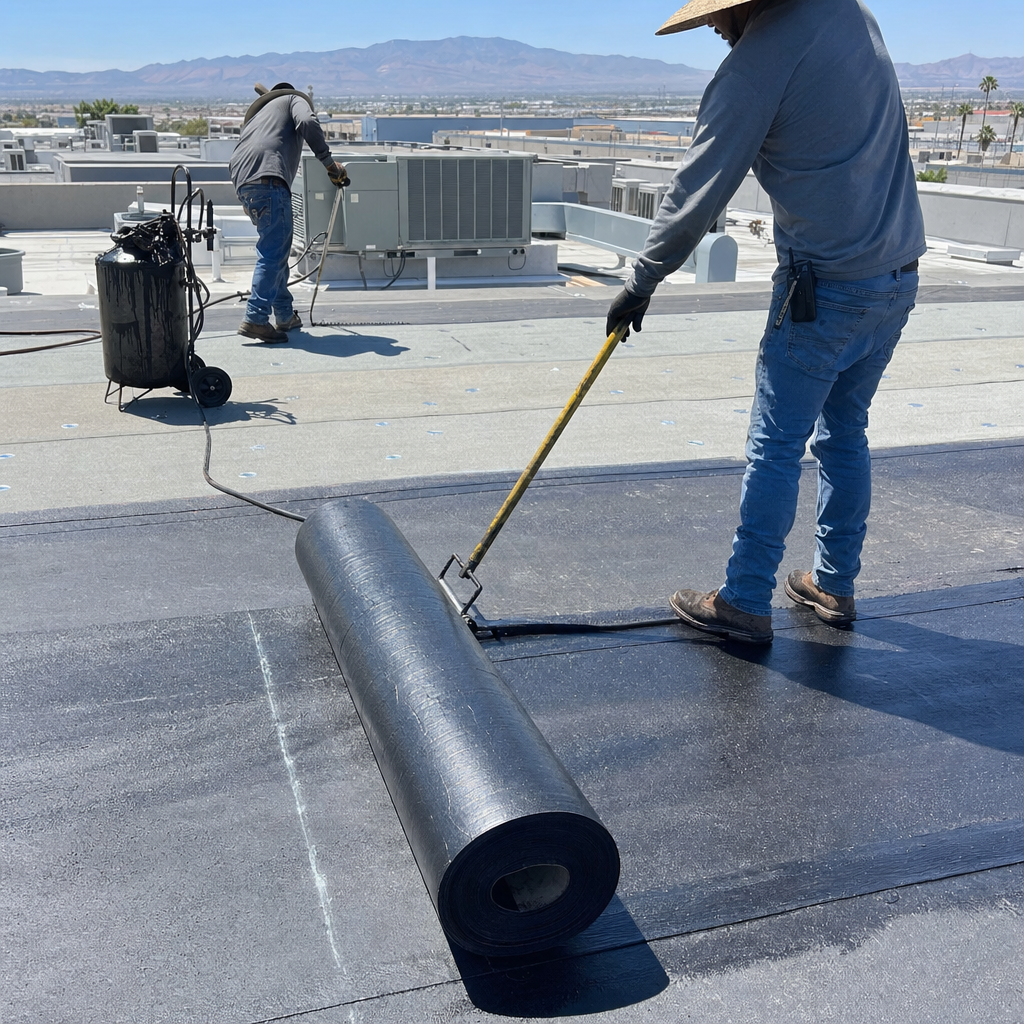
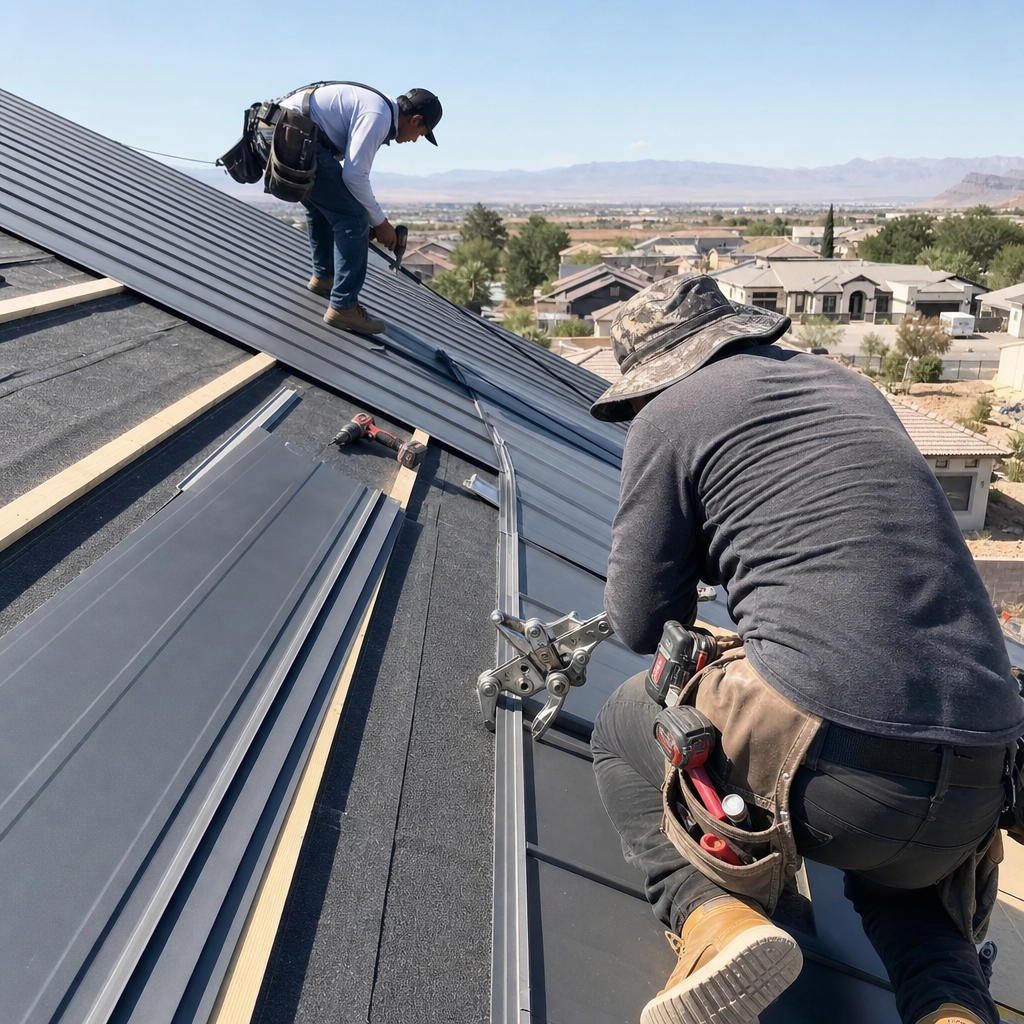
Built-up roofing is the system that defined Spring Valley’s commercial and apartment construction from the 1970s through the early 1990s, and it’s the system we know most intimately in this market. The original gravel-surfaced BUR membranes on low-rise complexes along West Flamingo Road and West Sahara Avenue have endured five decades of Las Vegas Valley UV exposure and thermal cycling — roof surfaces regularly hitting 160°F before cooling sharply overnight — and the vast majority are well past their functional lifespan. We perform full BUR tear-offs, drain clearing and sleeving, and new multi-ply installations rated for the extreme conditions this valley delivers. A full BUR replacement on a Spring Valley apartment complex roof typically runs $5.50–$8.50 per square foot depending on roof access, drain count, and whether the deck substrate needs remediation.
Modified Bitumen Roofing in Spring Valley
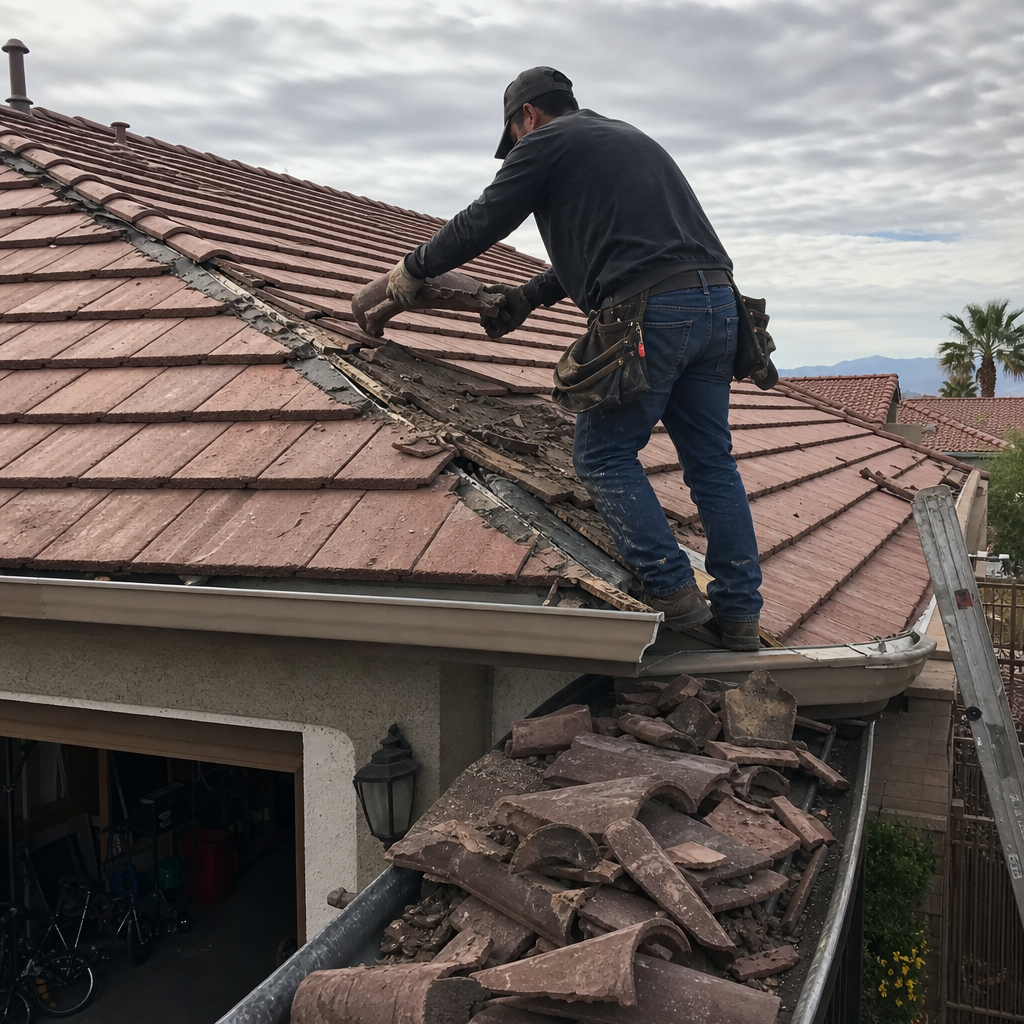
Modified bitumen is the upgrade most Spring Valley property owners move to after their original BUR system reaches end of life — and with good reason. A granule-surfaced torch-down modified bitumen cap sheet handles the Las Vegas Valley’s extreme thermal swing far better than older gravel BUR, and its welded seams eliminate the gap-and-crack failure mode that causes ponding emergencies on aging flat roofs every August monsoon season. We recently responded to a Buffalo Ranch garden-style apartment complex on West Flamingo Road just after a July monsoon event, where standing water had pooled six inches deep on a 1980s BUR system because interior drains were fully blocked with compacted gravel and debris. We stripped the deteriorated membrane, cleared and sleeved the drains, and installed a new modified bitumen cap sheet rated for roof-surface temperatures above 150°F. The complex owner reported zero ponding through the remainder of monsoon season and avoided the interior ceiling damage three neighboring units had already sustained. Modified bitumen installations in Spring Valley typically run $4.50–$7.00 per square foot for a standard torch-down application.
Solar Ready Roofing in Spring Valley
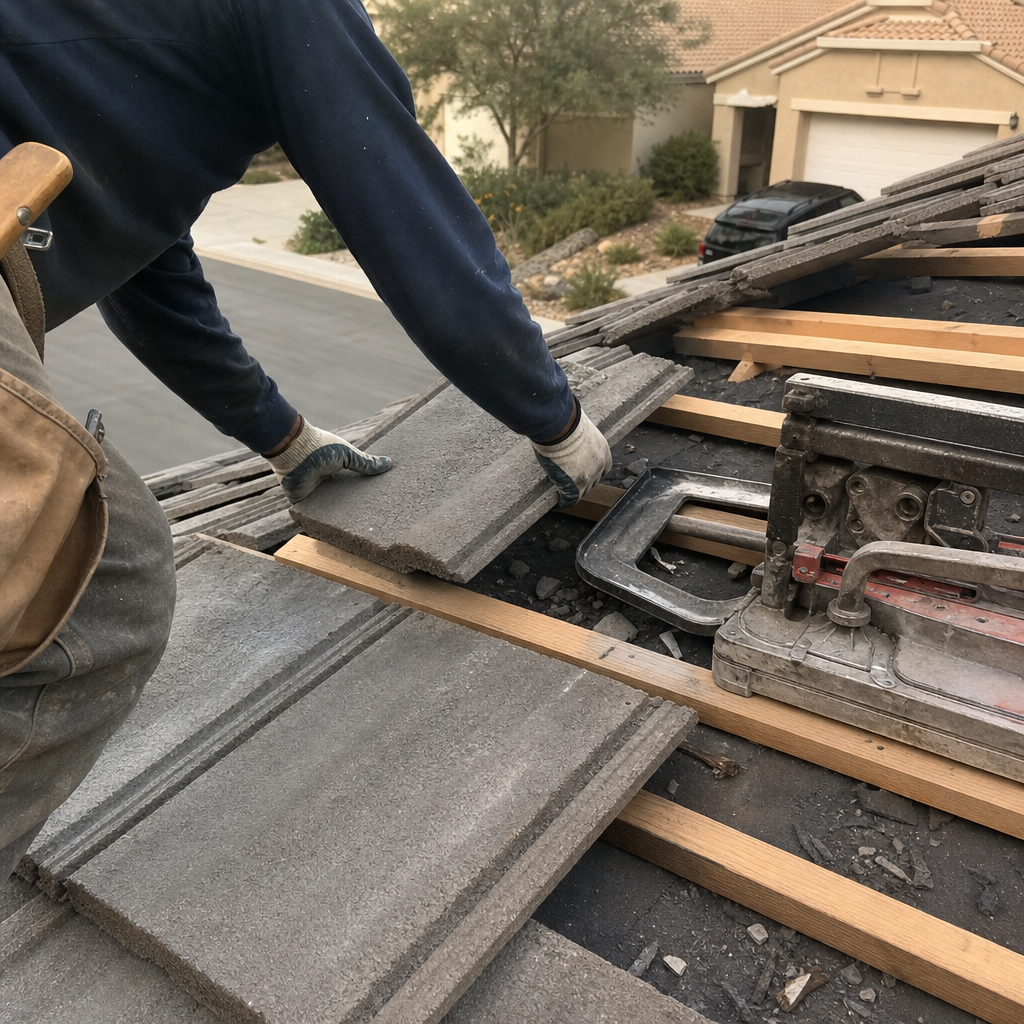
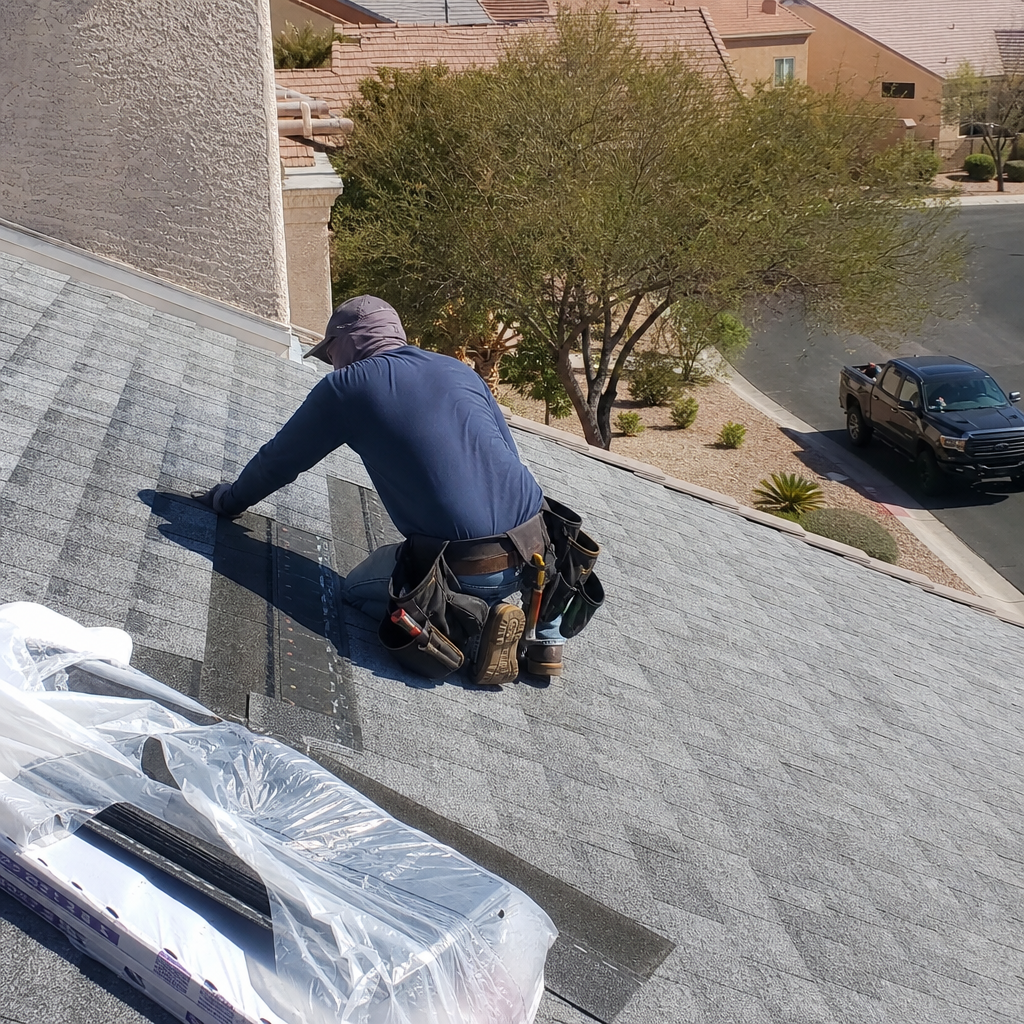
Solar adoption is accelerating across Spring Valley’s older residential neighborhoods, and homeowners in areas like Buffalo and Canyon Gate are running into a hidden cost that surfaces only after panel installation begins: the original felt underlayment beneath their 1980s concrete-tile roofs is already fully degraded. The Las Vegas Valley’s UV intensity and sustained roof-surface temperatures above 150°F consume standard felt underlayment in 20–25 years — and the homes in these Spring Valley neighborhoods are 35–45 years old. Fastening solar racking hardware into a roof with failed underlayment is a water intrusion problem waiting to happen. Our solar-ready roofing prep includes a full underlayment tear-off, inspection of the tile and deck, and installation of a high-temp synthetic underlayment before any racking system goes down. Expect solar-ready roofing prep in Spring Valley to run $2.50–$4.50 per square foot before your solar contractor begins mounting hardware.
TPO and EPDM Roofing in Spring Valley
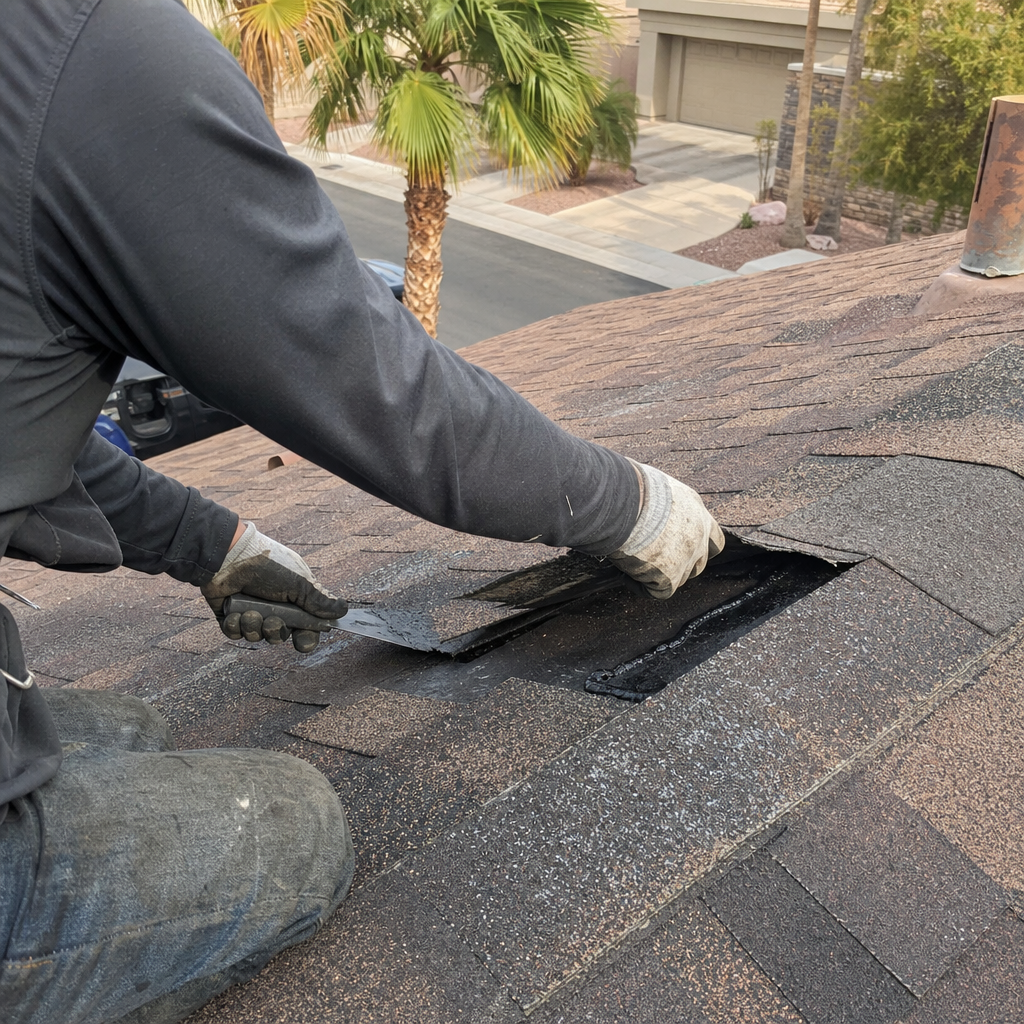
Single-ply membranes — TPO and EPDM — are common on Spring Valley’s flat-roof commercial buildings along West Sahara Avenue and the retail corridors near the Bruce Woodbury Beltway. They’re durable systems, but not indestructible in this climate. Extreme thermal cycling degrades TPO and EPDM seams faster than manufacturer estimates assume, particularly at penetration flashings around HVAC curbs that weren’t originally set with high-temp-rated sealant. We reseal, re-flash, and fully replace both membrane types, and we specify materials from brands like GAF, CertainTeed, and Owens Corning that are tested for sustained high-temperature performance. A TPO or EPDM re-roof in Spring Valley typically runs $5.00–$9.00 per square foot depending on membrane thickness, penetration count, and whether existing insulation layers need replacement.
What happens when you call
- 1
A real person answersNo phone trees — you reach a local pro.
- 2
You get an upfront price rangeHonest numbers before anyone is dispatched.
- 3
A background-checked tech heads outLicensed & insured, dispatched right away.
- 4
You approve before work beginsNothing starts until you say go.
Trusted Brands We Service in Spring Valley
Spring Valley jobs run on the right materials — not whatever happened to arrive on the truck that morning. We work with seven of the industry’s most established roofing material brands: GAF, CertainTeed, Owens Corning, IKO, Atlas, Tamko, and Boral. That breadth means we can match the right membrane or underlayment system to your specific roof type and budget, whether it’s a granule-surfaced Owens Corning modified bitumen cap sheet on a West Flamingo Road apartment complex or a Boral-compatible synthetic underlayment under concrete tile in a Spring Valley residential neighborhood. We don’t steer Spring Valley customers toward a single brand because it’s all we carry.
Common Specialty Roofing Problems We See in Spring Valley Homes and Buildings
- Clogged interior drains on 1970s–1980s BUR systems along West Flamingo Road and West Sahara Avenue. Decades of accumulated gravel, debris, and biological growth compact around interior drain basins and go completely undetected during Spring Valley’s long dry season — then cause catastrophic ponding within hours of the first August monsoon downpour. By the time a property manager notices a ceiling stain, the membrane beneath the gravel has already been saturated for hours.
- Degraded felt underlayment beneath concrete tile on Spring Valley’s 1980s residential stock. Spring Valley was built out primarily between the 1970s and early 1990s, and original felt underlayment on those roofs has a 20–25 year desert lifespan that has long since expired — even when the concrete tiles above look perfectly intact from the street. Homeowners in neighborhoods like Buffalo and Canyon Gate frequently don’t discover this until a solar contractor starts drilling or a monsoon finds the first gap.
- Failed HVAC penetration flashings on commercial flat roofs along West Sahara Avenue. The combination of 160°F summer roof-surface temperatures and sharp overnight cooling cycles fatigue the sealant and flashing metal around rooftop HVAC curbs faster than standard manufacturer timelines project. Once that seal fails, every monsoon rain event drives water directly into the building at the highest-traffic penetration point on the roof.
- Solar racking hardware installed over failed underlayment on older Spring Valley tile roofs. This is an increasingly common call we receive in the 89103 ZIP code. A solar installation company mounts a racking system, the homeowner notices water intrusion six months later, and the diagnosis is a 40-year-old felt underlayment that was already failing before the first lag bolt went in. The fix requires removing the panels, replacing the underlayment, and remounting — a cost that proper solar-ready roofing prep would have avoided entirely.
Pricing for Specialty Roofing in Spring Valley, NV
Here’s a straightforward breakdown of what Spring Valley property owners are paying in the current market:
- Built-Up Roofing (BUR) full replacement: $5.50–$8.50 per square foot
- Modified bitumen torch-down installation: $4.50–$7.00 per square foot
- TPO or EPDM single-ply membrane: $5.00–$9.00 per square foot
- Solar-ready underlayment prep (concrete tile): $2.50–$4.50 per square foot
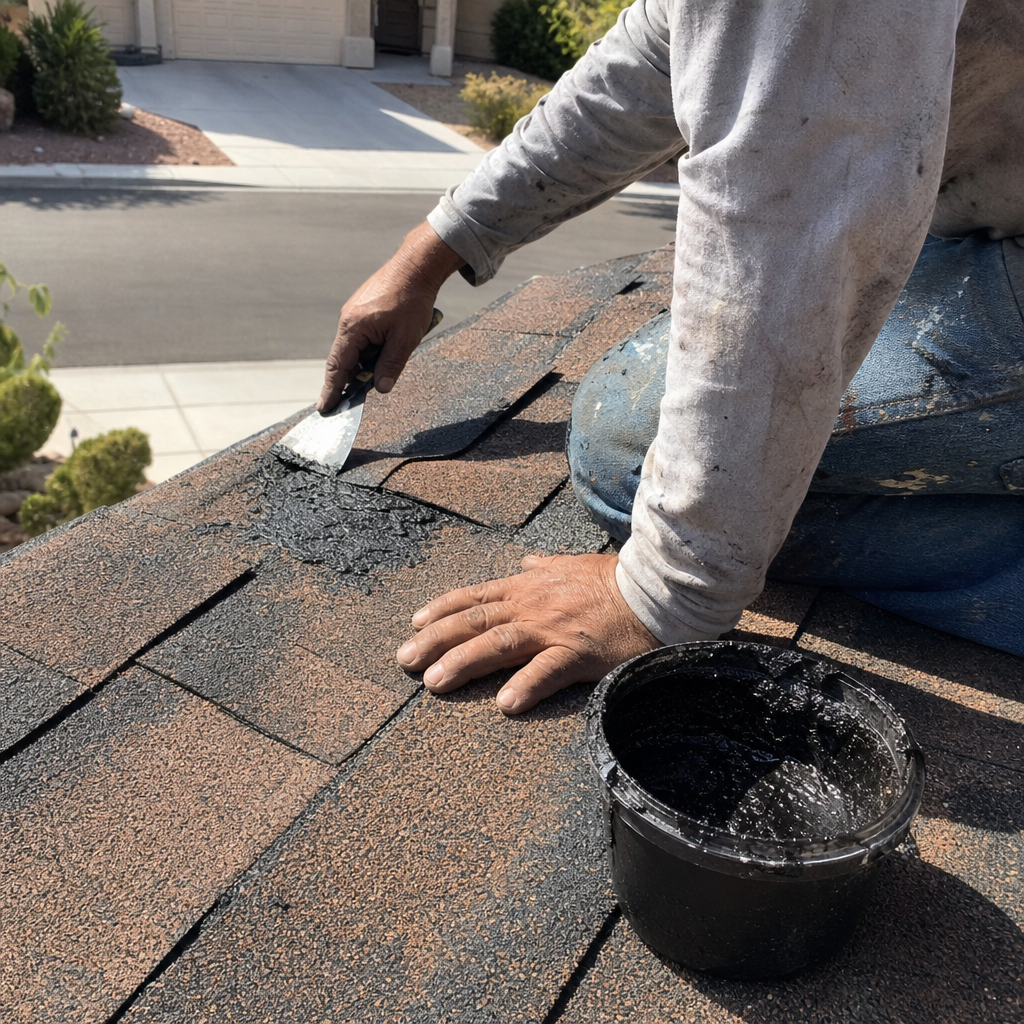
- EPDM or TPO seam/flashing repair: $350–$900 per repair area
What moves the number up or down in Spring Valley specifically: roof access (alley-load apartment complexes take longer to stage), drain count and condition on BUR systems, whether the deck substrate has moisture damage from past ponding events, and membrane thickness specification. Every estimate we provide is free and itemized — call (725) 529-9119 and we’ll get eyes on your roof before we put a number on paper.
We Also Serve Cities Near Spring Valley
While Spring Valley is where much of our specialty roofing work is concentrated, we serve the broader Las Vegas Valley daily. If you’re in Las Vegas, Winchester, Paradise, or Whitney, the same crew, the same materials, and the same hands-on oversight from Jose Diaz applies. Response times to these neighboring communities are comparable to Spring Valley, and we carry the same material inventory to every job regardless of ZIP code.
Serving Spring Valley, NV — Our Local Coverage Area
We’re based in the Spring Valley area and know this community well. Use the map below to see our service coverage — if you’re nearby, we can almost certainly help.
FAQs — Specialty Roofing in Spring Valley
In nearly every case we’ve evaluated on West Flamingo Road, a 1970s gravel BUR system needs full replacement, not a patch. Spot repairs on a membrane that has thermally cycled for 40–50 years in Las Vegas Valley heat are essentially waterproofing one area while the rest of the membrane continues to fail. The bigger problem is almost always the interior drains: original 1970s drain basins on Spring Valley apartment complexes pack with compacted gravel and debris over decades, and no patch addresses that. Full replacement — strip the BUR, clear and sleeve the drains, install a new modified bitumen cap sheet — is the call that stops the annual monsoon emergency cycle. Call (725) 529-9119 for a free roof evaluation before the next August monsoon season arrives.
Roof surfaces in Spring Valley routinely hit 160°F in July and August, then cool sharply overnight — that thermal swing contracts and expands the membrane repeatedly, fatiguing seams and flashing sealants at penetrations faster than the manufacturer’s performance estimates assume. HVAC curb flashings are the most common failure point, because most of them were originally set with standard-temp sealant that simply wasn’t specified for sustained Las Vegas Valley roof-surface temperatures. Once a flashing seam separates even slightly, every monsoon downpour drives water directly through that penetration. We spec high-temp-rated sealants and reinforced flashing details on every Spring Valley commercial membrane job for exactly this reason. Call (725) 529-9119 to have your TPO or EPDM penetrations inspected before summer peak.
Yes — and we’d say that even knowing it adds cost to your project, because the alternative is worse. Canyon Gate homes built in the 1980s have original felt underlayment that has already exceeded its 20–25 year desert lifespan, even if the concrete tiles above it look intact. Drilling solar racking hardware through degraded felt creates a direct water intrusion path that won’t show up until the next monsoon season. Solar-ready roofing prep — full underlayment tear-off, deck inspection, synthetic high-temp underlayment installation — runs $2.50–$4.50 per square foot in the Spring Valley market and saves you from removing your entire solar array to fix a problem that was visible before installation started. Call (725) 529-9119 and we’ll walk through exactly what your roof needs before your solar contractor begins.
Modified bitumen is a factory-engineered roofing membrane made from asphalt modified with polymers — typically APP or SBS — that dramatically improve its resistance to thermal cracking and UV degradation compared to original BUR gravel systems. For Spring Valley’s aging apartment inventory, it’s the right successor to original BUR for two reasons: its torch-welded seams are continuous and watertight in a way that multi-ply BUR’s mopped layers stop being after 30 years of desert thermal cycling, and a granule-surfaced cap sheet reflects significantly more solar radiation, reducing roof-surface temperatures that drive interior cooling loads. On the older low-rise complexes along West Flamingo Road and West Sahara Avenue, a properly installed modified bitumen system with clear and sleeved interior drains ends the annual August ponding emergency cycle reliably. Installation in Spring Valley runs $4.50–$7.00 per square foot depending on roof size and drain remediation scope. Call (725) 529-9119 for a free assessment.
Because Spring Valley gets almost no meaningful rainfall from October through June — so a failing membrane, a clogged interior drain, or a separated flashing seam sits completely dry and gives no indication it exists. Then the July–September monsoon season delivers sudden, intense downpours in volumes that a compromised roof can’t handle in the span of minutes. The leak you’re seeing in August has likely been building for years; the roof was just never tested by rainfall significant enough to find it. On Spring Valley’s older flat-roof stock — particularly the BUR systems along West Flamingo Road — the August leak almost always traces back to a drain basin clogged with compacted gravel and debris that accumulated during the long dry months. Don’t wait until next monsoon season to find out how bad it is. Call (725) 529-9119 for a free inspection this spring, before the heat peaks and the rains follow.
Ready to Talk About Your Spring Valley Roof?
If your Spring Valley property has a flat roof, an aging BUR system, a solar installation in the planning stages, or a membrane that leaks every August and behaves fine the rest of the year — we know exactly what you’re dealing with. Jose Diaz and the Total Roof Protection Specialists crew have spent 18 years working on the roofs of this valley, and Spring Valley’s specific inventory of 1970s–1990s BUR systems and underlayment-failed concrete-tile homes is territory we know well. A 4.9 rating across 788 reviews isn’t marketing — it’s what happens when the person who assesses your roof is the same person who finishes the job.
Call (725) 529-9119 for a free, no-pressure specialty roofing estimate in Spring Valley. We’ll tell you what your roof actually needs — and what it doesn’t.
Reviewed by Jose Diaz, Owner and Lead Technician at Total Roof Protection Specialists, serving Spring Valley and the Las Vegas Valley for 18 years.