Fast, Reliable Roof Repair Across Spring Valley
Roof repair in Spring Valley, NV typically runs $350–$1,800 depending on the scope — a cracked ridge mortar patch on one end, a full valley and underlayment section replacement on the other. Most jobs are completed same-day or within 48 hours of our first visit. If you’re dealing with a leak, shifting tiles, or standing water on a flat roof after a monsoon, call us now at (725) 529-9119 — our Roof Repair team knows Spring Valley roofs, specifically, and we’ll tell you exactly what’s wrong before we touch anything.
Why Total Roof Protection Specialists Is Spring Valley’s Preferred Roof Repair Company
Spring Valley homeowners keep calling us back — and sending their neighbors our way — because Jose Diaz doesn’t just run the company, he runs the job. Every inspection, every repair decision, every material call goes through him directly. That matters here, where a lot of the housing stock is 35 to 50 years old and the failure modes aren’t obvious from the driveway. You need someone who knows what 1980s #30 felt underlayment looks like when it’s failed, not someone who glances at the tile surface and tells you everything’s fine.
Nearly 800 five-star roofs later, that track record isn’t marketing — it’s 788 verified reviews averaging 4.9 stars across hundreds of real jobs. Spring Valley customers show up in those reviews because we’ve been working streets near West Flamingo Road, East Charleston Boulevard, and the neighborhoods around Buffalo Ranch for years. We respond fast to Spring Valley calls — the 89103 zip code is familiar territory, and we’re not routing your job through a scheduler in another city.
Our Roof Repair Services in Spring Valley
Valley Repair
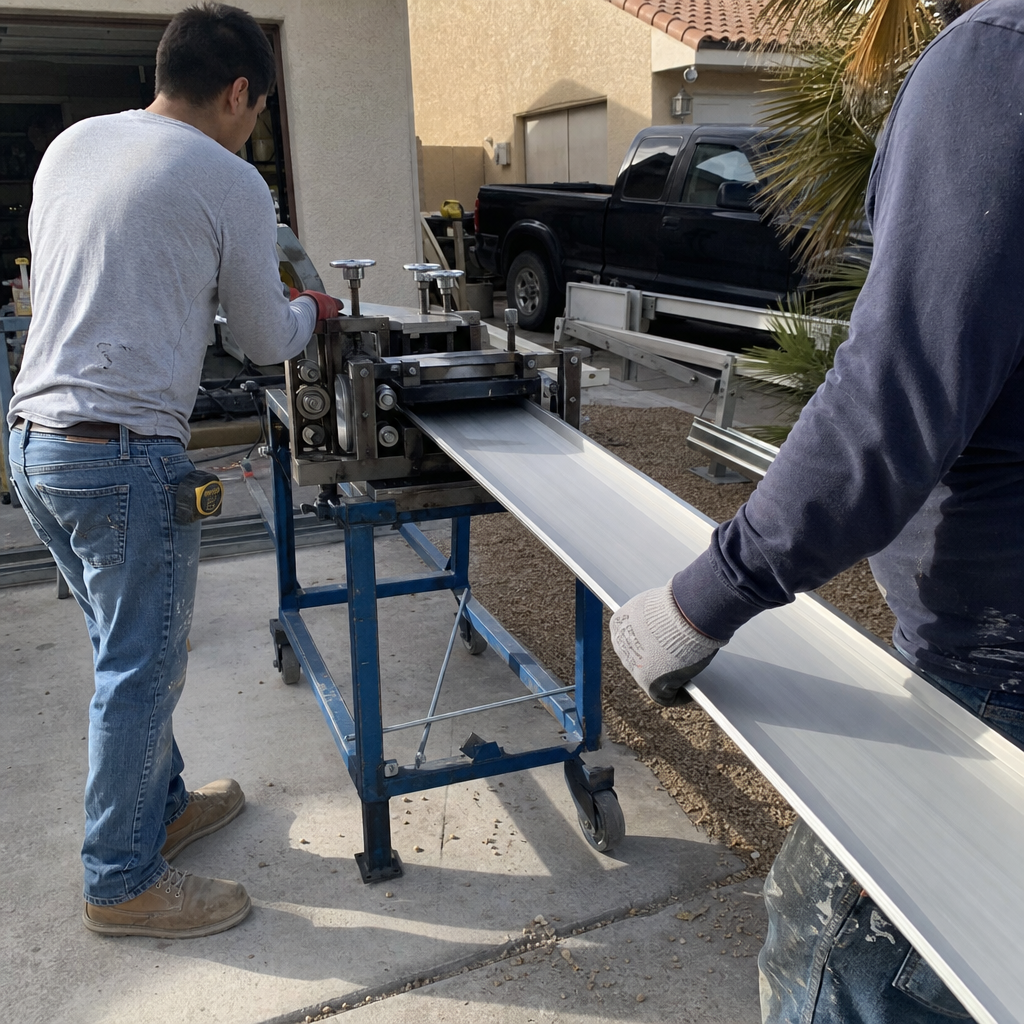
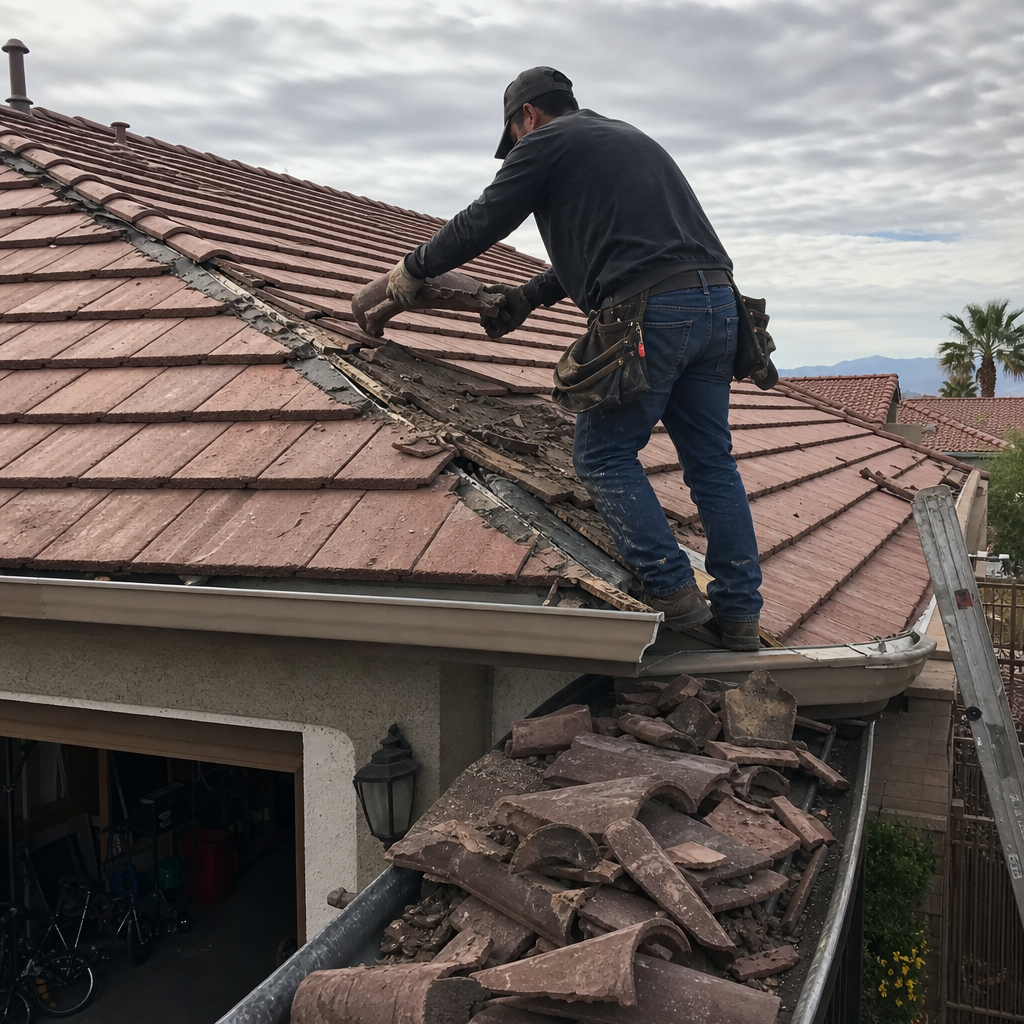
The roof valley is where two slopes meet and where water volume concentrates during Spring Valley’s intense July–September monsoon downpours. On the 1970s–1990s concrete tile roofs that dominate the residential stock here, the metal valley flashing and the felt underlayment beneath it often deteriorate on the same timeline — meaning a valley that held up for years will suddenly fail in a single heavy storm. A typical valley repair in Spring Valley runs $400–$900 depending on linear footage and whether the underlayment beneath needs to be replaced along with the metal. We lift the adjacent tile field, replace the valley metal and underlayment section, reset the tiles with fresh mortar, and make sure the transition seals before the next monsoon window opens.
Flashing Repair
Flashing failures are behind a disproportionate share of the leak calls we get in Spring Valley — particularly around chimney bases, skylight curbs, and HVAC curb penetrations on older single-family homes. The Las Vegas Valley’s extreme thermal cycling (roof surfaces hitting 150°F in summer, then cooling sharply overnight) works flashing sealants loose over time, and by the time you see a water stain on an interior ceiling, the flashing has usually been failing quietly for one or two monsoon seasons. A flashing repair in Spring Valley typically runs $250–$700 depending on the penetration type and how much substrate damage has accumulated underneath.
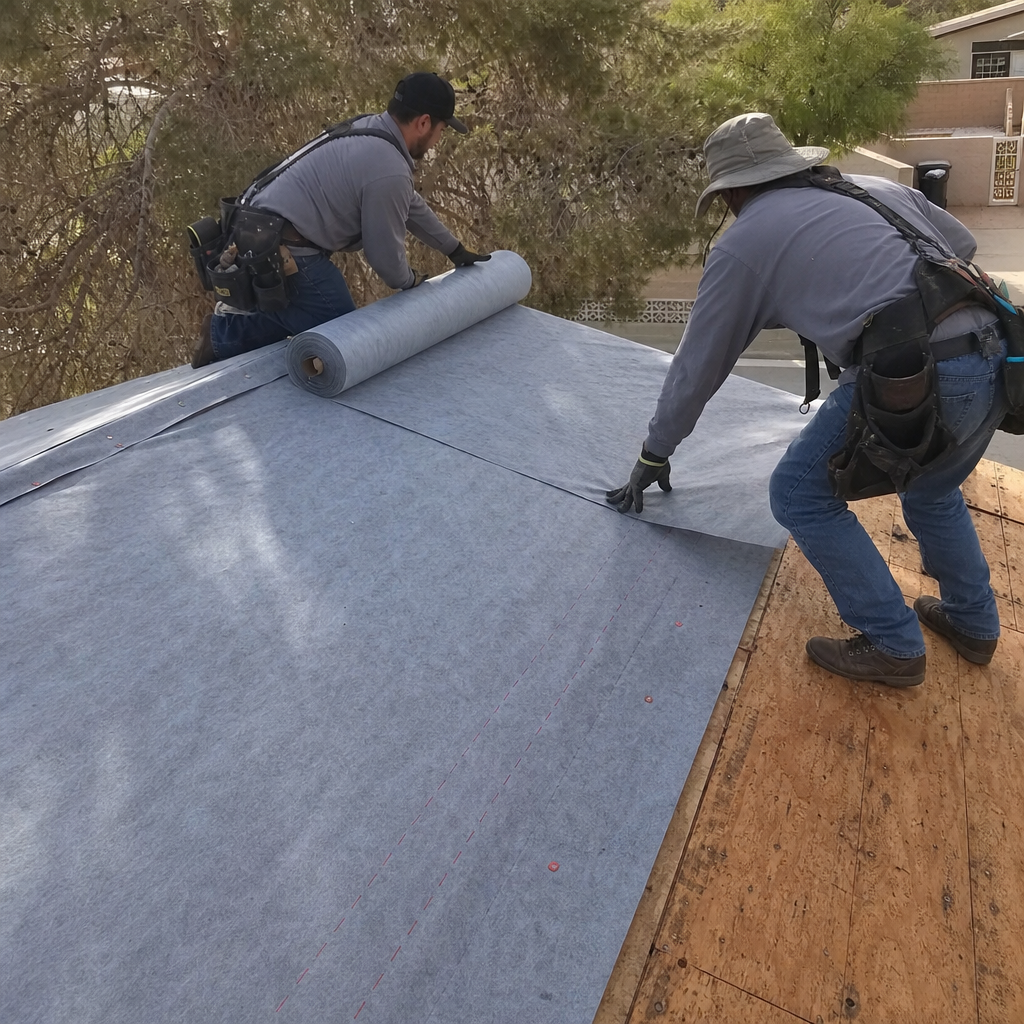
Flat Roof Patch
Along the low-rise commercial corridors and apartment complexes on West Flamingo Road, we regularly deal with the original 1970s–1980s gravel-surfaced built-up roofing (BUR) that’s still in place on dozens of buildings. Clogged interior drains on these flat roofs turn August monsoon events into standing-water emergencies — and what looks like a simple patch job sometimes uncovers saturated insulation board and failed membrane seams underneath. A targeted flat roof patch in Spring Valley runs $500–$1,500 for a localized section; larger BUR section replacements that expose widespread saturation run higher and we’ll scope that honestly before you commit to anything.
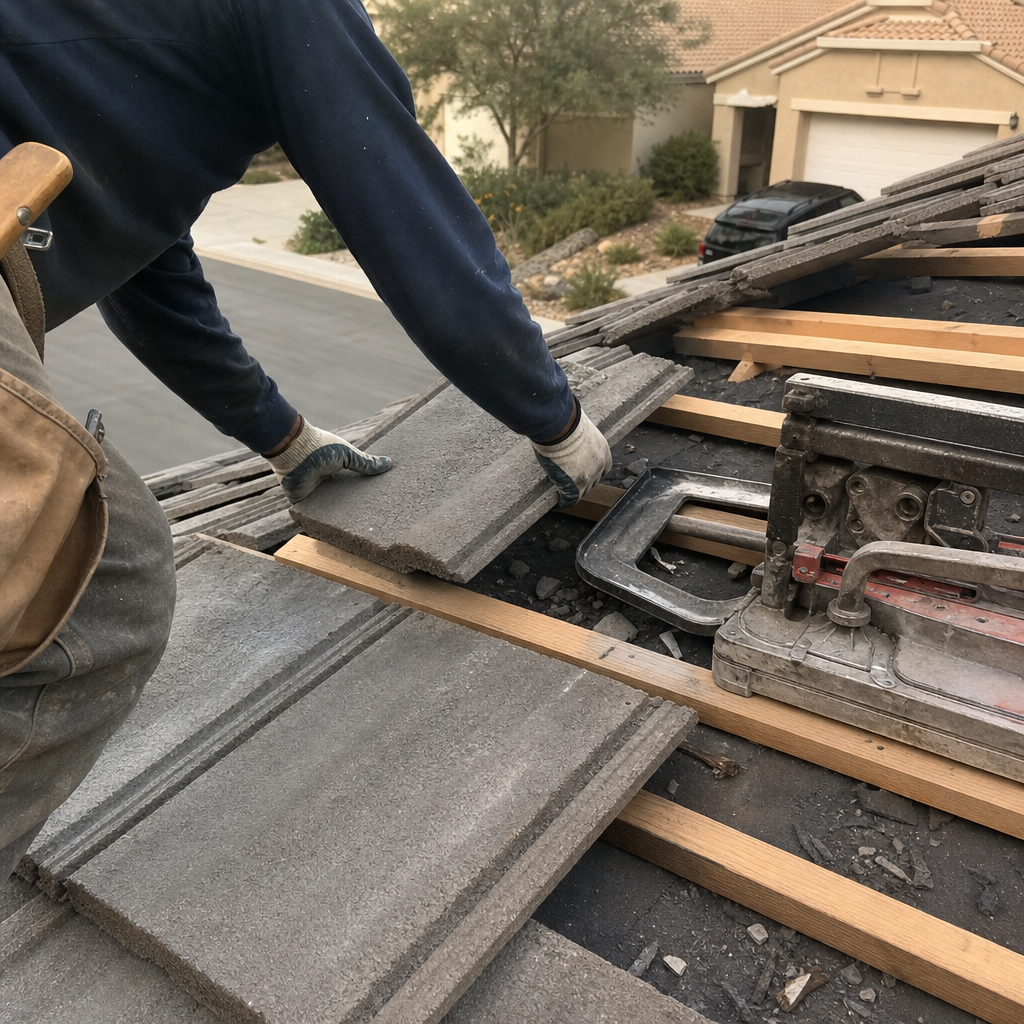
Shingle Replacement
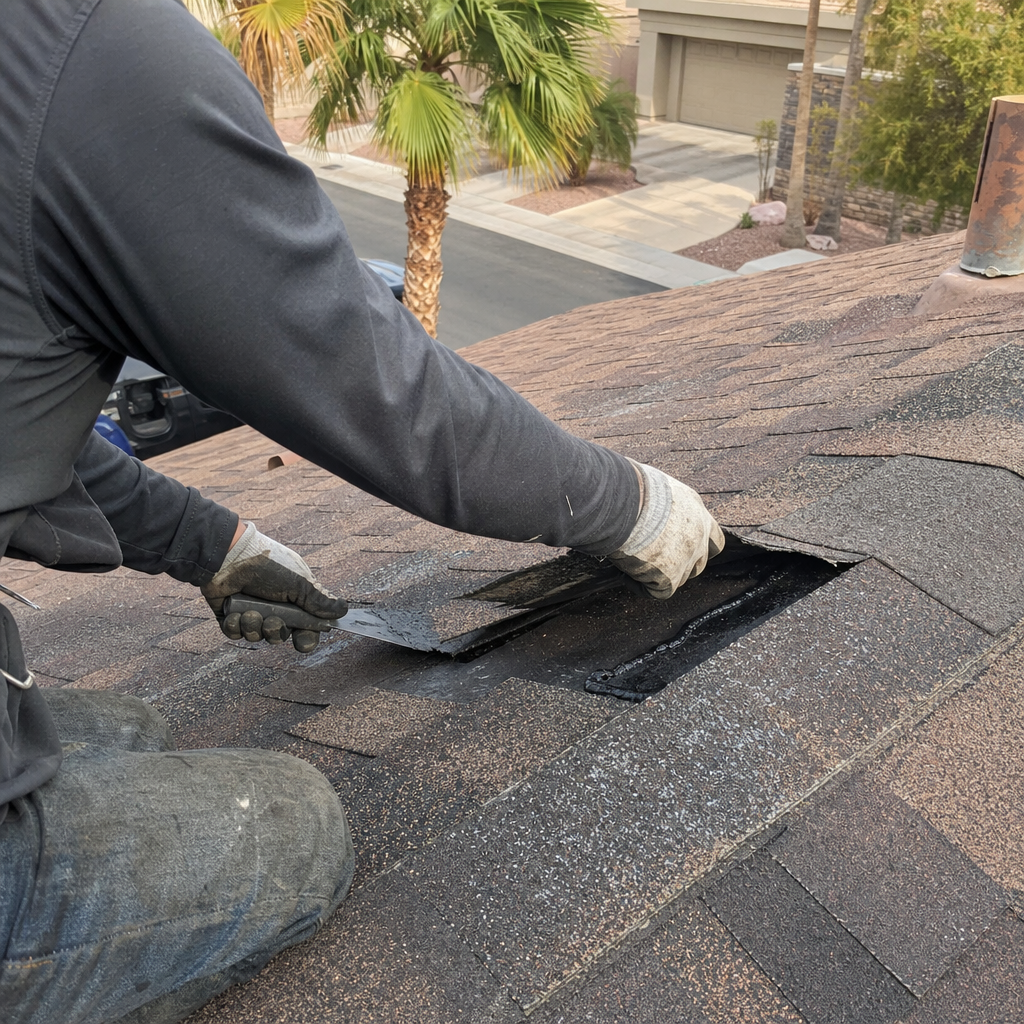
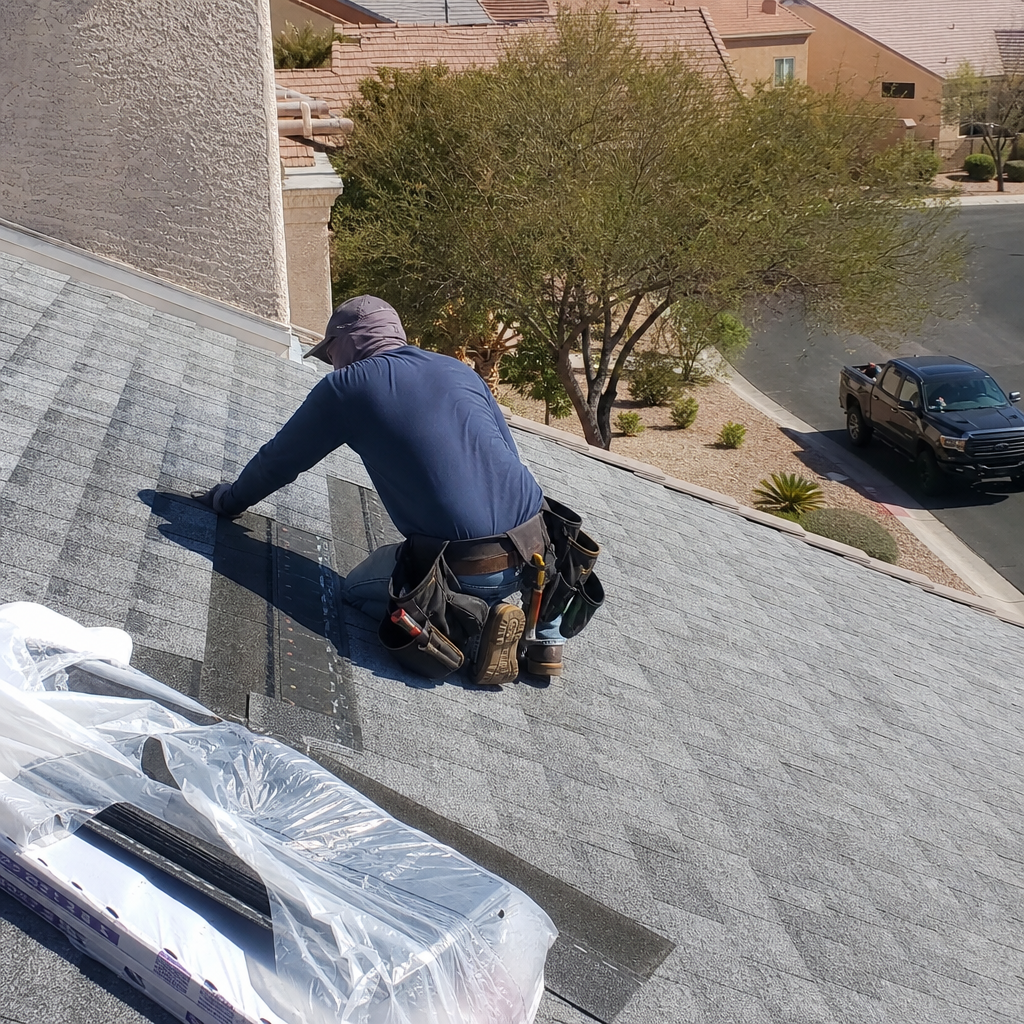
While concrete tile dominates Spring Valley’s older single-family stock, there are shingle-roofed homes scattered through neighborhoods like Angel Park Lindell and properties along East Charleston Boulevard — particularly on homes that received re-roofing work in the 1990s and early 2000s. Shingle replacement in Spring Valley typically runs $350–$800 for a localized repair section, with the range driven by how many squares are affected, whether decking needs attention, and which material — GAF, CertainTeed, Owens Corning, IKO, or Atlas — matches the existing installation.
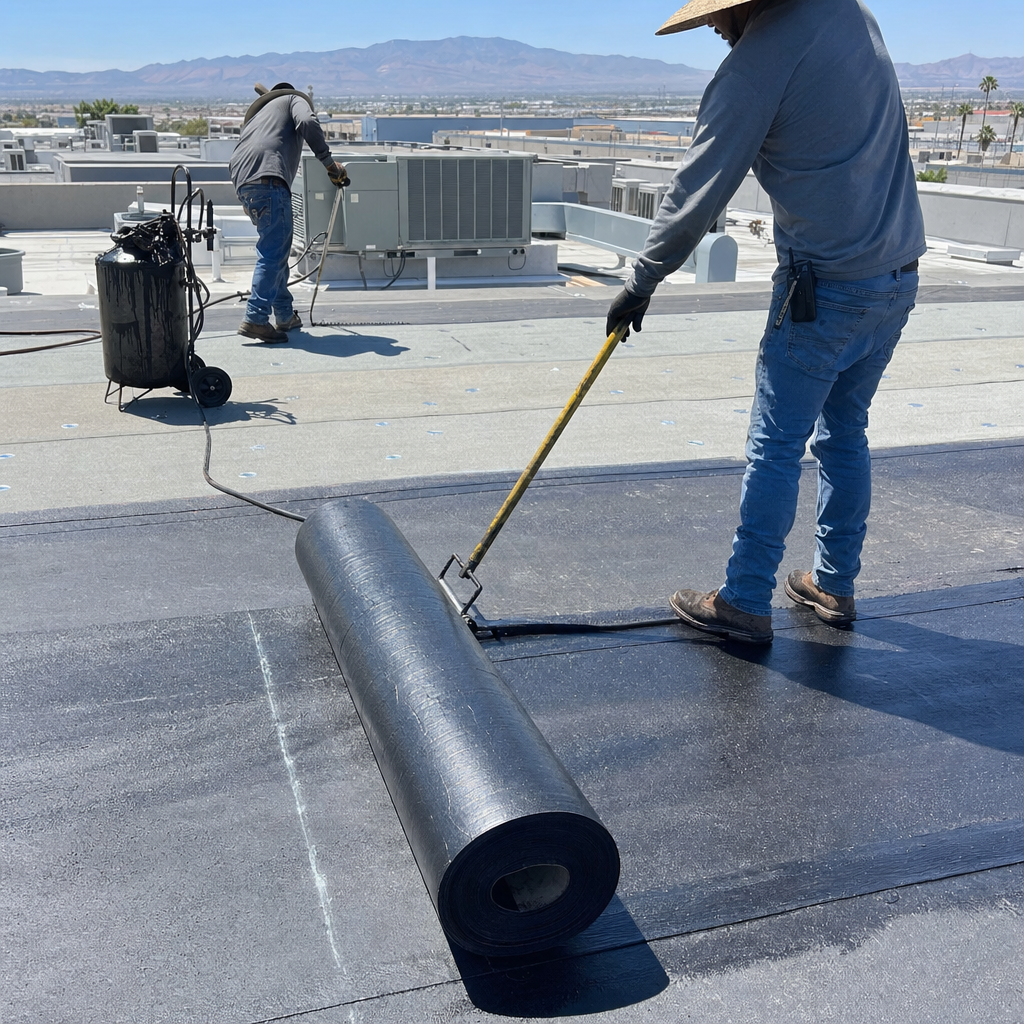
Leak Repair
A leak on a Spring Valley home built before 1990 almost always traces back to one of three sources: desiccated underlayment that can no longer shed water even when the tile surface looks intact, failed flashing around a penetration, or a compromised valley. We don’t patch the symptom and leave — we find the source. Leak repair in Spring Valley runs $350–$1,200 depending on how deep the diagnostic goes and what the repair requires once we’ve pulled tile to look underneath.
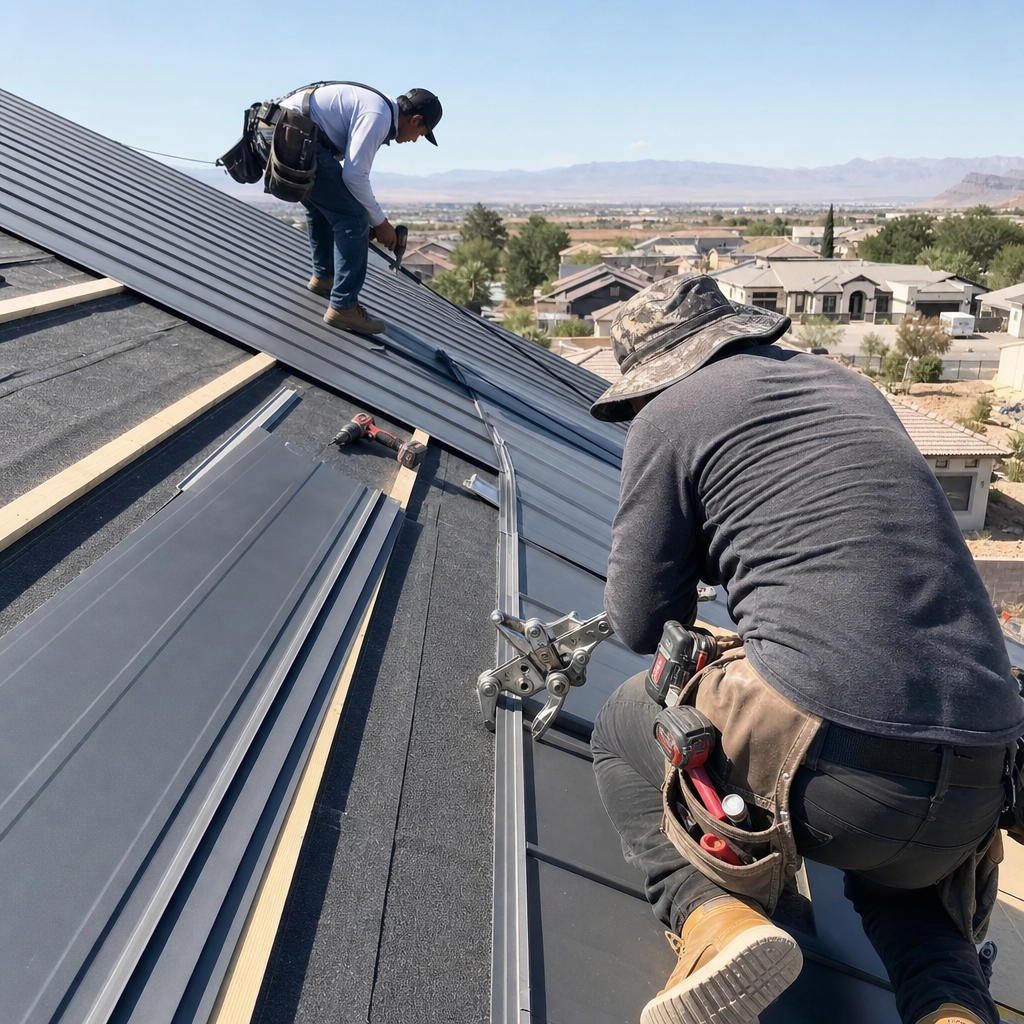
Vent Boot Repair
Rubber vent boots on Spring Valley roofs take a hard hit from UV exposure and the extreme surface temperatures common across the Las Vegas Valley floor — cracking, separating from the pipe collar, and letting water track down into the attic space. Vent boot replacement in Spring Valley typically runs $150–$350 per boot and is one of the faster, cleaner repairs we do — but it has to be done right the first time or the next monsoon will prove it wasn’t.
What happens when you call
- 1
A real person answersNo phone trees — you reach a local pro.
- 2
You get an upfront price rangeHonest numbers before anyone is dispatched.
- 3
A background-checked tech heads outLicensed & insured, dispatched right away.
- 4
You approve before work beginsNothing starts until you say go.
The Spring Valley Underlayment Crisis — What the Tile Surface Won’t Tell You
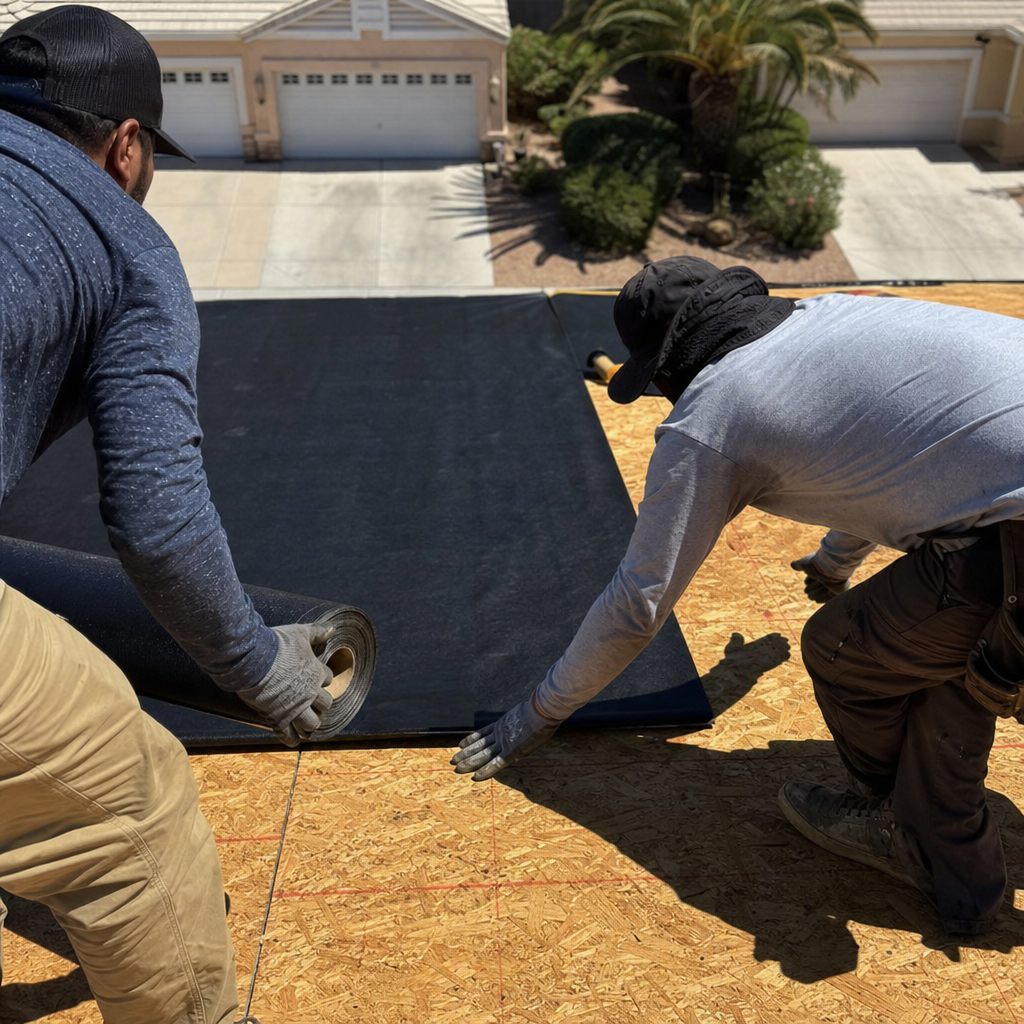
This is the defining roofing problem in Spring Valley, and it’s one that doesn’t affect newer developments to the northwest the same way. Spring Valley was built out primarily between the mid-1970s and early 1990s as a bedroom community for Strip workers. The concrete tile roofs installed on those homes were done with #15 or #30 organic felt underlayment — a product rated for roughly 20–25 years under normal conditions. Las Vegas Valley conditions are not normal. Roof-surface temperatures on south- and west-facing slopes here routinely exceed 150°F from May through September, and that sustained heat bakes organic felt into a brittle shell long before the tile above it shows any visible distress. From the street, the roof looks fine. Underneath the tile, the underlayment is gone.
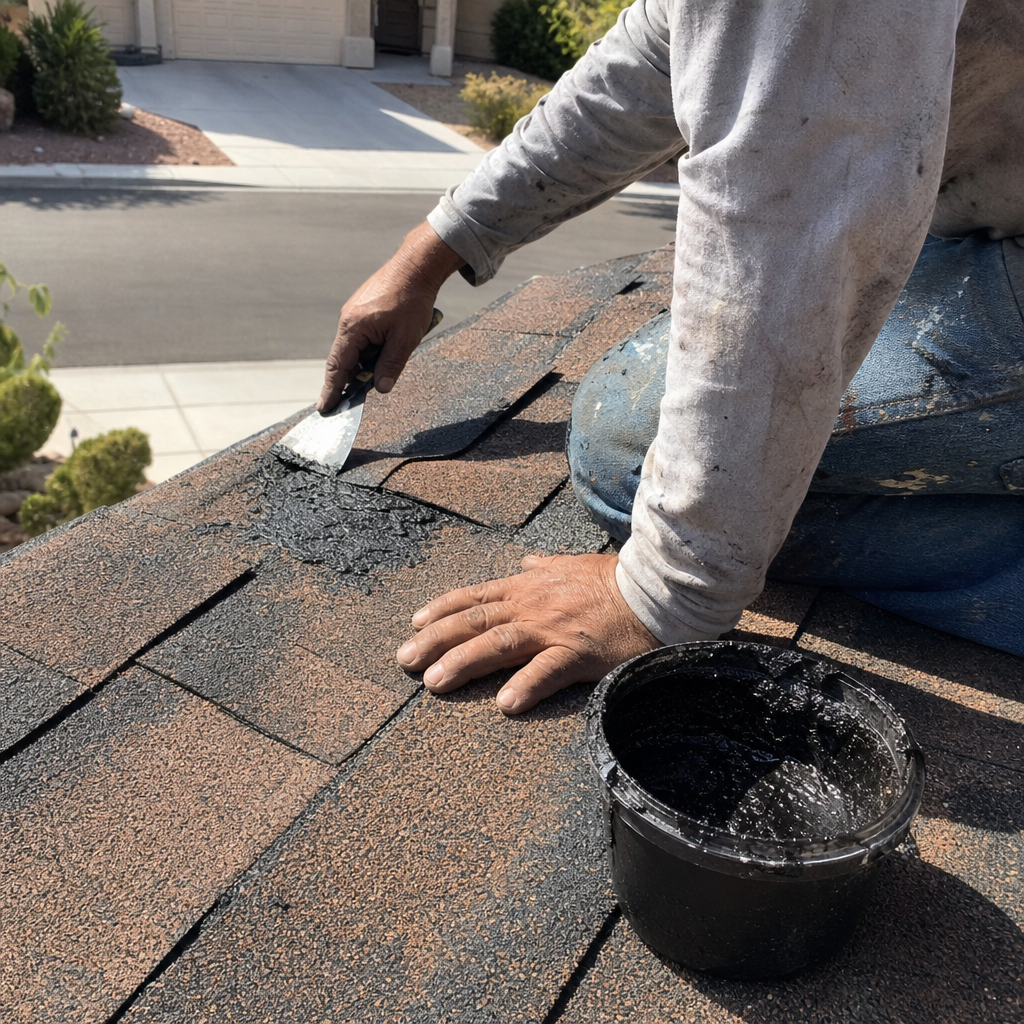
We saw this firsthand on a two-story home in the Charleston Heights neighborhood, where the homeowner had been watching the same three concrete tiles along the west-facing ridge for years and was convinced the roof was holding up. When we lifted the ridge caps, the original 1980s felt underlayment crumbled at the touch — dried to dust by decades of 150°F-plus surface heat — while the Boral concrete tiles themselves were structurally sound. We replaced the failed underlayment across the ridge field, reseated the tiles with fresh mortar, and sealed the valley transition before the next monsoon window opened. The tiles were fine. The felt was long gone. That combination is not unusual in Spring Valley. It’s the norm.
Newer builds in Summerlin used synthetic underlayments from the start — products rated for 40–50 years that handle desert UV without degrading. Spring Valley didn’t get those materials because they weren’t widely available when the neighborhood was built. That’s not a criticism of the original construction — it’s just the reality of where those roofs are in their lifecycle, and it’s why a visual inspection from the ground tells you almost nothing useful about a Spring Valley concrete tile roof.
Common Roof Repair Problems We See in Spring Valley Homes
- Silent underlayment failure beneath intact concrete tile: Homeowners near West Flamingo Road and across the 89103 zip code often delay repair because the tile surface looks fine. The original 1980s felt beneath those tiles has almost certainly exceeded its service life, and the next monsoon season will find every gap.
- Cracked ridge and hip mortar: The Las Vegas Valley’s thermal cycling — 150°F surface highs in summer dropping sharply overnight — fractures the mortar joints at concrete tile ridges and hips over time. Once a ridge tile shifts, it exposes underlayment seams to direct weather and interior water staining follows quickly.
- Ponding water on flat-roofed apartment and commercial buildings: The original 1970s–1980s built-up roofing on low-rise buildings along West Flamingo Road relies on interior drains that clog with debris over decades. A single August monsoon event can put two to four inches of standing water on a roof that appeared perfectly dry all spring.
- Failed flashing at penetrations on aging single-family homes: Chimney base flashing, HVAC curb flashings, and skylight curb seals on Spring Valley homes from the 1980s have been through 35-plus years of UV exposure and thermal movement. Sealant fatigue is nearly universal on roofs this age, and it’s often the last thing a homeowner thinks to check before monsoon season.
Trusted Brands We Service in Spring Valley
We work with seven of the industry’s leading material brands — GAF, CertainTeed, Owens Corning, IKO, Atlas, Tamko, and Boral — which means we can match materials to what’s already on your Spring Valley roof rather than forcing a substitution that doesn’t fit. For concrete tile re-roofing and repairs, Boral is a natural fit for many of the 1980s-era homes we service here. For shingle repairs and replacements, GAF, CertainTeed, and Owens Corning cover the full range of weight classes and warranty tiers. The right material for your roof gets chosen for your roof — not because it’s what happened to come off the truck.
Pricing for Roof Repair in Spring Valley, NV
Here’s a straightforward look at what repairs typically run in the Spring Valley market:
| Service | Typical Range (Spring Valley) |
|---|---|
| Vent Boot Repair | $150 – $350 |
| Flashing Repair | $250 – $700 |
| Shingle Replacement (localized) | $350 – $800 |
| Leak Repair (diagnostic + fix) | $350 – $1,200 |
| Valley Repair | $400 – $900 |
| Flat Roof Patch (localized section) | $500 – $1,500 |
| Underlayment Replacement (ridge/hip field) | $800 – $2,500+ |
What moves a job toward the higher end: underlayment damage found once tile is lifted, multiple failing areas discovered during one inspection, or decking that’s absorbed moisture and needs replacement before new material goes down. We give you the full picture before work starts — no scope creep surprises. Estimates are free. Call (725) 529-9119 and we’ll tell you exactly where you stand.
We Also Serve Cities Near Spring Valley
Along with Spring Valley, we regularly handle roof repair calls throughout the surrounding Las Vegas metro — including Las Vegas proper, Winchester, Paradise, and Whitney. If you’re just outside Spring Valley’s 89103 boundary, we’re still your closest experienced option. Same response time, same hands-on oversight from Jose Diaz, same material access across all seven brands.
Serving Spring Valley, NV — Our Local Coverage Area
We’re based in the Spring Valley area and know this community well. Use the map below to see our service coverage — if you’re nearby, we can almost certainly help.
FAQs — Roof Repair in Spring Valley
Yes — and this is the most important thing we tell Spring Valley homeowners. Intact concrete tiles do not indicate a healthy roof. The original #30 felt underlayment installed beneath those tiles in the 1970s–1990s has a 20–25 year lifespan under normal conditions, and Las Vegas Valley roof-surface temperatures routinely exceed 150°F — conditions that accelerate underlayment degradation dramatically. By the time a 1980s-era Spring Valley roof reaches today, that underlayment has almost certainly broken down into a brittle, non-functional layer, even when every tile above it looks structurally sound. A monsoon event will find every gap. Call us at (725) 529-9119 for an inspection before the next storm season opens — estimates are free.
Valley and flashing systems on Spring Valley’s 1970s–1990s homes were installed without the benefit of modern synthetic underlayment behind them — meaning the secondary water barrier that backs up every valley metal and flashing seam in newer construction simply doesn’t exist here, or it’s degraded to the point it can’t function. When the valley metal or flashing seal fails on a newer Summerlin home, the synthetic underlayment catches the water. On an older Spring Valley home, there’s nothing left to catch it. That’s why a valley or flashing failure here moves much faster from “minor issue” to “interior water damage” than it does elsewhere in the valley. Call (725) 529-9119 for a straight assessment.
Ponding on those buildings traces directly to clogged interior drains on original 1970s–1980s built-up roofing systems — decades of debris accumulation, combined with gravel migration from the BUR surface, blocks the drain bodies and turns a moderate monsoon rain into a standing-water event. Whether a patch is sufficient depends on what’s underneath: if the ponding is isolated to one drain area and the surrounding membrane is intact, a targeted patch and drain restoration can hold. If the saturated area has spread through the insulation board and compromised membrane seams across a larger section, you’re looking at a full-section replacement. We won’t know until we open it. Call (725) 529-9119 — the inspection will tell you which situation you’re actually in.
The answer lives in the substrate, not the surface. A patch is appropriate when membrane failure is localized, the insulation board beneath it is dry, and the surrounding BUR or modified bitumen is still adhered and structurally sound. Full section replacement is indicated when probe testing or infrared shows widespread moisture in the insulation, when the membrane is delaminating across a large field, or when drain restoration alone won’t prevent recurring ponding. On the older low-rise complexes along West Flamingo Road, we’ve found both situations in the same inspection — a patchable section on one drain area and a replacement-required section on another. Jose Diaz scopes each zone separately so you’re not replacing material that doesn’t need it. Call (725) 529-9119 to schedule an assessment.
In most cases, yes — provided the tiles are structurally intact and the underlayment beneath the ridge field hasn’t fully deteriorated. Cracked or missing mortar at ridge and hip joints is one of the more common repairs we do on Spring Valley’s older tile roofs, driven by the thermal cycling that works mortar loose over time. We remove the affected ridge tiles, clear the failed mortar, inspect the underlayment beneath, apply fresh mortar at the correct profile, and reset the tiles. If the underlayment under the ridge field has desiccated — which is common on homes built before 1990 — we replace that section while the ridge is already open. A standalone ridge mortar repair in Spring Valley typically runs $300–$700 depending on linear footage. Call (725) 529-9119 for a free estimate.
Schedule Your Spring Valley Roof Repair Estimate Today
If your Spring Valley home was built before 1995, or you’ve noticed anything unusual after a monsoon — water stains, shifted tiles, standing water on a flat section — don’t wait for the next storm to confirm the problem. Jose Diaz personally oversees every inspection and repair we run in Spring Valley, across neighborhoods near East Charleston Boulevard, West Flamingo Road, and throughout the 89103 zip code. Call (725) 529-9119 today for a free, no-obligation estimate. We’ll tell you exactly what’s happening on your roof, what it will take to fix it, and what it will cost — before any work begins.
Reviewed by Jose Diaz, Owner & Lead Technician at Total Roof Protection Specialists, serving Spring Valley and the greater Las Vegas area for 18 years.