Fast, Reliable Roof Replacement & Installation Across Spring Valley
If you own a home in Spring Valley, NV — especially one built in the 1970s or 1980s — there’s a good chance your roof needs more attention than the tiles are letting on. Our Roof Replacement & Installation team serves Spring Valley regularly, and we know the specific failure patterns this neighborhood produces. Call (725) 529-9119 for a free on-site estimate — we’ll tell you exactly what your roof needs, not what’s easiest to sell.
Why Total Roof Protection Specialists Is Spring Valley’s Preferred Roof Replacement & Installation Company
We’ve built a strong reputation throughout Spring Valley by doing something straightforward: showing up, doing the work ourselves, and backing it with a track record that’s hard to argue with. Owner Jose Diaz doesn’t just run the company — he runs the job. With 18 years of hands-on roofing experience and 788 verified customer reviews averaging 4.9 stars, Jose brings that same direct involvement to every Spring Valley project, whether it’s a tile re-underlayment on a 1980s tract home off West Flamingo Road or a flat roof replacement on an older apartment complex near West Sahara Avenue.
Spring Valley homeowners in neighborhoods like Buffalo Ranch and Angel Park Lindell have called us back repeatedly — not because we made big promises, but because we spotted what other contractors missed. A 4.9 rating across 788 reviews isn’t marketing — it’s a track record. When you call us for a Spring Valley roof replacement, you’re getting the same crew, the same oversight, and the same person making every material decision from start to finish.
The Spring Valley Underlayment Crisis Nobody Talks About
Spring Valley was built out primarily between the mid-1970s and early 1990s as a bedroom community for Strip-shift workers. That build era left a dense inventory of single-family homes and low-rise apartment complexes — most of them running along corridors like West Flamingo Road and stretching through neighborhoods like Buffalo Ranch — with concrete tile roofs whose original felt underlayment is now 30 to 50 years old. The rated lifespan of that original fiberglass-reinforced felt was 20 to 25 years in a moderate climate. Spring Valley is not a moderate climate.
Roof-surface temperatures in the Las Vegas Valley routinely exceed 150°F to 170°F in summer, then drop sharply overnight. That thermal cycling — compounded by intense UV exposure year-round — doesn’t destroy concrete tile, which is why so many Spring Valley roofs look fine from the street. What it does destroy is the felt layer beneath those tiles, quietly, over decades. By the time the first August monsoon hits and water finds every failed seam, the tile still looks intact. The leak is real. This silent underlayment failure is the defining roofing crisis in Spring Valley’s 89103 ZIP code, and it simply does not exist in the same way in newer master-planned communities like Summerlin to the northwest.
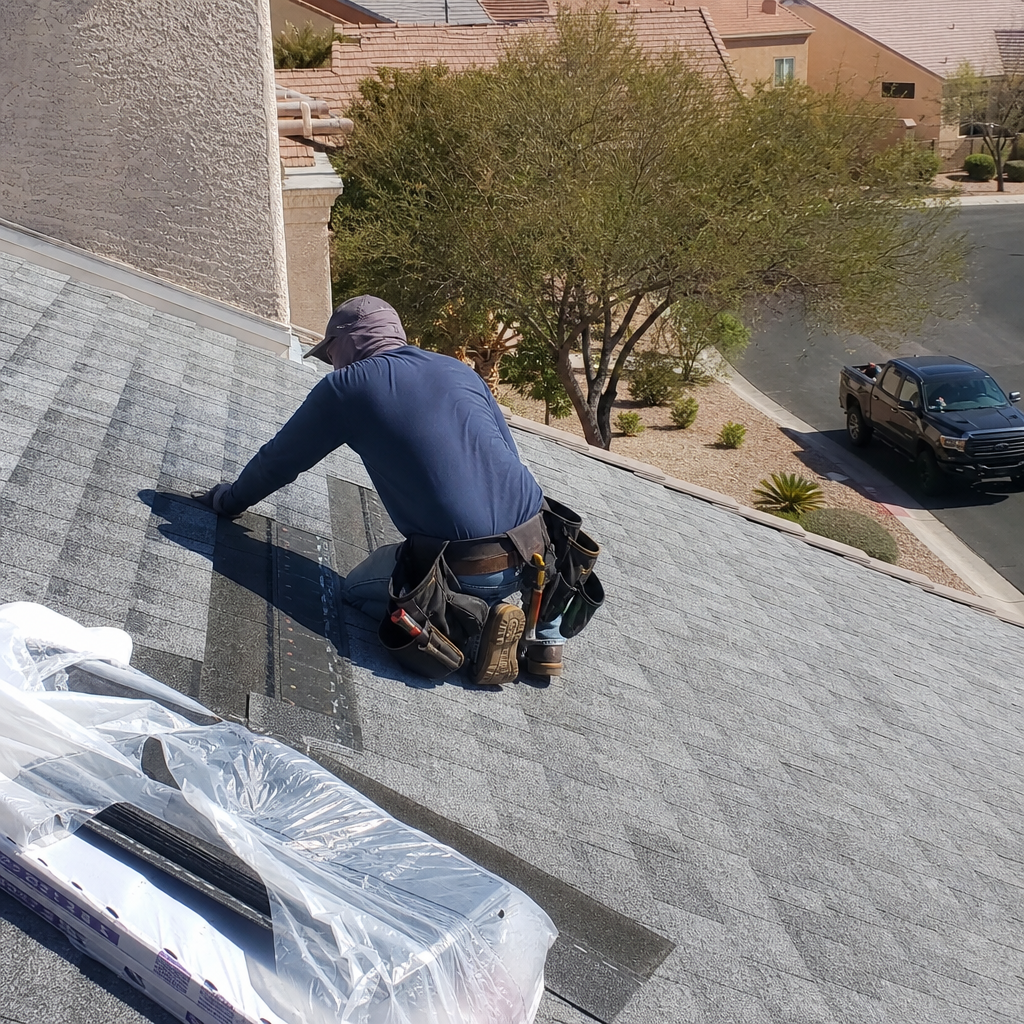
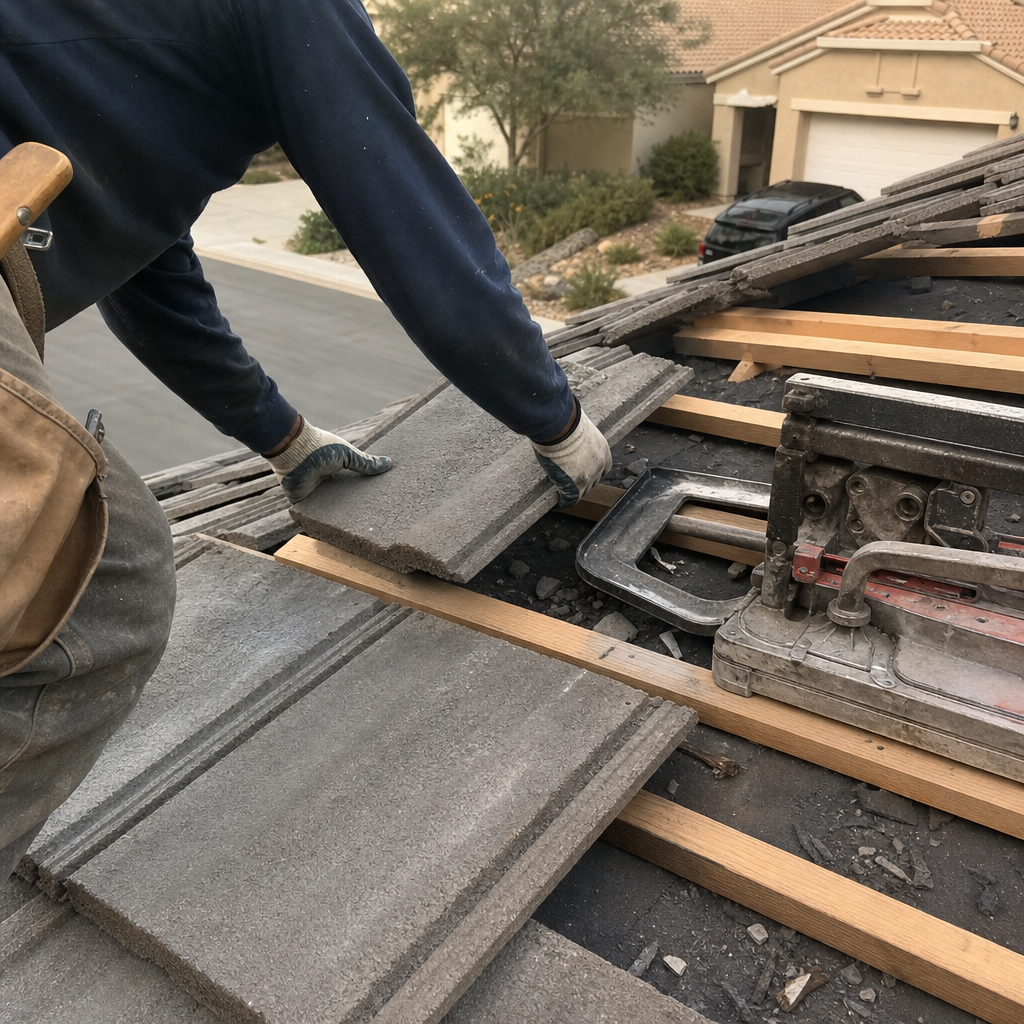
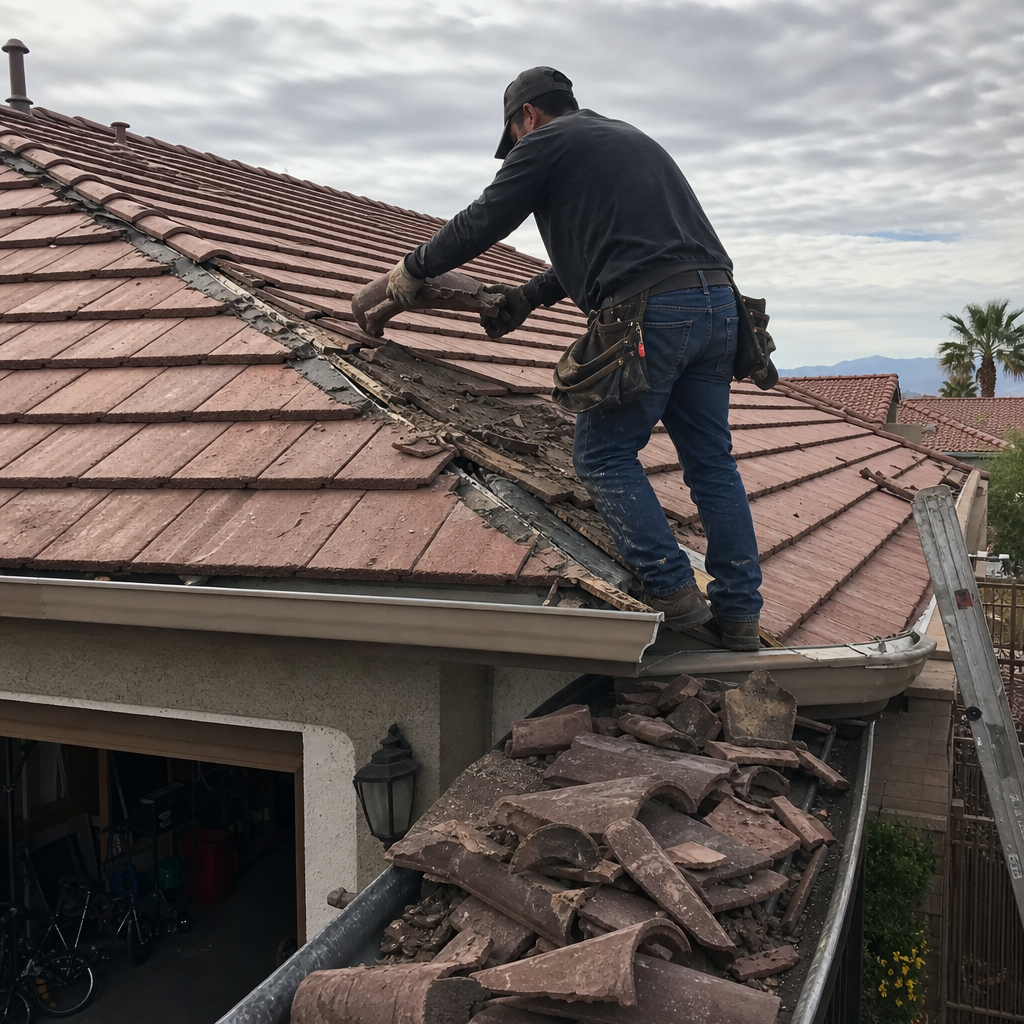
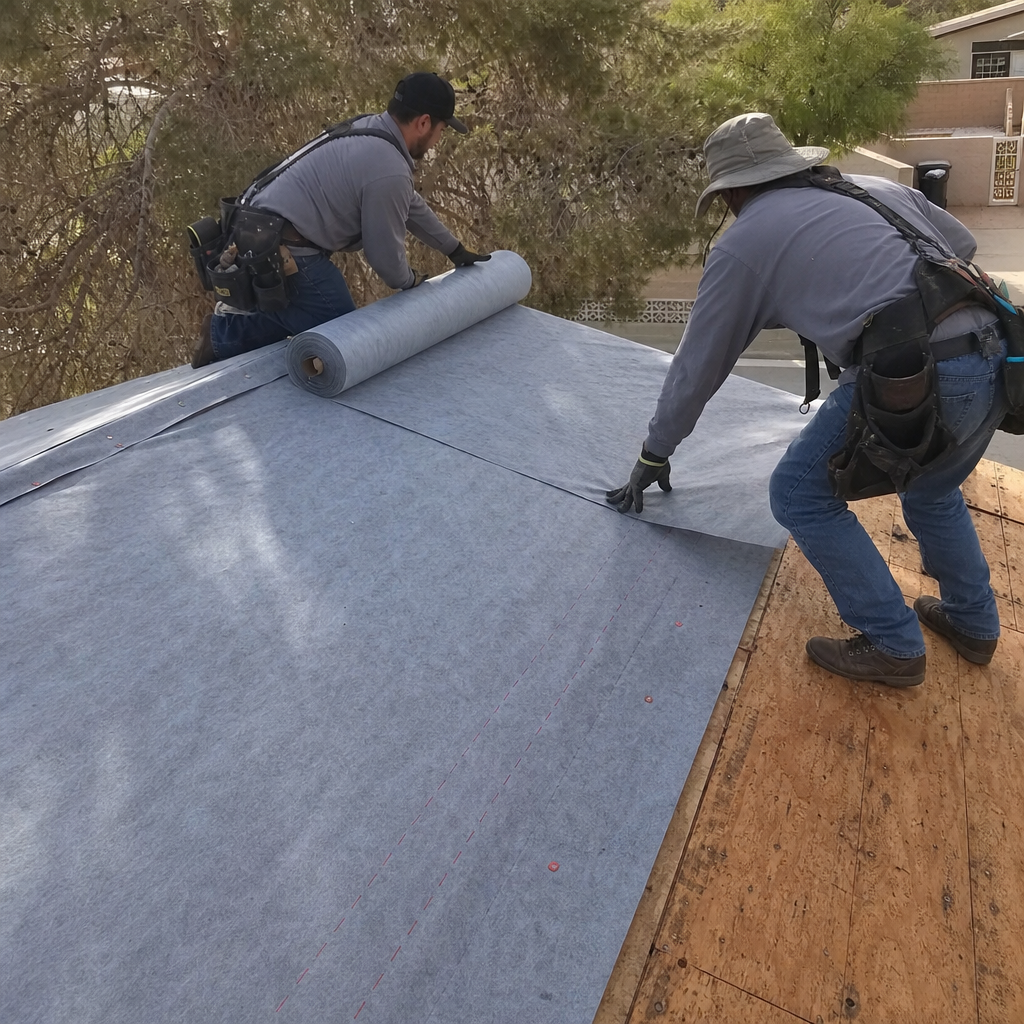
We handled this exact situation recently on a two-story home in the Buffalo Ranch neighborhood. The concrete tile surface appeared undamaged, but infrared scanning revealed the original underlayment had fully delaminated beneath the field tile — invisible from the street, catastrophic in a rainstorm. We removed the Boral concrete tile, replaced the degraded underlayment with a heat-welded modified bitumen layer rated for the Las Vegas Valley’s temperature extremes, re-mortared every ridge cap, and re-laid the salvageable tile — all within the tight side-yard clearances typical of 1980s Spring Valley tract lots. That’s what a proper Spring Valley tile replacement looks like.
Our Roof Replacement & Installation Services in Spring Valley
Full Roof Replacement
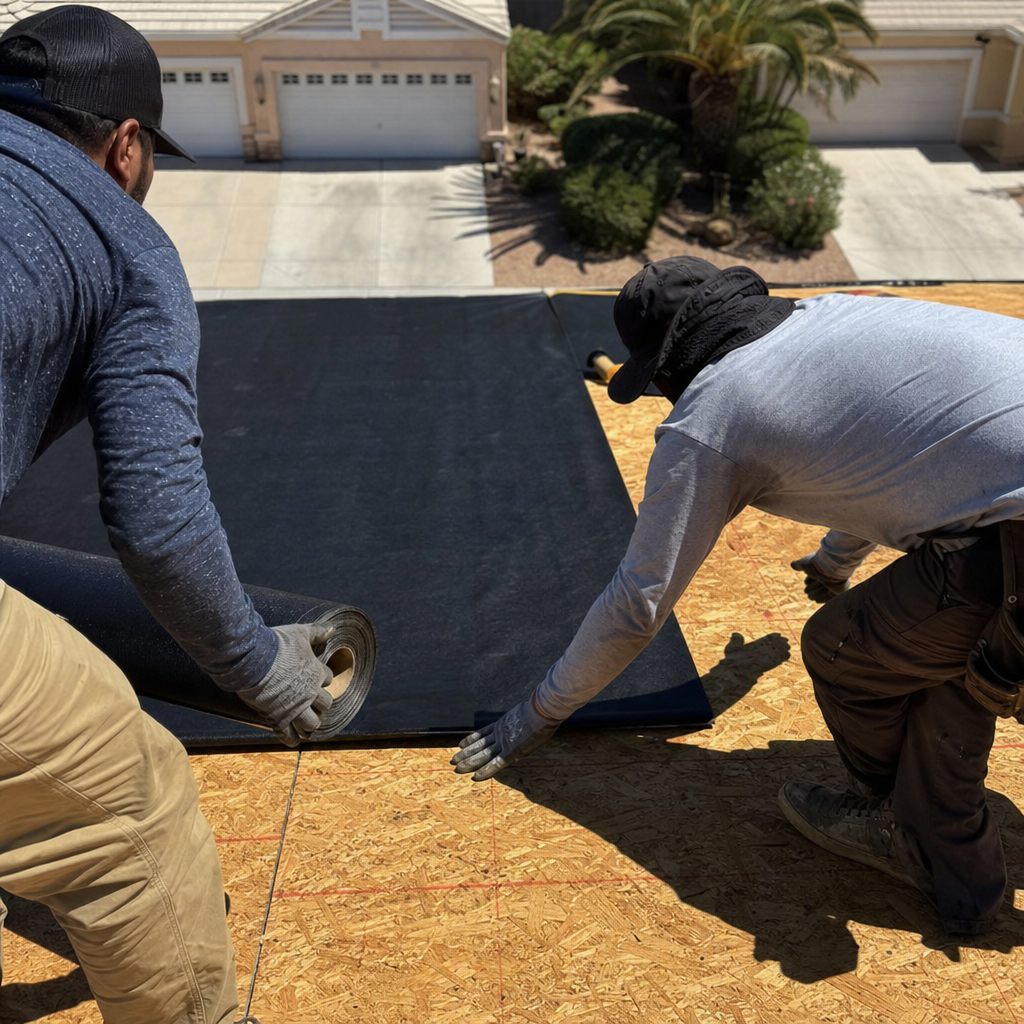
A full roof replacement in Spring Valley isn’t just swapping surface materials — it means pulling the old tile or membrane, evaluating the deck condition after decades of thermal stress, and installing underlayment systems engineered for the Las Vegas Valley’s extremes. We bring the right staging equipment for Spring Valley’s tighter 1970s-1980s tract lots, where side-yard clearances near neighborhoods like Angel Park Lindell can turn a standard tear-off into a logistics problem for crews who haven’t worked them before. We’ve worked them. We know the clearances, the fencing layouts, and how to haul old tile without damaging adjacent structures.
Tile Roofing
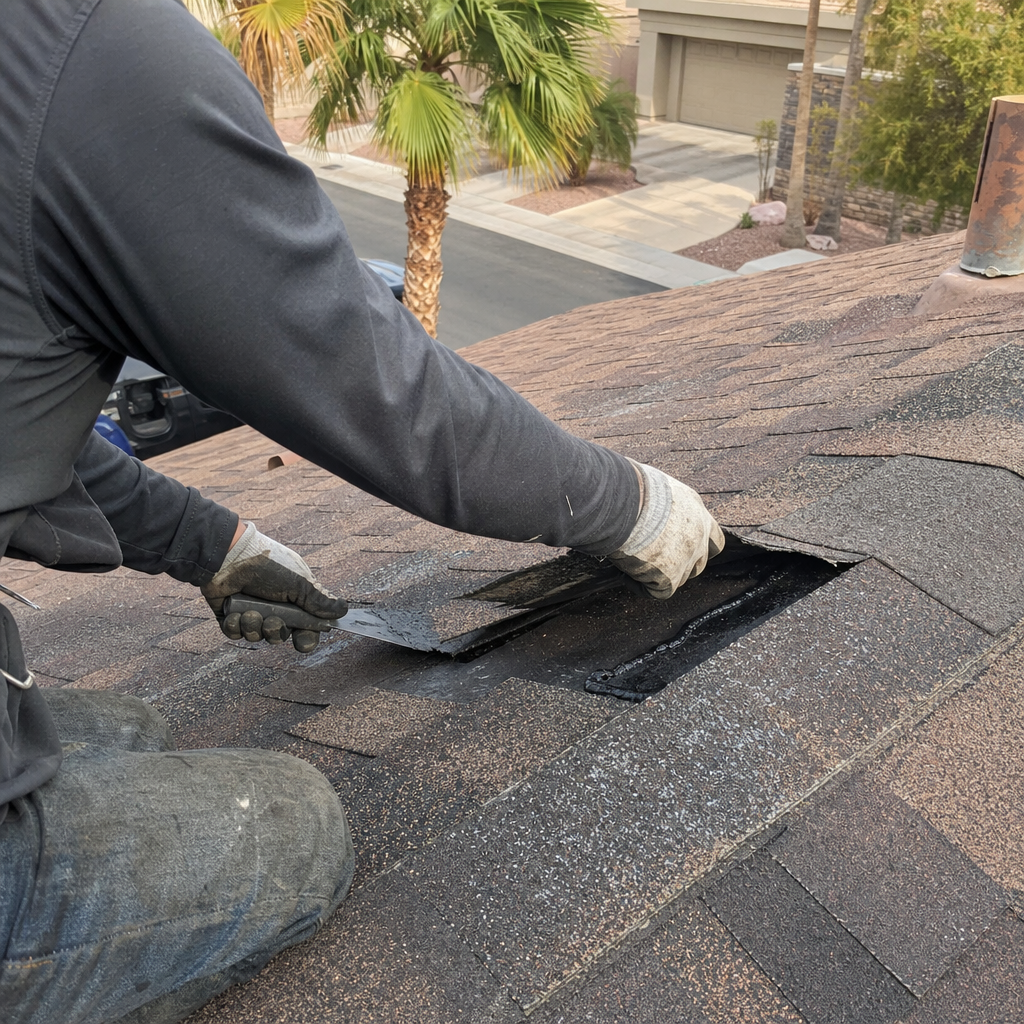
Concrete and clay tile is the dominant roofing material across Spring Valley’s residential stock, and we work with it daily. Our tile replacement process always includes a full underlayment evaluation — we won’t skip it just to shorten the bid, because skipping it is exactly how a homeowner on West Flamingo Road ends up with an interior leak six months after a new roof installation. Where original Boral or other concrete tiles are structurally sound and color-matched, we salvage and re-lay them to keep material costs down without cutting corners on the underlayment system underneath.
Flat & Low-Slope Roofing
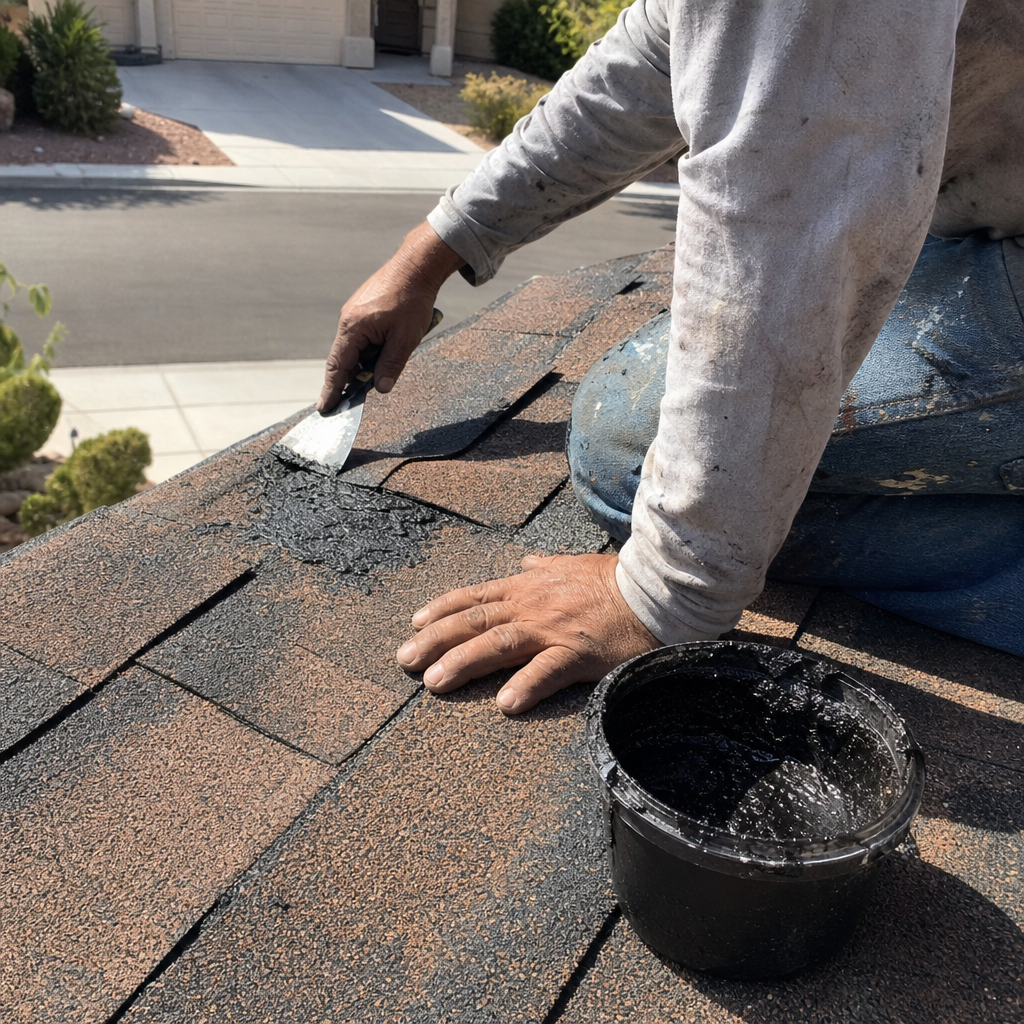
Older apartment complexes and commercial strips throughout Spring Valley — particularly along West Flamingo Road and West Sahara Avenue — still carry original 1970s and 1980s gravel-surfaced built-up roofing (BUR). These roofs have interior drains that can go years without proper clearing, and when August monsoon events deliver three inches of rain in an afternoon, ponding water on a new membrane will fail it prematurely if the drain infrastructure wasn’t addressed in the replacement scope. We include drain evaluation and clearance in every flat roof bid for Spring Valley properties. It’s not an add-on. It’s required.
Asphalt Shingles & Metal Roofing
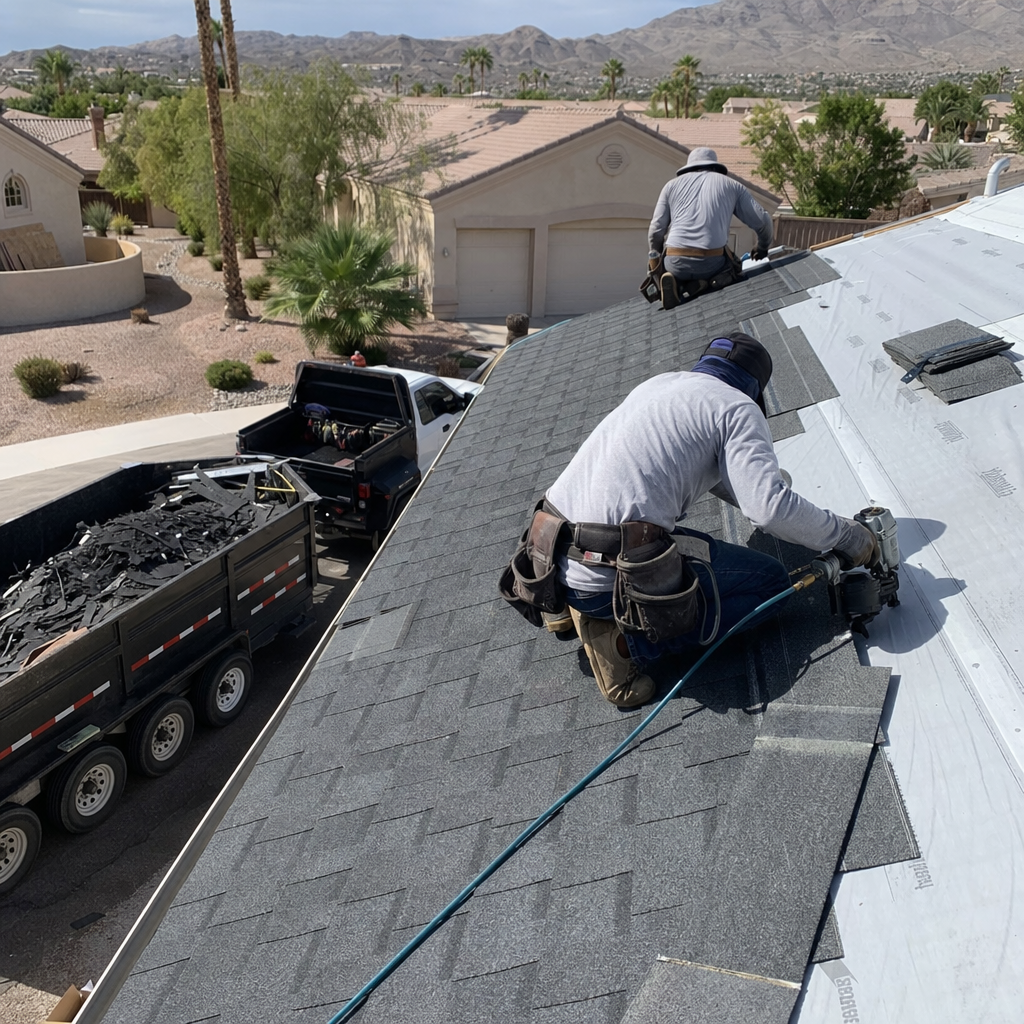
While tile dominates Spring Valley’s older residential stock, some single-family homes — particularly on lower-pitched sections near Madison Playground and the broader 89103 corridor — were built with asphalt shingles, and modern architectural shingles from GAF, CertainTeed, Owens Corning, IKO, Atlas, and Tamko perform well in the desert heat when installed with proper ventilation. Metal roofing is increasingly popular in Spring Valley for its longevity and heat reflectance, and we install standing-seam and exposed-fastener systems on both residential and commercial properties. If you’re weighing tile against metal for a full replacement, Jose Diaz can walk you through the tradeoffs specific to your roof pitch and sun exposure.
What happens when you call
- 1
A real person answersNo phone trees — you reach a local pro.
- 2
You get an upfront price rangeHonest numbers before anyone is dispatched.
- 3
A background-checked tech heads outLicensed & insured, dispatched right away.
- 4
You approve before work beginsNothing starts until you say go.
Trusted Brands We Install in Spring Valley
Spring Valley homeowners get a real choice of materials — not just whatever we happen to have surplus of. We’re authorized to install roofing systems from GAF, CertainTeed, Owens Corning, IKO, Atlas, Tamko, and Boral — seven of the industry’s leading brands spanning asphalt shingles, metal systems, and concrete tile. That range matters in Spring Valley, where a 1,400-square-foot 1980s single-story may call for a completely different underlayment and surface solution than a 2,500-square-foot two-story near the Bruce Woodbury Beltway. The right material for your roof — chosen from seven of the industry’s best brands, not just whatever’s on the truck.
Common Roof Replacement Problems We See in Spring Valley Homes
- Intact-looking tile concealing failed underlayment: Homeowners on streets like West Flamingo Road accept a tile-only visual inspection and skip a full underlayment evaluation. The first July or August monsoon event then delivers interior leaks because the 30-to-50-year-old felt beneath those intact-looking concrete tiles has long since degraded — and no tile inspection catches it.
- Staging failures on tight 1980s tract lots: Crews unfamiliar with Spring Valley’s dense 1970s-1980s layouts underestimate side-yard clearances near Angel Park Lindell and Charleston Heights, arriving without a proper equipment staging plan. The result is damaged fencing, disrupted neighbors, and job delays that push a two-day replacement into a week-long ordeal.
- Flat roof bids that ignore interior drains: On older apartment complexes along West Flamingo Road, interior drains are frequently overlooked during a replacement bid. The new membrane goes down, the first monsoon arrives, ponding water has nowhere to go, and a brand-new roof starts failing within one season — because the drain infrastructure was never cleared or upgraded.
- Monsoon season urgency underestimated in the 89103 ZIP: Spring Valley’s July-through-September monsoon window is short but intense. Homeowners who put off a replacement estimate through spring often find themselves scrambling for emergency service in August when sudden downpours expose every cracked mortar joint and failed seam that was dry and quiet all winter.
Pricing for Roof Replacement & Installation in Spring Valley, NV
Here are the ranges our Spring Valley customers typically see:
- Full concrete tile re-underlayment (tile salvage and re-lay): $8,500–$14,000 for a typical 1,400–2,000 sq ft Spring Valley single-family home, depending on deck condition and ridge mortar work required.
- Full tile replacement (new Boral or equivalent concrete tile): $14,000–$22,000 for the same size range, with material grade and profile affecting the upper end.
- Asphalt shingle full replacement: $7,500–$12,500, depending on shingle line (GAF Timberline vs. architectural premium tiers) and ventilation upgrades.
- Flat/low-slope BUR or modified bitumen replacement: $4.50–$8.00 per square foot installed, with Spring Valley’s older apartment complexes often running $12,000–$28,000 depending on drain work and square footage.
- Metal roofing installation: $18,000–$30,000+ for most Spring Valley single-family homes, reflecting material cost and system complexity.
Several factors move Spring Valley costs within these ranges: roof pitch, deck condition after decades of thermal cycling, whether original tile can be salvaged, and whether interior drains on flat roofs need clearing or replacement. Call (725) 529-9119 for a free on-site estimate — we’ll give you a written number, not a vague range.
We Also Serve Cities Near Spring Valley
Beyond Spring Valley, Total Roof Protection Specialists serves homeowners throughout the greater Las Vegas Valley, including Las Vegas, Winchester, Paradise, and Whitney. If you’re just outside the 89103 ZIP code, we’re likely already working in your neighborhood. Call (725) 529-9119 and we’ll confirm service availability for your address.
Serving Spring Valley, NV — Our Local Coverage Area
We’re based in the Spring Valley area and know this community well. Use the map below to see our service coverage — if you’re nearby, we can almost certainly help.
FAQs — Roof Replacement & Installation in Spring Valley
Yes — and this is the most common misconception we encounter in the 89103 ZIP code. Concrete tile in Spring Valley is extremely durable on the surface, but the fiberglass-reinforced felt underlayment beneath it has a 20-to-25-year desert lifespan, and most Spring Valley homes are now 30 to 50 years old. The tile can look perfect while the underlayment has fully delaminated underneath it. You won’t know there’s a problem until water comes through your ceiling during an August monsoon. An infrared scan or physical inspection at the eave line will show you the truth. Call (725) 529-9119 — we’ll give you a straight answer before we write a scope of work.
They’re the forcing function. Spring Valley sits on the Las Vegas Valley floor, and monsoon events typically deliver sudden, intense downpours — sometimes two to three inches within a few hours — after months of dry weather that masked every failing seam. A roof with degraded underlayment, cracked ridge mortar, or a clogged interior drain on a flat section will hold up through a dry spring and then fail catastrophically on the first serious storm. By late June, our schedule in Spring Valley fills fast as homeowners who procrastinated finally call. If you’re on the fence, get the inspection done before July. We can usually get to Spring Valley properties quickly, but not instantly once the monsoon season kicks in.
Built-up roofing is a flat/low-slope system constructed from alternating layers of roofing felt and hot-applied bitumen, typically surfaced with gravel to reflect heat and protect the membrane. It was the industry standard for flat commercial and multi-family construction from the 1950s through the 1980s, which is exactly when most of Spring Valley’s garden-style apartment complexes and low-rise commercial strips along West Flamingo Road were built. BUR can last decades, but the 40-to-50-year-old systems still in place on many Spring Valley properties are well past their service life — the bitumen layers become brittle, the gravel displaces, and interior drains clog. Replacement with a modern modified bitumen or TPO system, combined with proper drain clearing, is the correct solution. Call (725) 529-9119 to schedule a flat roof assessment.
Salvageable original tile can absolutely be re-laid — and for many Spring Valley homeowners, it’s the right financial decision. Boral and similar concrete tiles from the 1980s and 1990s are structurally durable; what fails is the underlayment, not the tile itself. Our process involves carefully stripping the tile, stacking and inspecting each piece, replacing broken or spalled units, installing a new heat-rated underlayment system, and re-laying the sound tile. The result is a roof that looks original from the street, carries a properly spec’d underlayment, and costs meaningfully less than a full new-tile installation. We’ll tell you during the inspection whether your specific tile is worth saving — if it’s not, we’ll say so plainly.
It affects everything. Spring Valley’s 1980s tract lots were built with narrow side yards — sometimes as little as three feet between the eave line and a block wall or neighboring structure. Staging a full tile tear-off requires careful planning: where do dump containers go, how do crews haul old tile without dropping it over adjacent fencing, and how is the replacement material loaded to the roof without a straight-shot driveway access. We’ve worked these lots for years. We arrive with a staging plan built around your specific property, not a generic crew setup that assumes a wide suburban lot. That planning is part of what Jose Diaz does on every job — and it’s why our Spring Valley customers don’t end up with a damaged fence and an angry neighbor at the end of the week.
Get a Free Roof Replacement Estimate in Spring Valley Today
If you own a home or building in Spring Valley and your roof is anywhere near 20-plus years old — especially if it’s a concrete tile system — the smartest move you can make this season is a proper underlayment inspection before the monsoon window opens. Jose Diaz will come to your property, assess what’s actually happening under the surface, and give you a written estimate with no pressure and no guesswork. Nearly two decades and nearly 800 five-star roofs later, we know Spring Valley’s roofing problems better than anyone. Call (725) 529-9119 today to schedule your free estimate.
Reviewed by Jose Diaz, Owner & Lead Technician at Total Roof Protection Specialists, serving Spring Valley and the greater Las Vegas Valley since 2007.