Fast, Reliable Roof Repair Across Whitney
If you’re in Whitney’s 89122 ZIP and dealing with a leaking flat roof, lifted parapet flashing, or ceiling stains after last night’s monsoon cell, our Roof Repair crew knows this neighborhood’s roofs — the aging gravel-and-tar BUR systems, the 1970s stucco ranches, and the Clark County permit process that governs every job here. Jose Diaz leads every project personally, and we can be on a Whitney roof fast. Call (725) 529-9119 for a same-day assessment.
Why Total Roof Protection Specialists Is Whitney’s Preferred Roof Repair Company
Whitney homeowners have trusted us with their roofs because we understand the specific housing stock here — not just roofing in general. The single-story stucco ranch homes that define Whitney present a specific set of challenges: original BUR membranes pushing 40–50 years old, undersized scuppers, and parapet flashings that were never properly sealed from day one. We’ve diagnosed and repaired those exact systems dozens of times across the 89122 corridor.
A 4.9 rating across 788 verified reviews isn’t marketing — it’s a track record built one project at a time. Whitney customers consistently cite Jose Diaz’s hands-on presence as the reason they call back. Jose doesn’t just run the company — he runs the job. That means the person who assessed your roof is the same person directing the repair, not handing notes off to a subcontracted crew who’s never seen the property.
When a storm hits Whitney, you need someone who picks up the phone and shows up — not a callback in three days. Our emergency storm response is a core part of what we do, and the monsoon season’s sudden, high-volume rain events in the Las Vegas Valley mean we’ve built our scheduling to handle urgent calls from Whitney homeowners without bumping them to next week.
Our Roof Repair Services in Whitney
Flat Roof Patch
Flat roof patching is the most common repair call we get from Whitney’s 89122 neighborhoods, and for good reason — the original BUR systems on these 1970s and early-1980s ranch homes are now well past their rated service life. Before we cut a single patch, we check the scuppers and interior drains. In Whitney, a blocked scupper on an aging flat roof can back water six inches deep within 30 minutes during a monsoon cell, creating ceiling damage that looks exactly like a membrane blow-out when the membrane itself may still be partially functional. We isolate the actual failure point first, then repair it with compatible modified-bitumen patching material that bonds cleanly to the original gravel-and-tar substrate — no guesswork, no unnecessary tear-off.
A good example of what we find here: our crew was called to a single-story stucco ranch off the 89122 corridor after a July monsoon deposited nearly an inch of rain in under 30 minutes. The homeowner was certain the flat BUR membrane had blown out. Both scuppers were packed solid with desert grit and gravel, turning the roof into a temporary pond. After clearing drainage and drying the deck, we found two genuine stress-cracked sections of the original BUR system, patched them with modified bitumen, and had the interior protected before the next storm window arrived. That diagnostic sequence — drainage first, membrane second — is something crews unfamiliar with Whitney’s housing stock routinely skip.
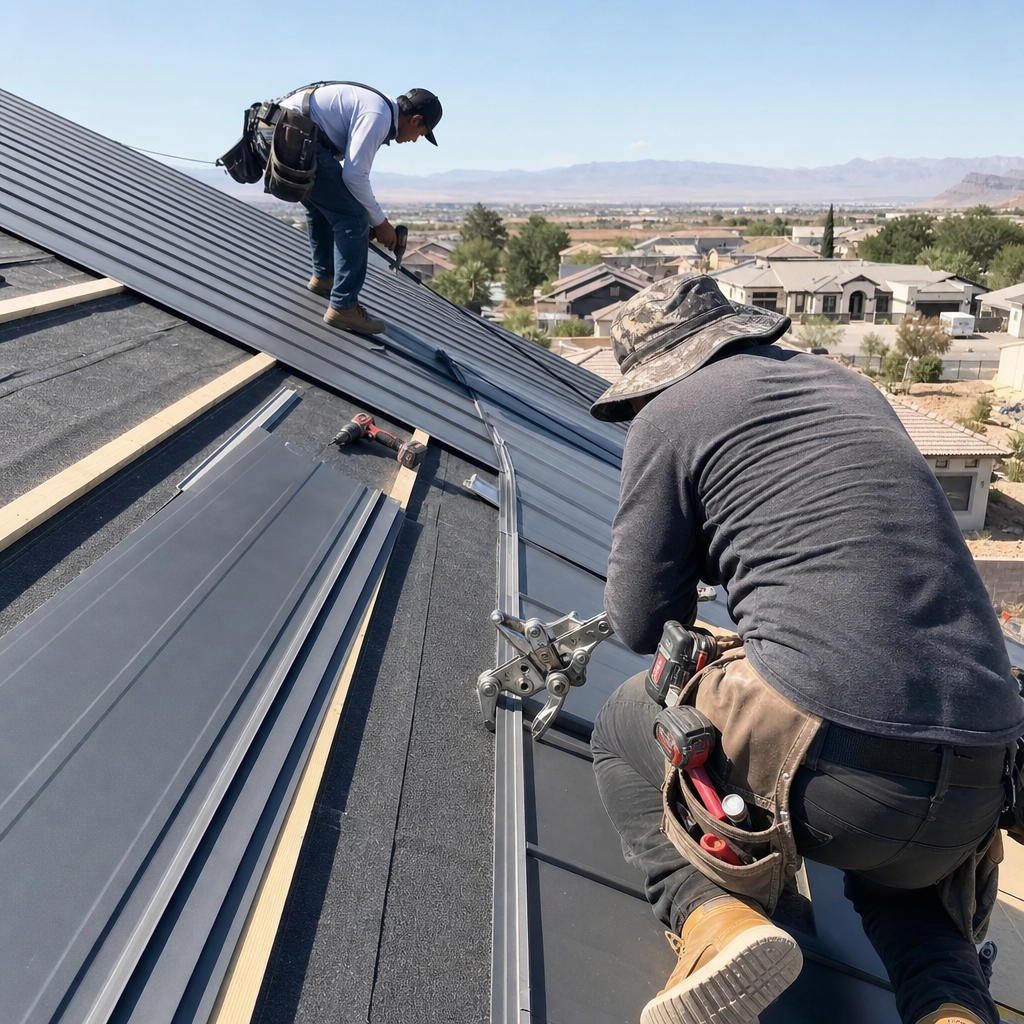
Leak Repair
Leak diagnosis on Whitney’s flat-roof homes requires patience and a methodical approach because water travels. A ceiling stain in the middle of a bedroom can originate at a parapet wall 10 feet away, or at an HVAC curb, or at a dried-out pitch pocket near a penetration. We trace the water path before we open anything up, which is how we avoid the common mistake of patching the wrong section and having the homeowner call back after the next rain. In Whitney’s older homes, we frequently find that what’s presented as a “new” leak has actually been migrating slowly for a season or more before it became visible inside.
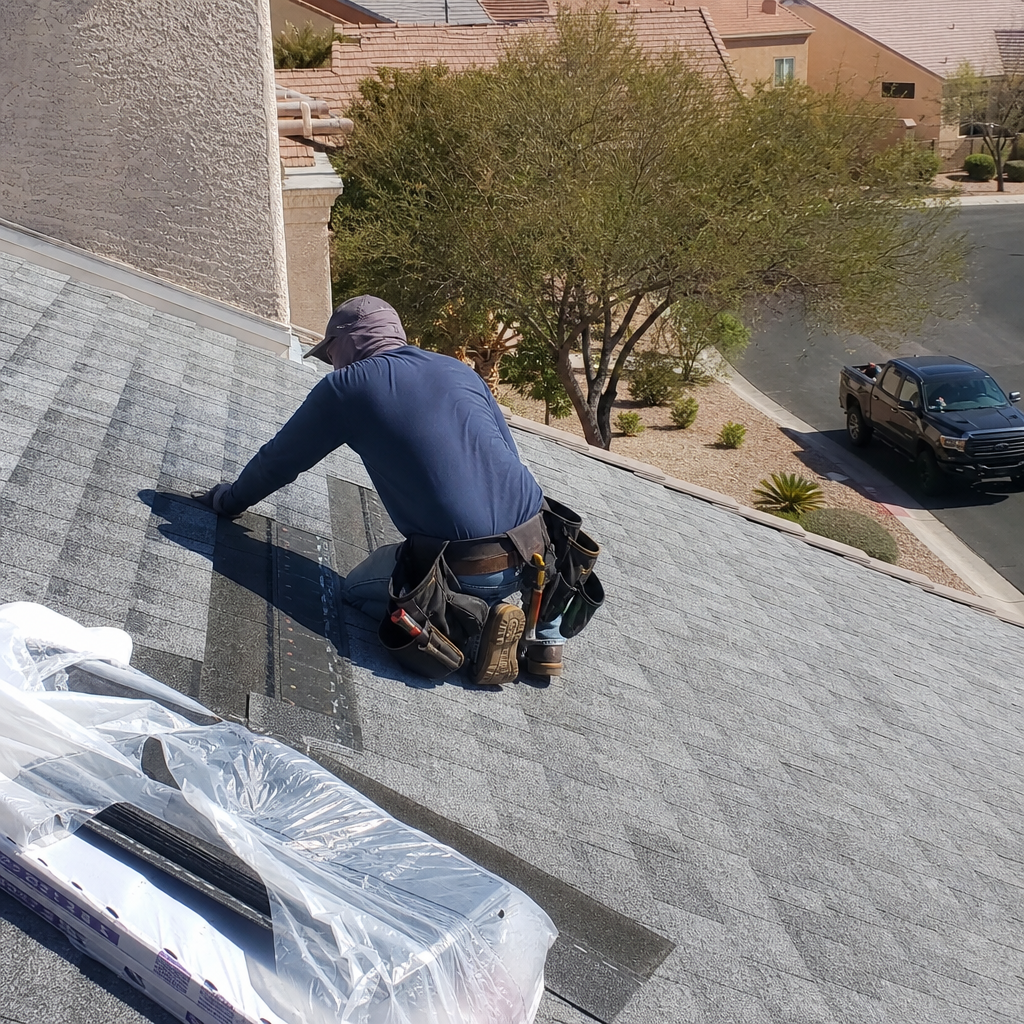
Flashing Repair
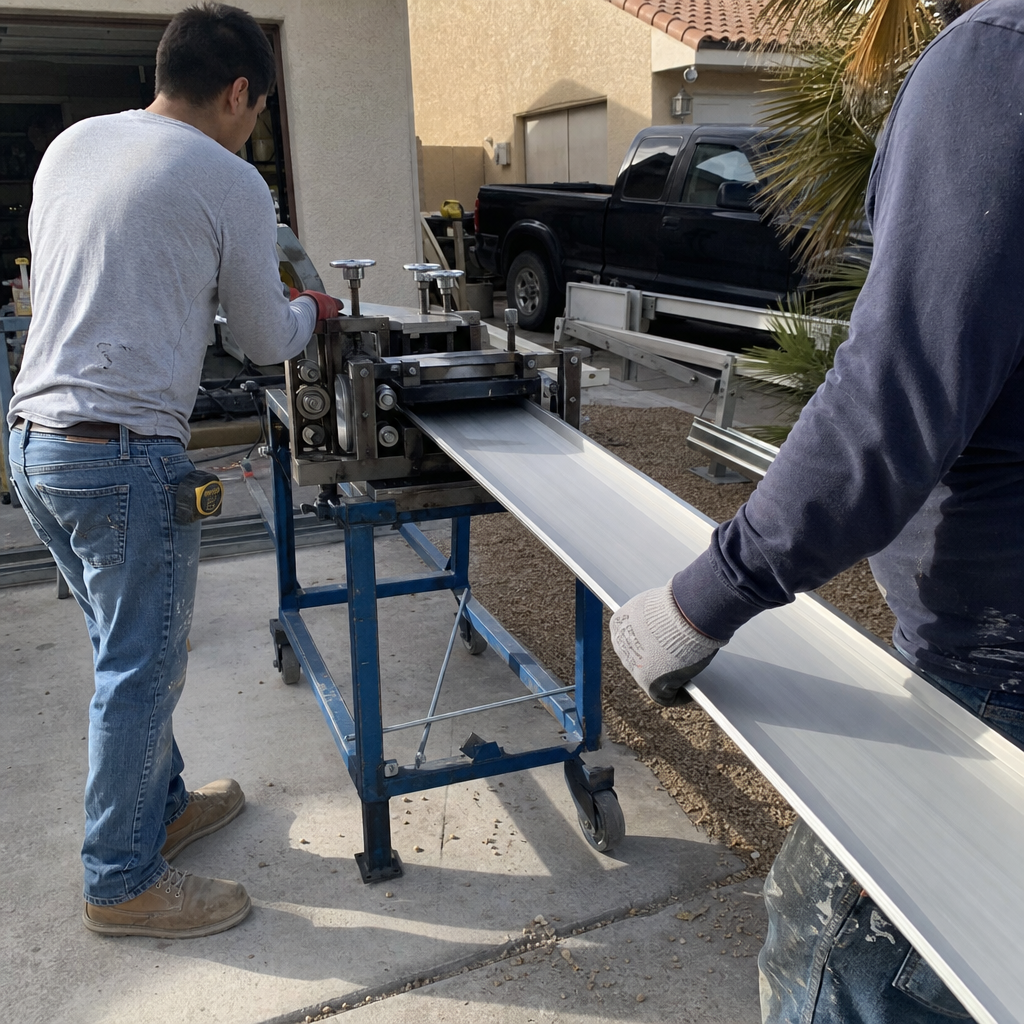
The parapet wall flashings on Whitney’s 1980s stucco ranch homes are a persistent weak point. The original installations typically used dry-lapped sheet metal — meaning the edges were folded over but never properly sealed with roofing cement or compatible sealant. A single high-desert wind gust lifts the leading edge, and the next monsoon’s water travels six feet inward along the deck before it shows up as a ceiling stain. Homeowners often discover this damage a full storm cycle after it happened. We re-flash these parapet terminations using materials compatible with the existing BUR or modified-bitumen surface, seal every edge, and inspect the adjacent membrane for secondary damage caused by the prolonged water intrusion.
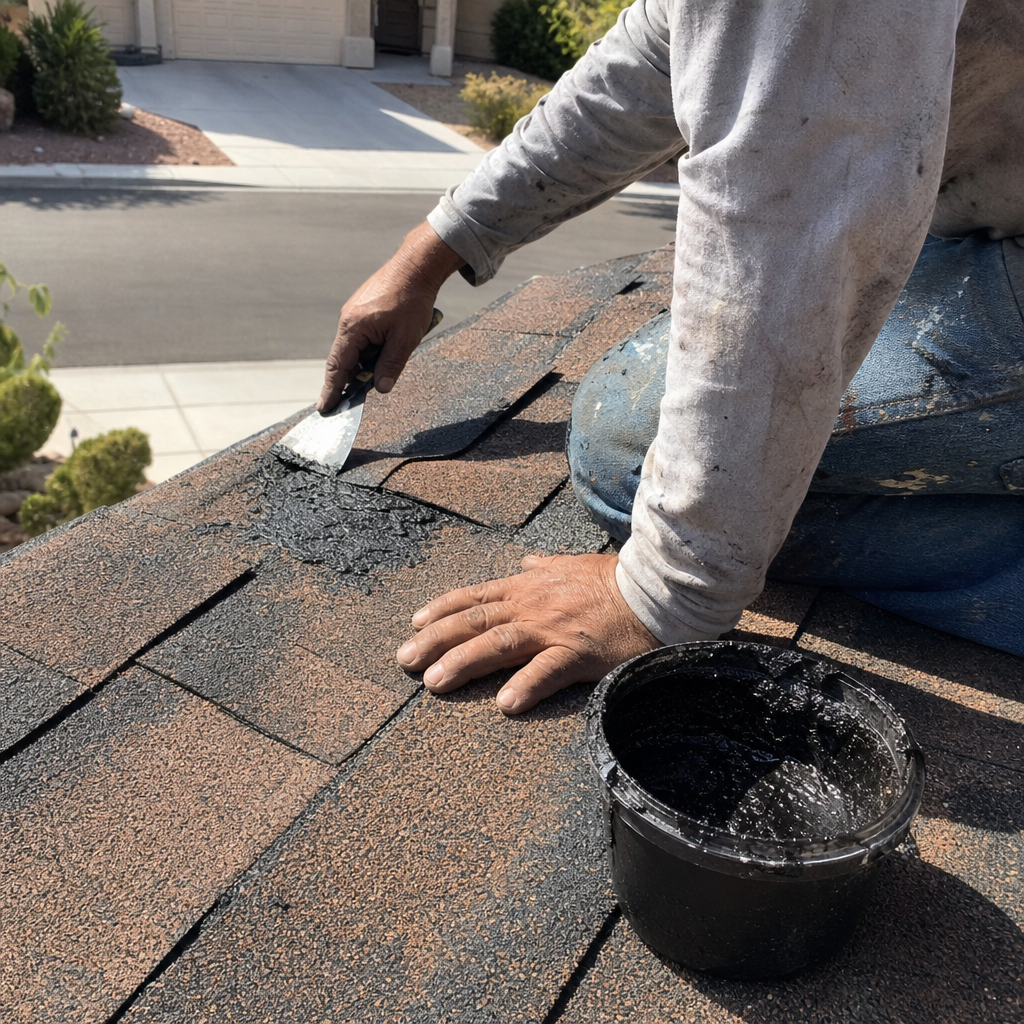
Shingle Replacement
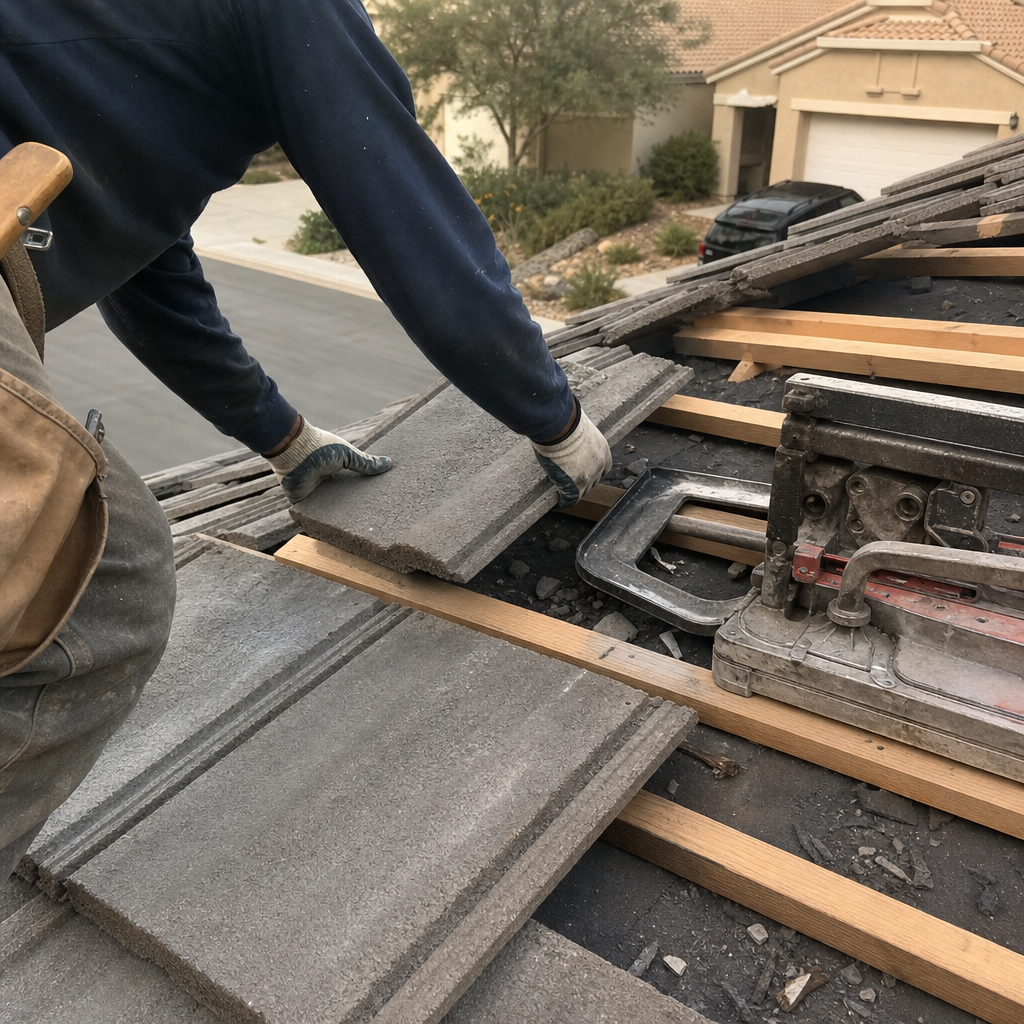
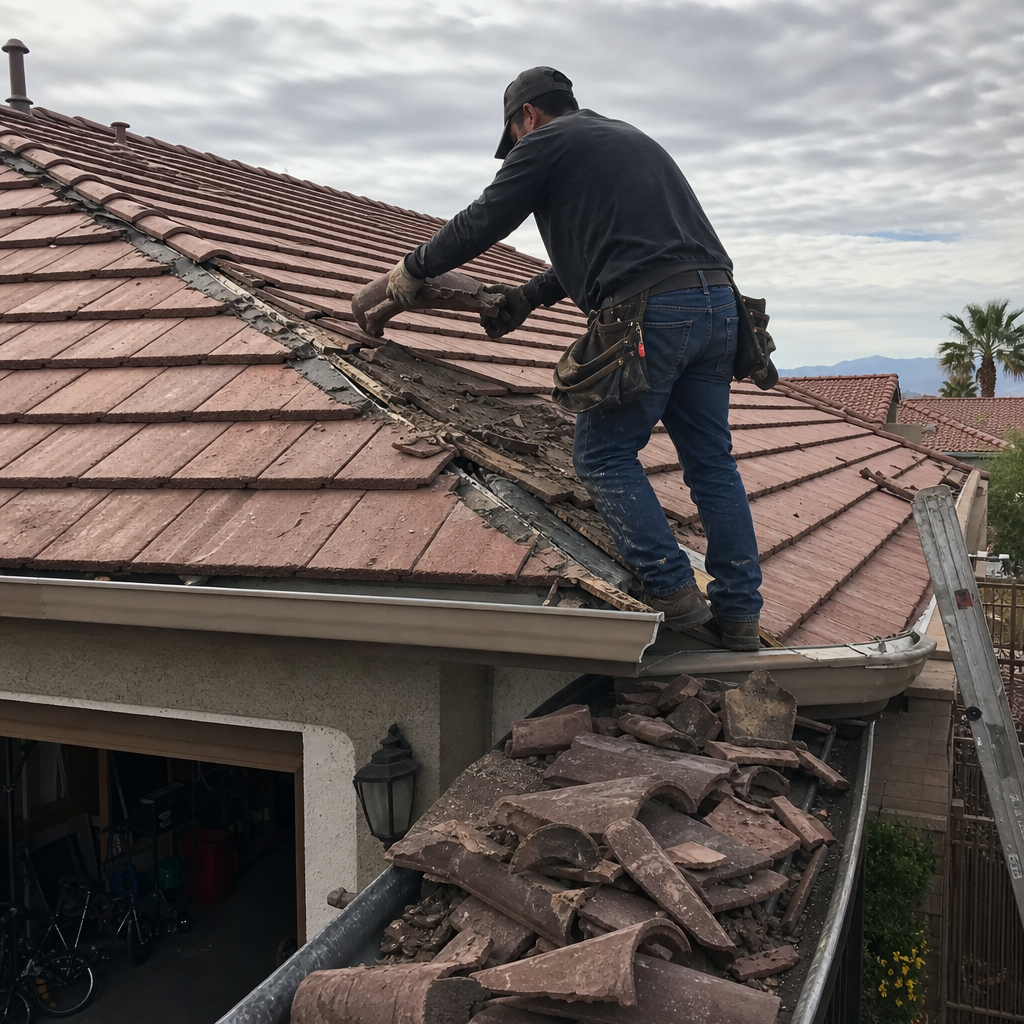
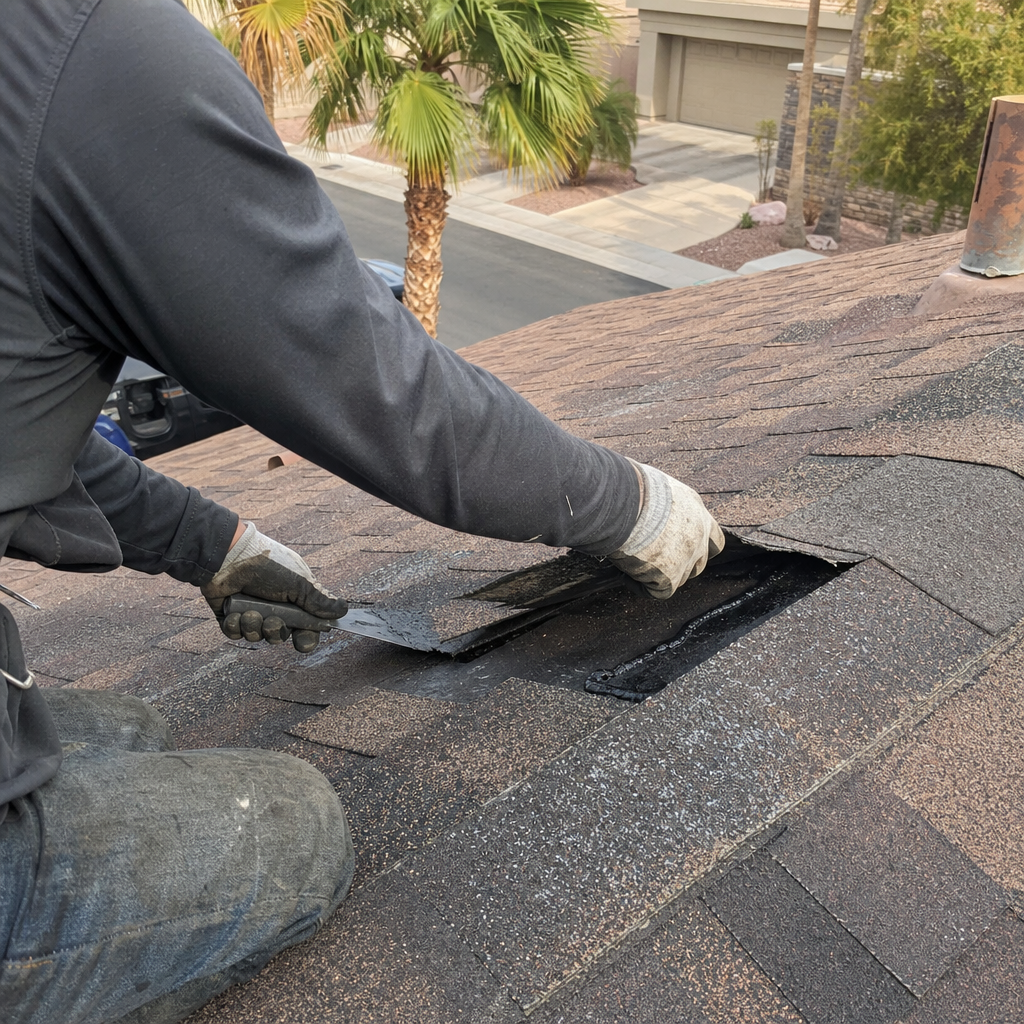
While Whitney’s dominant housing stock runs flat or low-slope, there are later infill properties and concrete tile homes throughout the community where pitched sections and shingle applications are part of the picture. When shingle sections fail — whether from UV degradation, wind lift, or cracked tabs — we match replacement material carefully. We work with GAF, CertainTeed, Owens Corning, IKO, Atlas, Tamko, and Boral, which means we’re not forcing a substandard color or weight match because we’re limited to one manufacturer’s current inventory. Getting the right shingle for a Whitney home’s specific pitch and exposure matters for both performance and appearance.
What happens when you call
- 1
A real person answersNo phone trees — you reach a local pro.
- 2
You get an upfront price rangeHonest numbers before anyone is dispatched.
- 3
A background-checked tech heads outLicensed & insured, dispatched right away.
- 4
You approve before work beginsNothing starts until you say go.
Trusted Brands We Service in Whitney
We work with seven of the roofing industry’s top material brands — GAF, CertainTeed, Owens Corning, IKO, Atlas, Tamko, and Boral — which gives Whitney homeowners real product choice rather than a take-it-or-leave-it option. On Whitney’s flat and low-slope roofs, that flexibility extends to modified-bitumen systems and BUR-compatible patching membranes from brands that actually perform under the Las Vegas Valley’s 160°F-plus rooftop temperatures. We carry materials suited to the specific demands of 89122’s housing stock, and we stock what we need to move quickly when a storm creates an urgent repair window.
Common Roof Repair Problems We See in Whitney Homes
- Scupper and interior drain blockage on 1970s flat roofs. Desert grit, gravel migration, and wind-blown debris pack Whitney’s original scuppers tight over decades of use. During a monsoon cell, a blocked scupper turns a flat roof into a retention pond within minutes — and the resulting ceiling damage is consistently misread as a membrane failure by crews who don’t check drainage first.
- Dry-lapped parapet flashing separating at corners. The original sheet-metal flashings on Whitney’s stucco ranch homes were installed without sealant at the termination edges. The combination of thermal cycling — extreme heat during the day, rapid cooling at night — and occasional high-desert wind gusts causes the edges to lift and separate, opening a direct water entry point at the parapet wall.
- UV and heat-accelerated BUR membrane oxidation. Rooftop temperatures in the Las Vegas Valley regularly exceed 160°F in summer. On Whitney’s original gravel-and-tar built-up systems, that sustained heat load oxidizes the asphalt binders far faster than the manufacturer’s rated service life assumed — producing surface cracking and brittleness that makes the membrane vulnerable to even moderate monsoon-driven hydrostatic pressure.
- Vent boot and pipe penetration failures on aging flat decks. The original neoprene and lead vent boots on Whitney’s 1970s and 1980s homes have been through 40-plus summers of UV exposure. The neoprene cracks, the lead fatigues, and water enters at every penetration point simultaneously during a heavy rain event. We see this most on homes that have had their BUR surface maintained but never had the penetration flashings updated to match the current membrane system.
The Whitney Permit Reality: Clark County, Not the City of Las Vegas
Whitney is an unincorporated Clark County community — which means every roofing permit, inspection, and contractor licensing compliance review runs through the Clark County Building Department, not the City of Las Vegas. That distinction matters more than most homeowners realize. Clark County operates its own fee schedule, its own inspection hold timelines, and its own wind-load code compliance review — and repair scopes that cross into re-decking trigger an inspection hold that can leave a storm-damaged flat roof exposed for days longer than an equivalent City of Las Vegas permit would. We’ve navigated the County’s process on Whitney’s aging flat-roof homes enough times to plan permit sequencing into the job timeline from day one, so there are no surprises when the inspector needs to clear a deck before we can proceed with the next layer. If your repair is straightforward patching below the re-decking threshold, we’ll tell you that upfront too — unnecessary permits add cost and time, and we’re not going to manufacture scope to justify one.
Pricing for Roof Repair in Whitney, NV
Roof repair pricing in Whitney’s 89122 market reflects both the age of the housing stock and the complexity of flat-roof diagnosis. Here are honest ranges based on what we routinely handle in this neighborhood:
- Scupper clearing and drainage restoration: $150–$350, depending on access and blockage severity
- Flat roof patch (modified-bitumen, per section): $380–$850 for isolated stress-cracked or blown sections on existing BUR systems
- Parapet flashing repair or re-termination: $300–$700 per wall section, depending on linear footage and substrate condition
- Vent boot or pipe penetration replacement: $180–$380 per penetration
- Leak diagnosis and repair (single entry point): $275–$600 for most Whitney ranch-home scenarios
- Full BUR tear-off and re-deck (if required by County inspection): $4,500–$11,000+ depending on square footage and deck condition
What drives cost up on Whitney’s flat roofs is deck condition underneath. If the original plywood or board decking has been holding moisture for years, re-decking adds material and labor that patching alone won’t justify. We give you a straight assessment before any work starts — no pressure to replace what can honestly be repaired. Call (725) 529-9119 for a free on-site estimate; we’ll tell you exactly where your roof stands.
We Also Serve Cities Near Whitney
Beyond Whitney, we regularly handle roof repair jobs throughout the surrounding area — including Paradise, Winchester, Sunrise Manor, and Las Vegas. Each of these communities has its own mix of housing ages and roof types, and we carry material inventory suited to all of them. If you’re just outside the 89122 ZIP but neighboring Whitney, give us a call — we’re already in the area.
Serving Whitney, NV — Our Local Coverage Area
We’re based in the Whitney area and know this community well. Use the map below to see our service coverage — if you’re nearby, we can almost certainly help.
FAQs — Roof Repair in Whitney
It depends on the scope of the repair, and the answer matters. In Whitney’s unincorporated 89122, all roofing permits route through the Clark County Building Department — not the City of Las Vegas — and the threshold that triggers a required permit is different than what city-side homeowners are used to. A straightforward modified-bitumen patch over an intact deck typically falls below the permit threshold. But if the repair requires replacing or repairing the decking underneath, Clark County requires a permit and inspection hold before the new roof surface can be applied. We assess that threshold on every job before we write the scope — so you know what you’re looking at before work starts. Call (725) 529-9119 and we’ll walk you through it.
It’s possible — and it’s actually the most common diagnostic finding on Whitney’s 1970s flat roofs. The scuppers on these original drainage systems were sized for near-zero annual rainfall. During a monsoon cell that drops an inch in under 30 minutes, a partially or fully clogged scupper backs water across the entire deck surface within minutes. The membrane doesn’t have to be compromised for water to enter — it just has to be sitting under six inches of standing water long enough to find any lap joint, penetration, or parapet termination. We clear and test drainage before we evaluate the membrane on every Whitney flat-roof call. If the membrane is still sound after drainage is restored, we tell you that directly. Call (725) 529-9119 to get an honest second opinion.
Sustained rooftop temperatures above 160°F accelerate oxidation in asphalt-based membranes significantly faster than manufacturers’ rated service life assumes — which was typically calculated for milder climate zones. On Whitney’s original gravel-and-tar BUR systems, that heat load has already done decades of cumulative damage to the binders. A patch applied on top of a heavily oxidized substrate has a shorter effective bond life than the same patch applied to a healthier surface. We don’t hide that fact. When the underlying membrane is too far degraded for a patch to be a durable repair, we say so and give you a full-replacement scope with honest pricing. When patching genuinely makes sense, we use modified-bitumen material rated for high-temperature applications — not the cheapest compatible product. Call (725) 529-9119 for a clear assessment of where your roof actually stands.
Lifting parapet flashing on a Whitney ranch home is typically both — it started as a maintenance failure (original dry-lapped sheet metal that was never properly sealed) and it becomes a storm-damage vector the moment a monsoon wind gets underneath it. Clark County inspectors look at parapet termination condition during any re-roofing or re-decking inspection, and lifted or unsealed flashings at the parapet can flag the job for corrective work before approval is granted. Even if your repair doesn’t require a full County inspection, that open flashing edge is actively letting water travel along the deck. We repair parapet flashings as part of our standard scope on Whitney’s older flat roofs — it’s not a separate add-on, it’s part of doing the job correctly. Call (725) 529-9119 for a free look.
Yes, we can patch isolated sections — and on Whitney’s aging BUR systems, we do it regularly when the rest of the membrane still has reasonable integrity. The honest answer is that whether a patch is the right call depends on how much of the original membrane is still sound. If stress cracking and oxidation are isolated to one or two sections and the rest of the deck is dry and intact, a targeted modified-bitumen patch is a legitimate repair with a meaningful service life. If the membrane is failing broadly across the deck, patching buys months, not years, and we’ll tell you that directly rather than let you spend money on a temporary fix. Nearly two decades working on Whitney’s flat-roof housing stock has made us direct about that distinction. Call (725) 529-9119 and we’ll give you a straight answer after we see the roof.
Ready to stop guessing and get your Whitney roof diagnosed correctly? Call (725) 529-9119 to schedule a free estimate with Jose Diaz and the Total Roof Protection Specialists crew. We know Whitney’s roofs, we know Clark County’s permit process, and we’ll give you a clear scope before any work begins.
Reviewed by Jose Diaz, Owner and Lead Technician at Total Roof Protection Specialists, serving Whitney, NV and the greater Las Vegas Valley for 18 years.