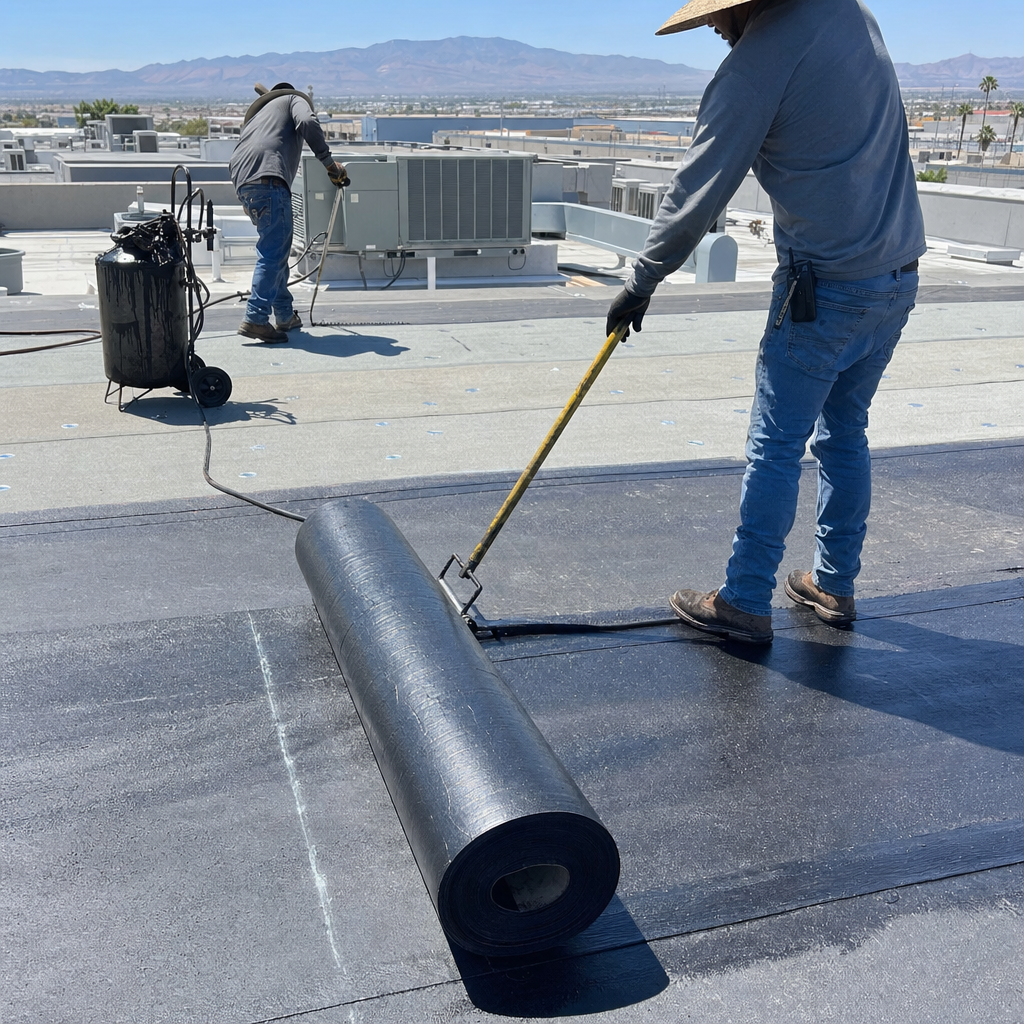
Fast, Reliable Specialty Roofing Across Las Vegas
Specialty roofing in Las Vegas means something different than it does in most U.S. cities — flat patio membranes butting directly against steep concrete-tile fields, solar-ready underlayment installations on 20-year-old roofs, and monsoon-triggered failures that show zero warning signs from the street. Our Specialty Roofing team has handled every variation of that complexity across Las Vegas for 18 years. If you need an honest assessment and a crew that actually shows up, call us at (725) 529-9119 for a free estimate.
Why Total Roof Protection Specialists Is Las Vegas’s Preferred Specialty Roofing Company
Jose Diaz doesn’t just run the company — he runs the job. That matters in a market like Las Vegas, where the roofing work routinely involves transitioning between two completely different systems on the same structure in the same afternoon. With 18 years of continuous, hands-on experience across Las Vegas and surrounding communities, Jose has personally overseen hundreds of tile-lift replacements, TPO membrane installations, and modified bitumen torch-down jobs — the kind of work that separates a specialty roofer from a generalist.
A 4.9 rating across 788 verified reviews isn’t marketing — it’s a track record. Las Vegas homeowners have left those reviews because the work held up through subsequent monsoon seasons, because phone calls got answered, and because the crew that showed up was the same crew Jose described when he wrote the estimate. Nearly two decades and nearly 800 five-star roofs later, we know this market’s specific failure modes better than most.
Our Specialty Roofing Services in Las Vegas
Solar-Ready Roofing in Las Vegas
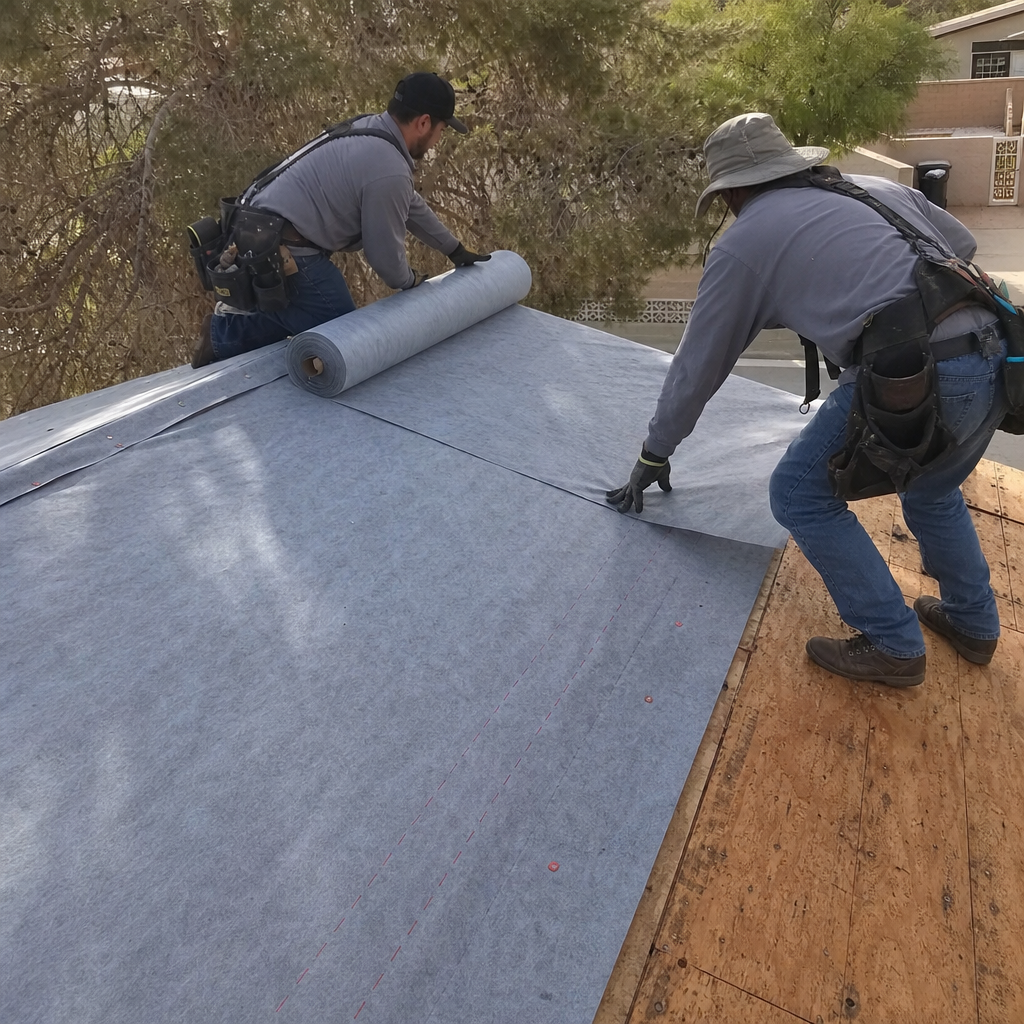
Las Vegas receives more annual sun hours than almost any other major U.S. metro, which makes solar adoption here not a trend but a financial calculation most homeowners eventually run. The problem is that solar rail feet anchored through a concrete tile field older than 18–20 years are often penetrating what looks like a solid deck but is actually a powdered layer of desiccated 30-lb felt with zero waterproofing integrity beneath the tiles. We perform a full tile-lift inspection before any solar-ready underlayment installation — confirming deck integrity, replacing failed felt with a modern synthetic layer, and ensuring every penetration is flashed correctly so that the solar installation above it doesn’t create the next monsoon leak. Skipping that step is the most common and most expensive mistake we see on Las Vegas solar projects.
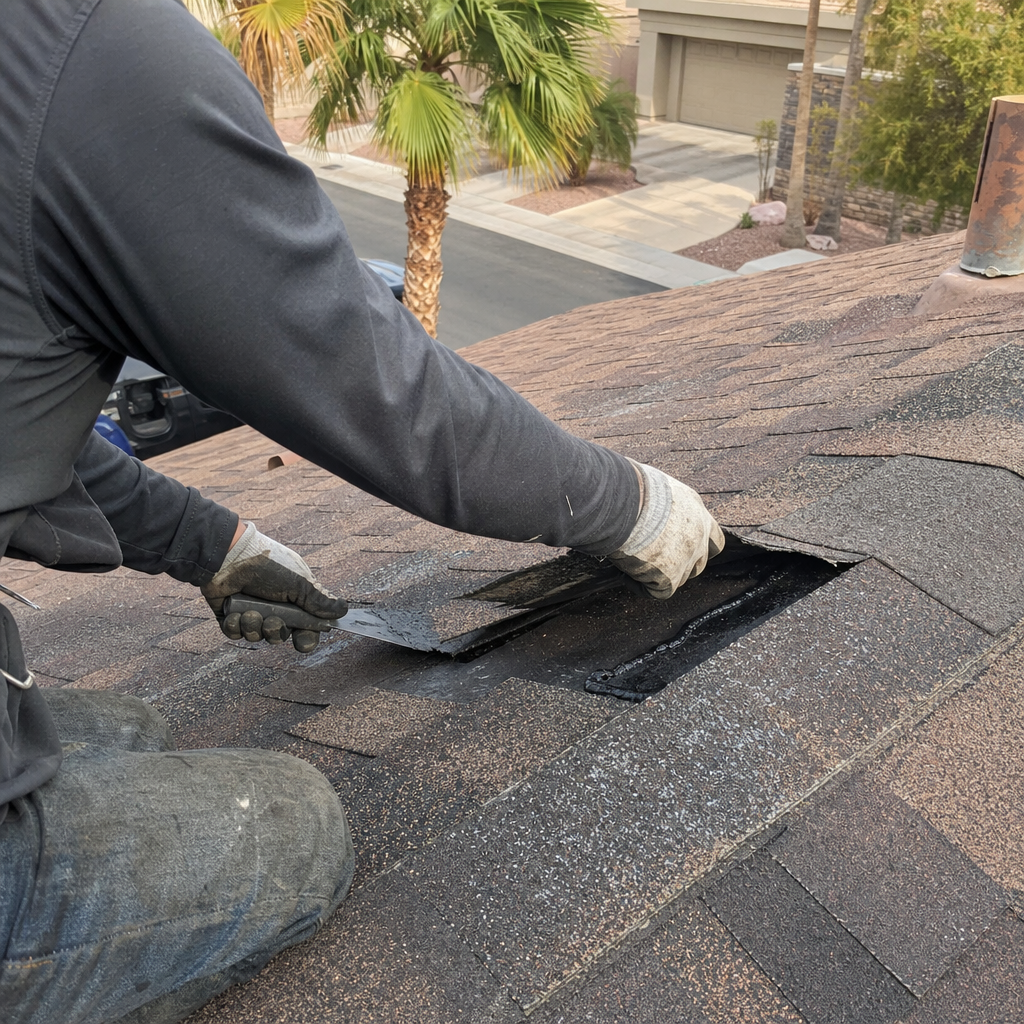
TPO Roofing in Las Vegas
TPO is the right membrane for Las Vegas flat sections — but only when it’s the right TPO. Standard commercial-grade TPO specified without UV-stabilized formulations will blister and delaminate at seams under the Mojave’s UV index, which ranks among the highest of any major U.S. metro. We see this failure regularly on low-slope patio covers and attached casitas in master-planned communities along the 89134 and 89052 zip code corridors — Summerlin and Henderson subdivisions where those flat sections were built as architectural features in the 1990s and have now cycled through 25-plus years of extreme heat. A typical TPO roofing installation on a residential flat section in Las Vegas runs $6.50–$9.50 per square foot, depending on membrane thickness, deck condition, and whether existing insulation needs replacement.
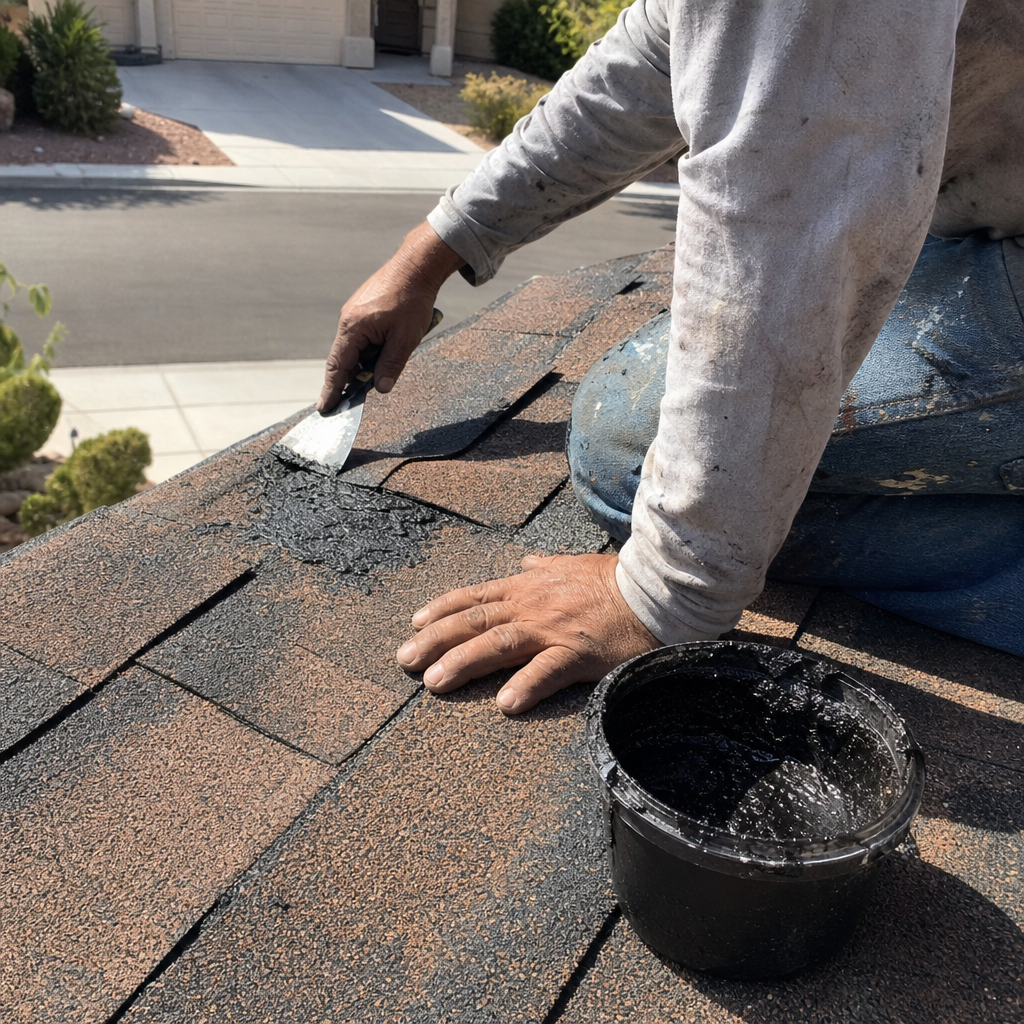
EPDM Roofing in Las Vegas
EPDM rubber membranes have a legitimate role on shaded or low-thermal-load flat sections in Las Vegas, but they require correct adhesive and seam tape rated for extreme heat — standard cold-process adhesives soften at the surface temperatures a Las Vegas roof reaches in July. We install EPDM on the right projects with full attention to seam integrity, because a seam failure on a Las Vegas flat roof rarely gets discovered until a monsoon delivers an inch of rain in 30 minutes and the ceiling shows it. EPDM installations in Las Vegas typically run $5.50–$8.00 per square foot for residential flat sections.
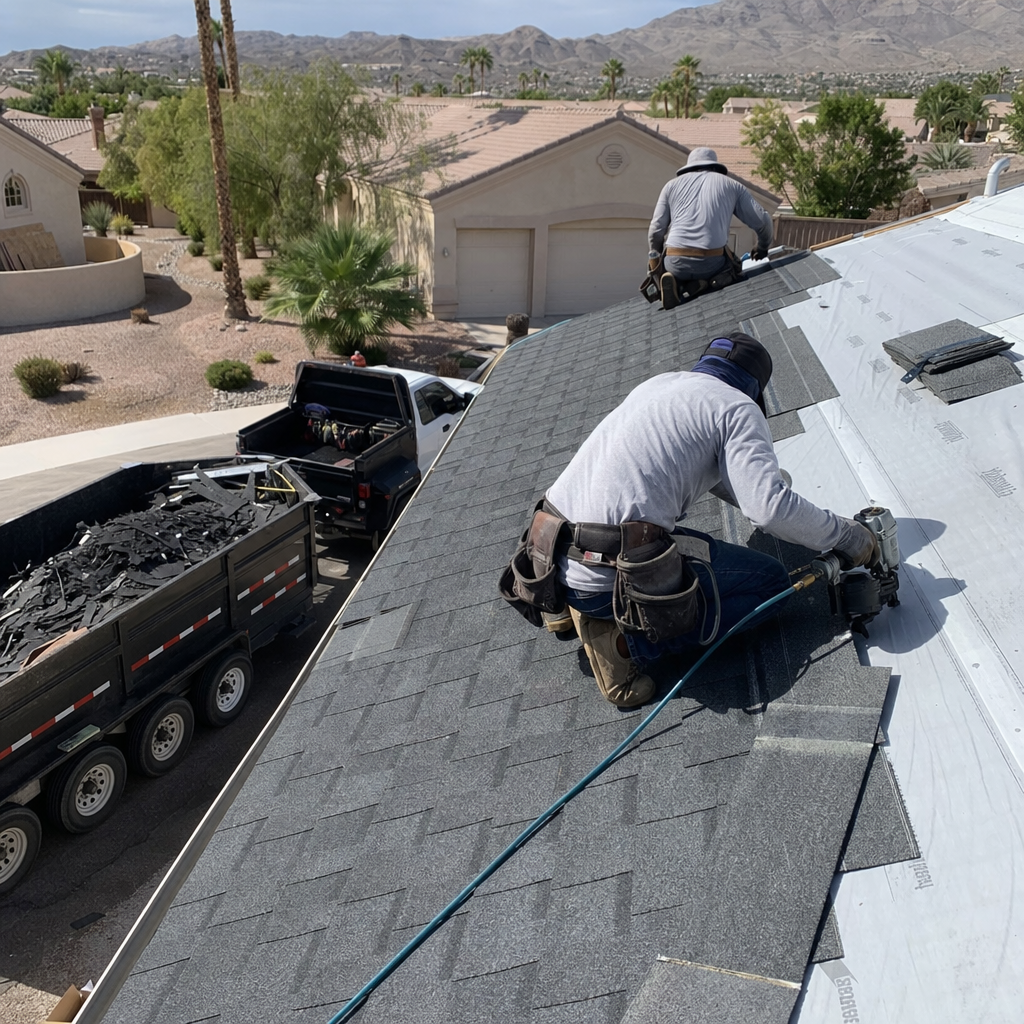
Modified Bitumen in Las Vegas
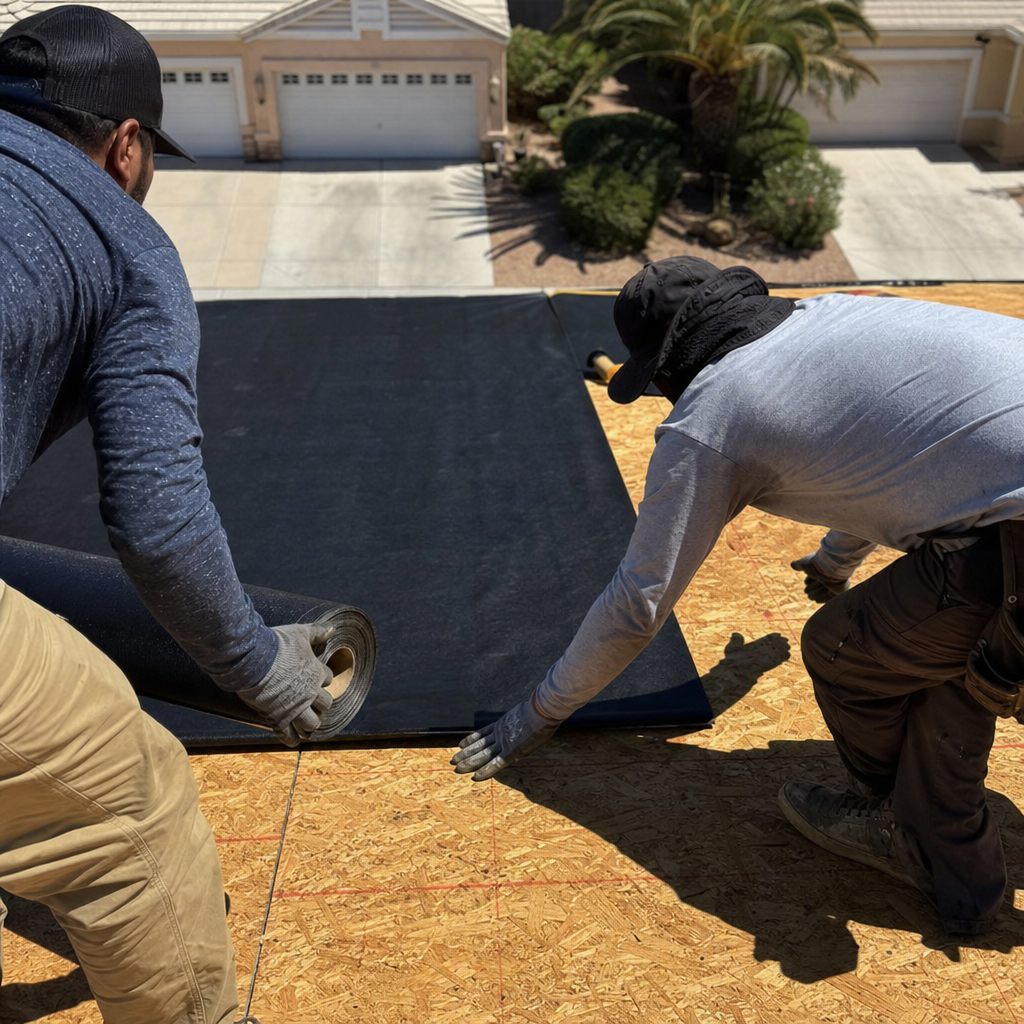
Modified bitumen torch-down is the workhorse flat-roof system for Las Vegas residential work, and it’s where local expertise genuinely separates good outcomes from callbacks. Lap seam failures on older North Las Vegas flat roofs happen when desiccated flashing — cracked by decades of heat cycling between 150°F attic temperatures and rapid monsoon cooling — lets fast-moving July storm water wick under the membrane invisibly. We’ve walked into North Las Vegas homes near Carey Avenue and Lamb Boulevard where the interior ceiling damage looked recent but the membrane had been compromised for multiple monsoon seasons. A two-ply modified bitumen system in Las Vegas runs $5.00–$8.50 per square foot, with older North Las Vegas flat roofs typically sitting at the higher end due to deck remediation needs.
Built-Up Roofing (BUR) in Las Vegas
Built-up roofing still exists on a meaningful share of Las Vegas’s older commercial and multi-unit residential stock, particularly downtown and in older North Las Vegas neighborhoods where flat roofs from the 1970s and 1980s were installed with gravel-surfaced BUR systems. These roofs are long past their engineered lifespan, and we typically assess whether overlay or full tear-off is the right call based on deck condition and existing insulation values. BUR replacement in Las Vegas runs $4.50–$7.50 per square foot depending on ply count and gravel ballast removal.
What happens when you call
- 1
A real person answersNo phone trees — you reach a local pro.
- 2
You get an upfront price rangeHonest numbers before anyone is dispatched.
- 3
A background-checked tech heads outLicensed & insured, dispatched right away.
- 4
You approve before work beginsNothing starts until you say go.
The Las Vegas Dual-System Reality — What Most Roofers Aren’t Prepared For
Here’s something that doesn’t get talked about enough in roofing: Las Vegas’s master-planned tile roofs — built at scale across Summerlin and Green Valley in the 1990s and 2000s — create a specialty roofing environment where TPO and modified bitumen systems are routinely installed not on commercial buildings but on the low-slope patio covers and attached casitas that are architectural staples of those subdivisions. A single residential structure in the 89134 or 89014 zip code might have a 6:12 concrete tile field on the main house transitioning directly to a flat membrane section over a rear casita — two completely different roofing systems with two completely different failure modes, both demanding attention in the same visit. That dual-system complexity on a single home is virtually absent in neighboring Reno or Phoenix markets. Crews that don’t regularly navigate that transition — matching flashing details, managing drainage at the step, torching membrane right up to tile terminations — produce leaks at exactly the junction where the two systems meet.
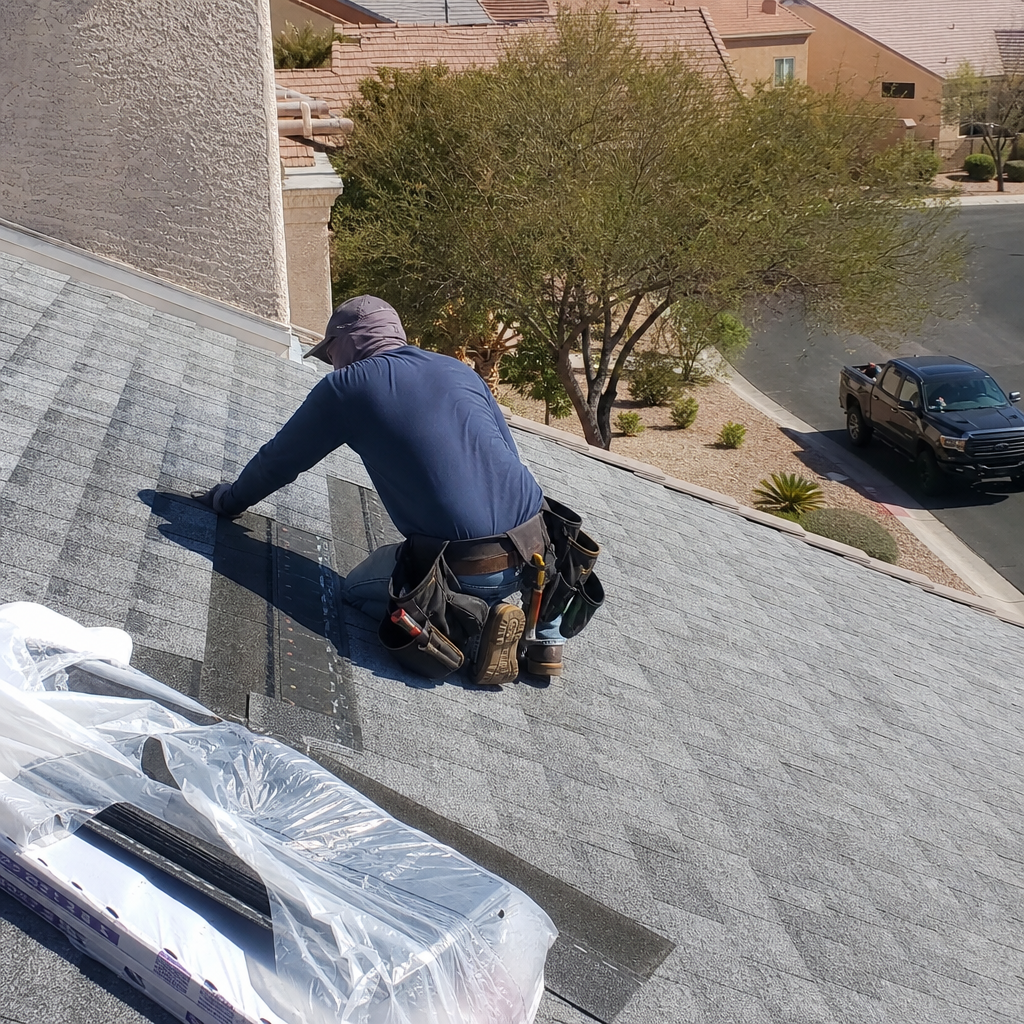
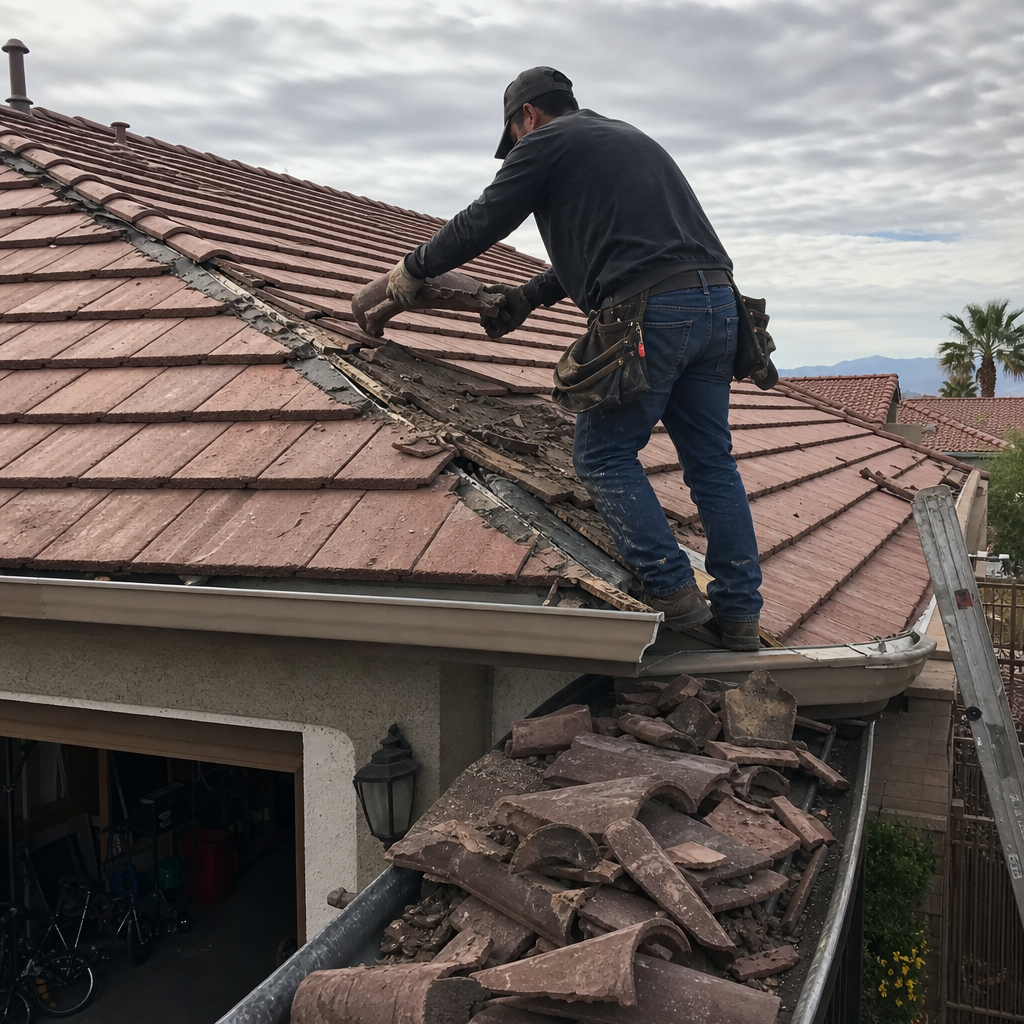
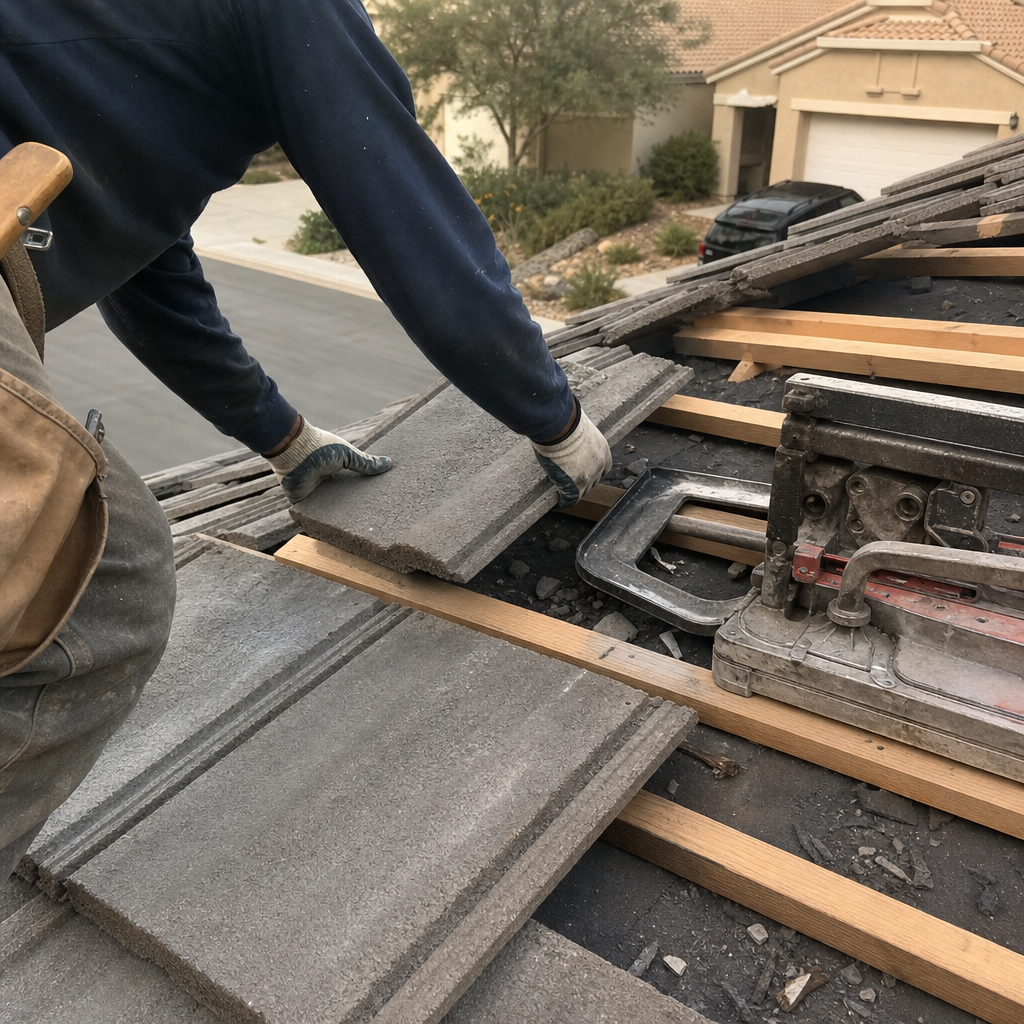
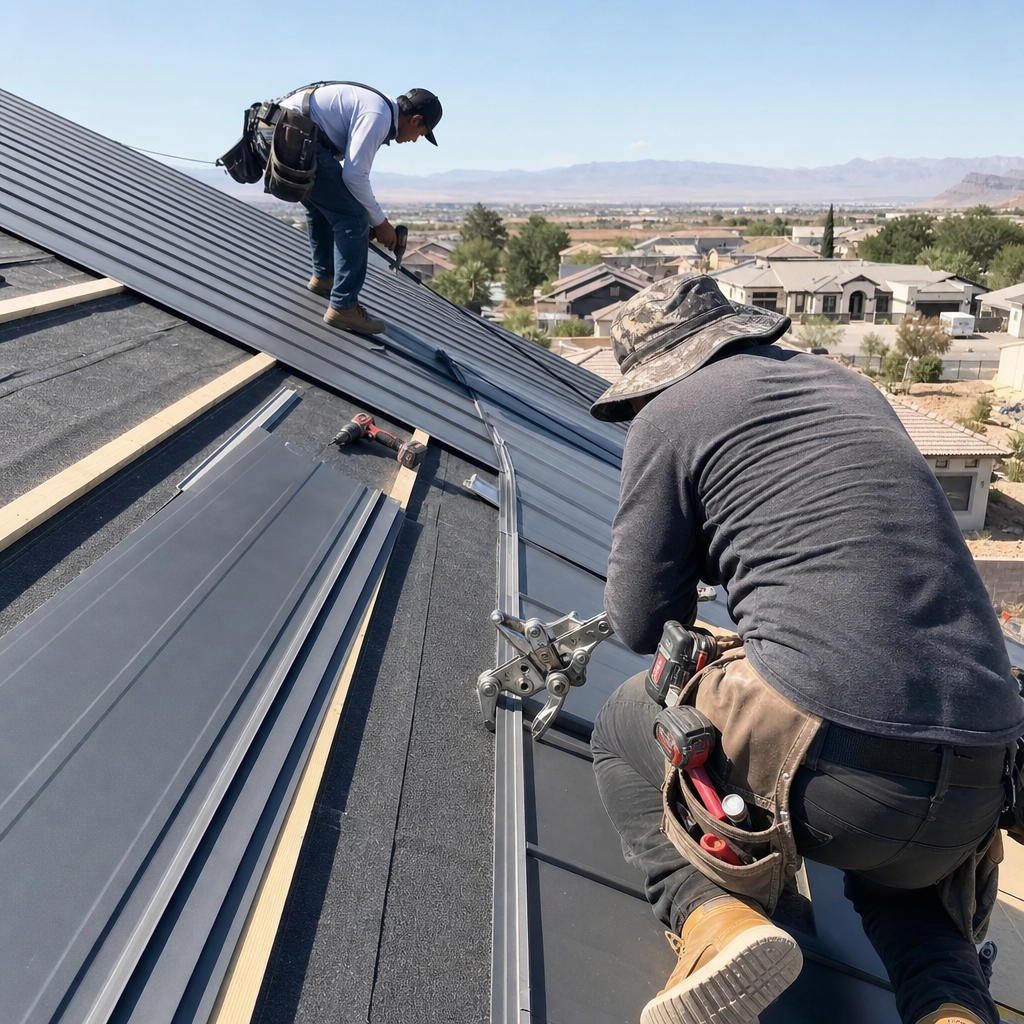
We ran into a textbook version of this on a Green Valley home that had survived 22 monsoon seasons without a visible crack. The concrete tiles looked showroom-clean from the street. Once we lifted the field tiles, we found the 30-lb felt underlayment had crumbled to a rust-colored powder from years of 150°F attic heat — essentially non-existent as waterproofing. We completed a full tile-lift-and-relay on the main field, reseating every concrete tile, and torched down a two-ply modified bitumen cap sheet on the home’s rear patio low-slope section using Boral-compatible flashing details. The result handles both the Mojave UV load and the next monsoon surge. That’s what this market actually requires.
Common Specialty Roofing Problems We See in Las Vegas Homes
- Powdered felt underlayment beneath intact-looking concrete tiles. The Mojave Desert’s 150°F attic temperatures destroy 30-lb felt in 15–20 years, completely invisibly — the tiles above look fine while the waterproofing layer beneath has turned to dust. This is the dominant hidden failure on Las Vegas tile roofs built during the 1990s and 2000s master-planned community boom across Summerlin, Henderson, and Green Valley.
- TPO seam delamination on residential patio and casita flat sections. Standard commercial-grade TPO membranes blistered and delaminating at seams are a pattern we see repeatedly on 1990s–2000s Las Vegas homes where the flat patio section was installed with materials specified for milder UV environments. The Mojave’s UV index is among the highest of any major U.S. metro, and it punishes under-spec membranes within 8–12 years.
- Modified bitumen lap seam failures on older North Las Vegas flat roofs. Heat cycling between extreme summer temperatures and rapid monsoon cooling cracks and desiccates flashing over time, creating micro-channels at lap seams where fast-moving monsoon water wicks under the membrane undetected. By the time interior ceiling damage appears, the moisture intrusion has typically been active for multiple storm seasons.
- Solar rail penetrations through failed underlayment on older tile fields. Solar installations anchored through concrete tile fields older than 18–20 years are often penetrating a deck that has lost its underlayment waterproofing entirely. Every rail foot becomes a potential leak point. We see this across Las Vegas solar retrofits where no tile-lift inspection was done prior to installation — a problem that neither the solar installer nor the homeowner discovered until the first heavy monsoon.
Pricing for Specialty Roofing in Las Vegas, NV
Here are honest Las Vegas market ranges for the specialty systems we install most frequently:
| System | Typical Las Vegas Range |
|---|---|
| TPO Roofing (residential flat section) | $6.50–$9.50 per sq ft |
| EPDM Roofing (residential flat section) | $5.50–$8.00 per sq ft |
| Modified Bitumen (2-ply torch-down) | $5.00–$8.50 per sq ft |
| Built-Up Roofing (BUR) replacement | $4.50–$7.50 per sq ft |
| Solar-Ready Underlayment (tile-lift + synthetic) | $3.50–$6.00 per sq ft (underlayment only, excludes tile relay labor) |
| Full Tile-Lift-and-Relay with new underlayment | $4.00–$7.00 per sq ft depending on tile condition and roof complexity |
What moves a Las Vegas job toward the higher end: deck damage requiring board replacement, older North Las Vegas homes with original 1970s–1980s decking, difficult access or multi-level structures, and dual-system transitions between steep tile and flat membrane sections. The right material for your roof is chosen from seven of the industry’s best brands — GAF, CertainTeed, Owens Corning, IKO, Atlas, Tamko, and Boral — not just whatever’s on the truck. Call (725) 529-9119 for a free, no-obligation estimate.
Trusted Brands We Service in Las Vegas
The right membrane, underlayment, or cap sheet for a Las Vegas roof isn’t always the same answer as for a roof in Seattle or Dallas — UV ratings, heat resistance, and thermal expansion characteristics matter here in ways they don’t everywhere else. We work with materials from GAF, CertainTeed, Owens Corning, IKO, Atlas, Tamko, and Boral specifically because having seven manufacturer relationships means we can specify what’s actually correct for a Mojave Desert exposure rather than defaulting to whatever’s most available. For Las Vegas homeowners, that material flexibility translates directly to systems that hold up through monsoon season and don’t require callbacks two summers later.
We Also Serve Cities Near Las Vegas
Beyond Las Vegas proper, our specialty roofing crews regularly work across Spring Valley, Winchester, Paradise, and North Las Vegas — communities with the same 1990s–2000s tile-roof housing stock, the same Mojave UV conditions, and the same monsoon-season failure patterns. If your home is in any of these areas and you’re seeing signs of a flat section leak or need a solar-ready underlayment evaluation, the same crew and the same standards apply.
Serving Las Vegas, NV — Our Local Coverage Area
We’re based in the Las Vegas area and know this community well. Use the map below to see our service coverage — if you’re nearby, we can almost certainly help.
FAQs — Specialty Roofing in Las Vegas
Concrete tiles in Summerlin can last 50 years or more — the tiles themselves are not the problem. The 30-lb felt underlayment beneath them fails in 15–20 years because Las Vegas attic temperatures routinely exceed 150°F, essentially baking the felt to a powder over time. From the street, the roof looks perfect. From under the tiles, there’s no waterproofing left. The first heavy monsoon rain exposes that failure catastrophically — interior ceiling damage, soaked insulation, and damaged drywall — even though nothing on the exterior looked wrong the day before. If your Summerlin tile roof is 18–22 years old, a tile-lift inspection is not optional maintenance, it’s overdue. Call (725) 529-9119 to schedule an assessment.
Solar-ready roofing means verifying and, where necessary, replacing the underlayment beneath a concrete or clay tile field before solar rail feet are anchored through the deck. It matters more in Las Vegas than almost anywhere else because the city’s extreme UV and heat conditions degrade underlayment faster than any comparable U.S. market, and because Las Vegas solar adoption rates are among the highest in the country — meaning a large share of the existing tile-roof housing stock is getting solar mounted on underlayment that may already be compromised. A solar rail foot anchored through failed underlayment creates a leak point the moment rain finds it. Doing the underlayment inspection first costs a fraction of repairing water damage after the fact. Call (725) 529-9119 for a pre-solar roof evaluation.
Yes — and that’s exactly the kind of dual-system job our crew is set up to handle. The attached flat patio section and the main concrete tile field require two completely different approaches: a membrane system (typically modified bitumen or TPO) on the flat, and a tile-lift-and-relay with new underlayment on the steep section. The critical detail is the transition flashing where the two systems meet, which is where Las Vegas homes most commonly develop leaks when a contractor handles one system but not the other. We bring the materials, the flashing details, and the experience to complete both in a single mobilization. Call (725) 529-9119 to get both sections quoted together.
For most Las Vegas residential flat sections with direct sun exposure, UV-stabilized TPO is the stronger choice — it reflects heat, maintains seam integrity better under extreme UV, and is better suited to the Mojave’s thermal conditions when correctly specified. EPDM is a viable option on shaded or low-thermal-load sections, but requires adhesives and seam tape specifically rated for extreme heat, and its dark surface absorbs heat in ways that matter on a Las Vegas roof. The honest answer is that material selection depends on your specific flat section — its orientation, shading, existing deck condition, and whether it’s transitioning to an adjacent tile field. Call (725) 529-9119 and we’ll tell you exactly what makes sense for your roof.
Because Las Vegas homeowners tend not to maintain roofs on an annual schedule — 4 inches of annual rainfall means a cracked flashing, failed underlayment, or compromised seam can sit undetected for years. When the July–September monsoon window arrives and delivers an inch of rain in under an hour, every deferred failure reveals itself simultaneously. The tiles look fine from the street. The homeowner hasn’t seen water in years. Then one monsoon storm finds every crack, every dried-out lap seam, and every powdered felt section at once. Jose Diaz and the Total Roof Protection Specialists team are set up for exactly that scenario — if you’re seeing ceiling stains after a monsoon hit, call (725) 529-9119 before the next storm arrives.
Schedule Your Free Specialty Roofing Estimate in Las Vegas
If your Las Vegas home has a tile roof older than 18 years, a flat patio section that hasn’t been inspected recently, or a solar installation planned for the near future, the inspection conversation is worth having now — before a monsoon makes it urgent. Jose Diaz personally oversees every job we take on, and the estimate is free. Call Total Roof Protection Specialists at (725) 529-9119 and we’ll schedule a time that works for you.
Reviewed by Jose Diaz, Owner and Lead Technician at Total Roof Protection Specialists, serving Las Vegas, NV since 2007.