
Last updated June 27, 2026
Seasonal Roofing Care for Las Vegas: Year-Round Homeowner’s Guide
Most roofing guides treat Las Vegas like it’s just hot all year — slap on some reflective coating, clear the gutters once, and call it done. That’s a costly oversimplification. The temperature swings between a January night in Summerlin and a February afternoon in Henderson can exceed 40°F in a single day, and that kind of thermal cycling creates more flashing movement and sealant cracking than anything summer throws at a roof. Add monsoon-driven moisture loads, UV degradation that accelerates faster here than almost anywhere in the country, and occasional freeze-thaw cycles at elevation, and you’re looking at four genuinely distinct roofing stress periods — not one long hot stretch. This guide maps all four, tells you exactly what to check during each one, and shows you how to build a 12-month maintenance routine that takes about two hours a year but can add five to eight years to your roof’s service life.
Quick Answer
Las Vegas roofs face four distinct stress periods — spring thermal expansion, summer monsoon moisture, fall pre-winter prep, and winter freeze-thaw cycling — each requiring a specific maintenance response. A homeowner who spends roughly two hours per year on seasonal inspections and targeted maintenance can realistically extend their roof’s lifespan by five to eight years and avoid the emergency repair calls that cost two to four times more than preventive work. The sections below break down exactly what to do and when.
Table of Contents
- Spring (March–May): Thermal Expansion and Sealant Recovery
- Summer (June–September): Monsoon Season and Drainage Management
- Fall (October–November): The Highest-ROI Maintenance Window of the Year
- Winter (December–February): Why Las Vegas Winters Still Matter for Roofs
- Your 12-Month Roofing Calendar for Las Vegas
- Choosing the Right Materials for the Las Vegas Climate
- Common Mistakes to Avoid
- When to Call a Professional
- Frequently Asked Questions
- The Bottom Line
Spring (March–May): Thermal Expansion and Sealant Recovery
Spring is when the damage from winter cycling becomes visible — and when most Las Vegas homeowners are completely unprepared for what they find. After months of 35°F nights and 65°F afternoons, every metal flashing on your roof has expanded and contracted hundreds of times. The sealant around pipe boots, skylights, HVAC curbs, and chimney step flashings bears the brunt of that movement, and by March, hairline cracks are common even on roofs that looked fine the previous fall.
What to inspect during the spring window:
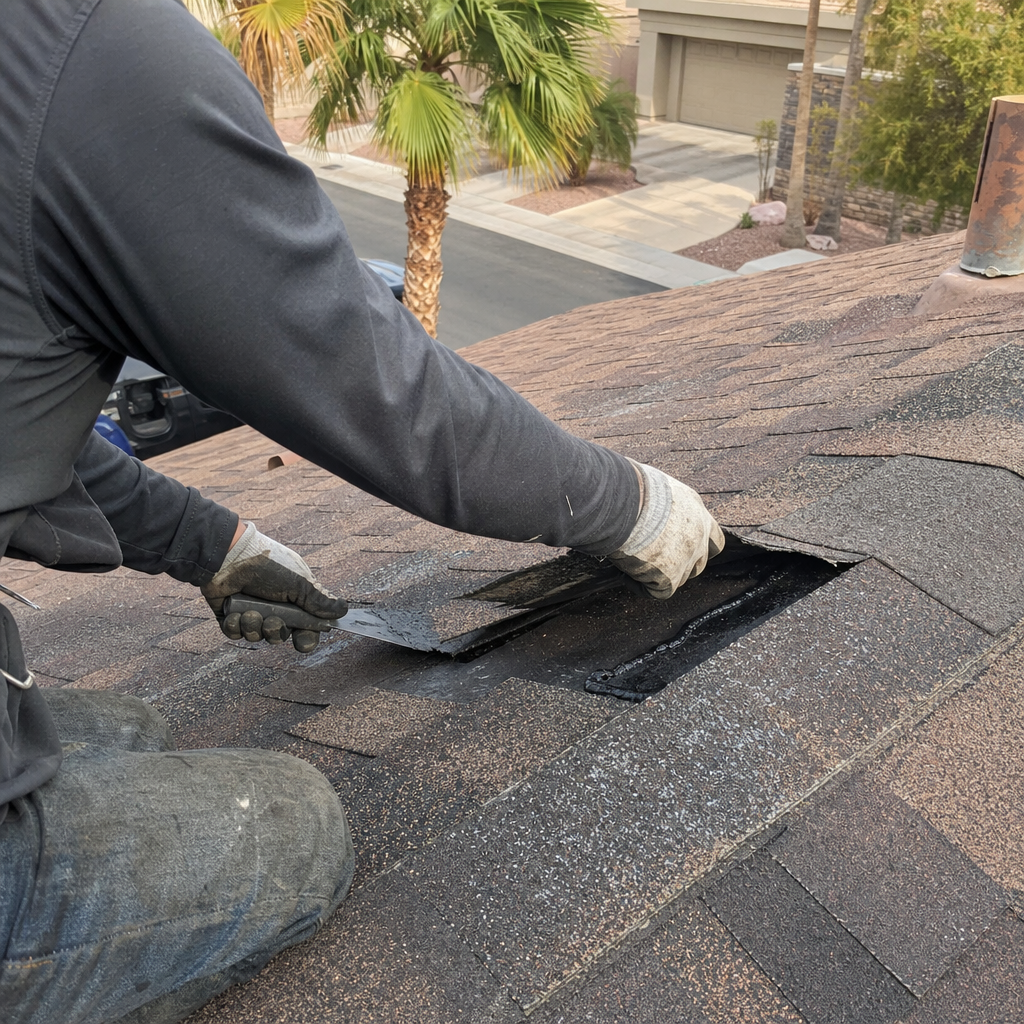
- Pipe boot sealant: The neoprene or metal collars around plumbing penetrations are the single most common failure point we see on Las Vegas roofs each spring. Check for cracking, separation, or uplift at the base.
- Step flashing along walls: In homes with second-story additions or dormers — common in newer Summerlin builds — step flashing seams open up after sustained cycling. Run a finger along each seam and feel for gaps.
- Ridge cap adhesion: On tile and asphalt shingle roofs, the ridge cap mortar or factory sealant strip can crack or lose adhesion after winter. Look for lifted edges or visible daylight from the attic.
- HVAC unit curbs: Most Las Vegas homes have rooftop HVAC units. The sheet metal curbing that surrounds each unit gets torqued by wind and thermal movement — inspect the perimeter sealant bead every spring.
- Attic ventilation openings: Spring is when pest activity picks up. Check that soffit screens and ridge vents are intact; a compromised vent opening is an entry point for birds and rodents that can cause insulation and sheathing damage.
Spring is also the time to check your attic temperature differential. On a 90°F April day in Las Vegas, an under-ventilated attic can reach 150°F or higher — a temperature that accelerates adhesive failure in asphalt shingles from below. If your attic feels like an oven when you crack the hatch in April, that’s a ventilation problem, not just an inconvenience.
Summer (June–September): Monsoon Season and Drainage Management
Las Vegas gets roughly 4.2 inches of annual rainfall — but about 40% of that falls between July and September, often in intense bursts of half an inch or more in under an hour. That’s not a gentle soaking rain. That’s a drainage stress test. A flat or low-slope roof that drains adequately under normal conditions can pond water badly when a 0.6-inch storm hits in 45 minutes, and standing water is the fastest way to turn a minor membrane issue into a major leak.
What to monitor during monsoon season:
- Scupper openings: Flat roofs on Las Vegas homes and commercial-style custom builds use scuppers to drain water off the edge. These collect debris — leaves blown in from neighborhood trees, windblown sand, and dust accumulation — faster than most homeowners expect. Clear them before monsoon season starts in June, and after every significant storm.
- Internal drain strainers: Homes in Anthem, Inspirada, and other Henderson hillside communities often have built-in roof drains with strainer baskets. A clogged strainer during a monsoon surge can back up enough water to overwhelm even a properly installed membrane.
- Post-storm debris loads: A flat roof loaded with wet debris can add 10–15 lbs per square foot of unexpected load. On older structures, that’s not trivial. After any storm that deposits visible material on the roof, get up there and clear it within 24 hours.
- Flashing around swamp cooler pads: Many older Las Vegas homes still run evaporative coolers. The penetrations and pans around these units are frequently neglected and are a leading source of summer leaks we’re called to address in North Las Vegas and older Henderson neighborhoods.
If water is pooling anywhere on a flat roof surface more than 48 hours after a storm, that’s a drainage design or membrane depression issue — not something that resolves on its own.
Fall (October–November): The Highest-ROI Maintenance Window of the Year
If you’re only going to do one maintenance visit per year on your Las Vegas roof, do it in October. Here’s why: you’re past the worst UV and heat stress of summer, you’re ahead of the thermal cycling that starts in December, and any repairs you make now have three to four months to cure and settle before spring inspection season. In our experience over 18 years of working on Las Vegas roofs, homeowners who do a thorough fall inspection and address small repairs in October almost never end up with emergency calls in February.
The fall maintenance checklist:
- Full perimeter gutter inspection: Clear all gutters and downspouts of summer debris accumulation. Check for sag, separation at seams, and proper slope toward downspout outlets. A gutter that doesn’t drain fully will pool water against fascia boards through winter — and fascia rot is an expensive fix.
- Re-examine all spring sealant repairs: Anything you patched or monitored in March has now been through a full summer. Check that sealant repairs around pipe boots, HVAC curbs, and flashing seams have held. If they’ve shifted or re-cracked, replace — don’t re-patch over a failed repair.
- Inspect tile for cracked or slipped pieces: Concrete and clay tile are the dominant roofing materials across Las Vegas master-planned communities. Fall is the time to walk the perimeter and look up at hip and ridge lines for any displaced tiles before winter wind events dislodge them completely.
- Check attic insulation and moisture: Summer heat drives moisture into attic insulation in ways that aren’t always visible from below. A quick attic inspection in October can catch early signs of mold or compressed insulation before they become structural issues.
- Document current roof condition with photos: Date-stamped photos taken in fall create a baseline for insurance claims if winter or spring storms cause damage. We recommend photographing all four roof faces, ridge lines, all penetrations, and gutters.
Fall repairs — re-sealing a few flashings, replacing a cracked tile, clearing gutters — typically run $150–$450 in Las Vegas. The same deferred problems addressed as emergency calls in January typically run $600–$1,800. The math is straightforward.
Winter (December–February): Why Las Vegas Winters Still Matter for Roofs
Mention “roof freeze-thaw damage” to most Las Vegas homeowners and they’ll look at you like you’ve lost your mind. But homes in Mountain Edge, western Summerlin, and the hillside communities of Henderson and Boulder City sit at elevations between 2,100 and 2,800 feet — high enough to experience genuine freeze-thaw cycling on a regular basis between December and February. When overnight lows drop into the upper 20s and afternoons climb into the upper 50s, water trapped in micro-cracks and seams freezes, expands, and opens those gaps further. Over a season, that process turns a hairline crack into a leak path.
What Las Vegas winters actually do to roofs:
- Sealant brittleness: Most roofing sealants are rated for low-temperature flexibility, but older or improperly specified products become brittle below 35°F and crack under the normal movement of a roof structure. This is especially common around HVAC curbs and skylights.
- Tile mortar cracking: The mortar used to set hip and ridge caps on tile roofs can develop micro-fractures through repeated freeze-thaw cycling. By February, what started as a hairline is often wide enough to allow water infiltration during the next rain event.
- Gutter ice loading: While Las Vegas doesn’t produce ice dams in the way northern climates do, overnight freezing in gutters that hold standing water can stress gutter hangers and cause separation from the fascia — especially on north-facing roof faces in Summerlin and Mountain Edge.
- Wind-driven rain infiltration: Las Vegas winter storms frequently combine moderate rain with sustained winds of 25–40 mph. That combination drives water horizontally under tile overlaps and into flashing seams that would stay dry in a vertical rain event.
Winter is a monitoring season more than an action season — but monitoring it is important. If you see any interior ceiling staining after a January or February rain event, don’t wait for spring to investigate. Water that infiltrates during a winter storm and sits in insulation or sheathing through February creates a mold-favorable environment by March.
Your 12-Month Roofing Calendar for Las Vegas
This calendar is designed to take roughly two hours of your time per year — split across four short sessions. It’s not exhaustive professional maintenance; it’s the homeowner-level observation routine that catches problems early enough to keep repair costs minimal.
- March (1 hour): Post-winter inspection. Walk the perimeter and look up at all penetrations, ridge lines, and flashing seams. Check attic for daylight gaps or moisture staining. Look at pipe boot sealant from ground level with binoculars or from a ladder if you’re comfortable. Note anything that looks cracked, lifted, or separated.
- June (15 minutes): Pre-monsoon drainage check. Clear all scuppers and downspout openings. Confirm that flat roof areas don’t have debris accumulation from spring winds. Make sure gutter downspouts discharge fully away from the foundation.
- After each major monsoon storm (15 minutes each): Quick visual from the ground. Look for shifted tiles, visible debris on flat areas, or any water entry at ceiling level inside. If flat roof drainage seems slow, get up and clear strainers.
- October (45 minutes): Fall comprehensive inspection. Full gutter clean and inspect. Re-examine all sealant repairs from spring. Walk tile surfaces carefully (or hire this out) to check for cracked or displaced pieces. Take dated photos for records.
- December (15 minutes): Pre-freeze check. Confirm gutters are clear of late-fall debris. Check that HVAC curb sealant is intact before the coldest months. Look at any north-facing eave areas in Summerlin or Mountain Edge homes for early ice loading if temps have already dropped.
Two hours. That’s the commitment. And the difference between a roof that lasts 18 years and one that fails at 12 is often nothing more than whether someone was paying attention during these five checkpoints.
Choosing the Right Materials for the Las Vegas Climate
Not every roofing material performs equally in the Las Vegas environment. UV index here regularly hits 11 or above from May through September — one of the highest sustained UV exposures of any major American city. That matters enormously for material selection.
A few material considerations specific to this climate:
- Asphalt shingles: Algae-resistant and impact-rated products from manufacturers like GAF, CertainTeed, and Owens Corning hold up better here than standard three-tab products. Look for shingles with Class 4 impact ratings and factory-applied algaecide, even though algae growth is less of a concern here than in humid climates — the UV stabilizers in algae-resistant products also slow granule loss.
- Tile: Concrete and clay tile dominate Las Vegas’s master-planned communities for good reason — they’re excellent thermal mass that moderates attic temperature swings and carry long warranties. The underlayment beneath the tile is the variable that actually determines lifespan; a tile roof with a degraded underlayment will leak even if every tile is perfect.
- Flat roof membranes: TPO and modified bitumen are the most common flat roofing systems on Las Vegas residential properties. TPO’s heat-welded seams perform well in high UV, but quality of installation matters more than brand choice on membrane work. An IKO or Atlas membrane properly installed outlasts a premium-brand membrane with poor seam welds.
- Cool-roof coatings: Tamko and Boral both offer reflective coating systems that can meaningfully reduce attic temperatures on low-slope roofs. On a flat-roofed Las Vegas home, a properly applied reflective coating can reduce peak attic temps by 20–30°F — which directly translates to HVAC savings and reduced thermal stress on the membrane below.
At Total Roof Protection Specialists, we work with all seven of those brands — GAF, CertainTeed, Owens Corning, IKO, Atlas, Tamko, and Boral — so the material recommendation we make is based on your specific roof geometry, slope, budget, and neighborhood aesthetic, not whatever happens to be in stock. That flexibility matters more than most homeowners realize when they’re comparing bids.
Common Mistakes to Avoid
- Patching over failed sealant without removing the old material: Applying new sealant over cracked, hardened caulk creates the illusion of a repair while trapping moisture beneath the new layer. Strip old sealant to bare metal or substrate before applying fresh product — we see this botched repair on nearly a third of Las Vegas homes we inspect that had prior DIY or low-bid contractor work.
- Ignoring flat roof drainage until a leak appears: A scupper or drain strainer that’s 60% blocked still drains — just slowly. Most homeowners don’t notice until a major monsoon storm overwhelms the reduced capacity and water ponds above the membrane seams. Clear drainage points proactively, not reactively.
- Walking tile roofs without knowing the correct foot placement: Concrete and clay tile are strong in compression but brittle under point loads. Walking directly on tile fields rather than on batten lines or at the lower third of each tile causes hidden cracking that leads to leaks months later. If you’re not sure where to step, stay off the roof and hire the inspection out.
- Assuming Las Vegas winters don’t require roofing attention: Homes above 2,000 feet in western Summerlin, Mountain Edge, and upper Henderson routinely experience freeze-thaw conditions that crack sealant and mortar. Skipping winter monitoring because “it doesn’t snow here” is a common and expensive assumption.
- Using the wrong underlayment when re-roofing: Las Vegas’s UV intensity and temperature extremes degrade standard 15 lb. felt underlayment significantly faster than in moderate climates. Re-roofing projects on Las Vegas homes warrant synthetic underlayment rated for high-UV exposure — this is a spec detail that low-bid contractors frequently cut corners on.
- Delaying gutter repairs because “it barely rains”: When it does rain in Las Vegas, it comes fast and hard. A gutter that sags 2 inches over a 10-foot run will overflow during any monsoon event, directing water directly against the fascia and into the soffit cavity. Four inches of annual rainfall routed against your fascia every time it rains adds up fast.
- Treating a roof inspection as optional after buying a home: In our experience on Las Vegas properties, pre-listing inspections frequently miss minor flashing failures, degraded pipe boot sealant, and underlayment condition under tile — because general home inspectors don’t always get on roofs or lift tile for a proper look. A dedicated roof inspection within the first year of ownership is a smart investment.
When to Call a Professional
Some of what’s described in this guide is genuinely manageable for an attentive homeowner — clearing gutters, taking photos, looking up at ridge lines from the ground. Other situations require a licensed professional, and recognizing the difference protects both your roof and your safety.
Call a professional when:
- You see any interior ceiling staining, water marks, or bubbling paint after a rain event — these symptoms indicate active infiltration that needs a source diagnosis, not a surface patch.
- Flat roof areas show visible ponding 48 hours after a monsoon storm.
- Tile pieces are visibly cracked, displaced, or missing — especially on hip or ridge lines where wind exposure is highest.
- Your HVAC units are showing rust streaks running down from their curbs, which often indicates curb flashing failure.
- Your roof is more than 15 years old and hasn’t been professionally inspected — regardless of visible symptoms.
- You’ve had any prior roofing work done by a contractor you can no longer reach, and you’re unsure whether the work was completed correctly.
Total Roof Protection Specialists offers free estimates throughout Las Vegas — call (725) 529-9119 to schedule. Jose Diaz will personally assess your roof’s condition and give you a straight answer about what it needs, with no pressure to spend more than the situation warrants.
Frequently Asked Questions
How often should I have my roof inspected in Las Vegas?
At minimum, once per year — and the best timing is October, after summer heat stress and before winter thermal cycling. Homes in elevated neighborhoods like Summerlin or Mountain Edge benefit from a second quick check in March to catch any sealant or flashing damage from winter freeze-thaw cycles. If your roof is over 15 years old, annual professional inspections are worth scheduling regardless of visible symptoms. Call (725) 529-9119 to set one up — estimates and inspections are free.
What does a roof inspection cost in Las Vegas?
Professional roof inspections in Las Vegas typically range from free (offered by contractors as a precursor to a repair estimate) to $150–$300 for an independent inspection with a written report. At Total Roof Protection Specialists, inspections provided as part of a free estimate assessment cost nothing. If you need a fully documented written condition report for insurance or real estate purposes, expect to pay $150–$250 from a dedicated roofing inspector. Either way, the cost is a fraction of what a deferred repair typically runs.
Does Las Vegas monsoon season actually cause roof damage?
Yes — and it’s one of the most underappreciated roofing risks in the Las Vegas market. Monsoon storms between July and September frequently deliver half an inch or more of rain in under an hour, creating drainage loads that flat and low-slope roofs aren’t always designed to handle at peak flow. Clogged scuppers, blocked drain strainers, and debris-laden flat roof surfaces turn these events into interior leak events every season. The Roof Repair in Winchester team handles post-monsoon damage calls regularly starting in late July.
My roof tiles look fine from the street — do I still need an inspection?
The tiles themselves rarely tell the full story. On a Las Vegas tile roof, the tiles are the weather surface — but the underlayment beneath them is what actually keeps water out of your home. Underlayment degrades from UV exposure, heat, and age even when tiles remain intact. We regularly find homes in Summerlin and Anthem where every tile is in perfect condition but the underlayment has deteriorated past its functional life. If your tile roof is more than 15–18 years old, an underlayment condition assessment is worth doing even if the surface looks perfect. See our Roof Replacement & Installation in Winchester page for what that process looks like when it’s time to re-deck and re-felt under tile.
Are there specialty roofing systems better suited to the Las Vegas climate?
For flat and low-slope roofs, thermoplastic membranes (TPO) and quality modified bitumen systems with reflective surface treatments perform well in Las Vegas’s high-UV, high-heat environment. For steep-slope applications, concrete and clay tile remain the standard for good reason — their thermal mass moderates attic temperature extremes better than asphalt in this climate. For homeowners interested in solar-ready or highly reflective systems, there are options worth discussing that fall under Specialty Roofing in Winchester. The right choice depends on your roof’s geometry, your budget, and how long you plan to own the home.
How long should a roof last in Las Vegas?
A properly installed asphalt shingle roof in Las Vegas typically lasts 18–25 years with regular maintenance — shorter than the same product’s rated life in a cooler climate because of UV intensity and thermal stress. Concrete tile roofs routinely reach 30–40 years when the underlayment is replaced at the 20-year mark. Flat membrane roofs typically carry 15–20 year functional lifespans. In all cases, homeowners who follow a basic seasonal maintenance routine — the kind outlined in this guide — consistently get the upper end of those ranges. Homeowners who defer maintenance consistently get the lower end.
The Bottom Line
Las Vegas puts roofs through four genuinely distinct stress periods every year. Spring thermal cycling cracks sealants and flashings. Monsoon season stress-tests drainage and membrane integrity. Fall is your highest-ROI window for catching small problems before they become expensive ones. And winter — despite what most homeowners assume — brings real freeze-thaw risk at elevation that affects tens of thousands of homes in Summerlin, Mountain Edge, Henderson, and Boulder City. A two-hour annual maintenance routine built around these four periods is the single highest-return investment you can make in your roof’s service life. Catch it early, address it directly, and you’ll routinely add five to eight years to the life of a Las Vegas roof.
A 4.9 rating across 788 reviews isn’t marketing — it’s a track record. When you’re ready for a free professional assessment of your Las Vegas roof, call (725) 529-9119. Jose Diaz doesn’t just run the company — he runs the job.
Written by Jose Diaz, Owner & Lead Technician at Total Roof Protection Specialists, serving Las Vegas since 2008.