Fast, Reliable Specialty Roofing Across Paradise
Specialty roofing in Paradise, NV covers everything from TPO and EPDM membrane systems on the commercial corridor flanking Harry Reid International Airport to solar-ready re-roofing on the residential parcels tucked behind the 89119 zip code’s hospitality strip. Our Specialty Roofing crew knows this market because we’ve worked it for 18 years — the flat-roof drainage failures after July monsoons, the flashing separations on casino HVAC equipment, the oxidized built-up gravel roofs on 1960s motels that have quietly been failing for a decade. If your roof in Paradise needs a specialist, call (725) 529-9119 for a free on-site estimate.
Why Total Roof Protection Specialists Is Paradise’s Preferred Specialty Roofing Company
A 4.9-star average across 788 verified reviews isn’t marketing — it’s a track record built job by job across the Las Vegas metro, including Paradise properties from the commercial corridor near the airport to low-rise apartment complexes throughout the 89119 zip code. Homeowners and property managers in Paradise keep calling back because Jose Diaz doesn’t just run the company — he runs the job. Every specialty roofing project gets his direct oversight, not a crew handed a work order and left unsupervised.
Nearly two decades and nearly 800 five-star roofs later, we understand what makes Paradise different from Henderson or Summerlin: the flat-roof density, the extreme UV load, the monsoon drainage crises, and the HVAC penetration counts that make flashing inspection a primary discipline here, not an afterthought. When a Paradise property manager calls us after a monsoon event floods a guest-floor ceiling, we’re not guessing where to look first. We already know.
Our Specialty Roofing Services in Paradise
TPO Roofing in Paradise
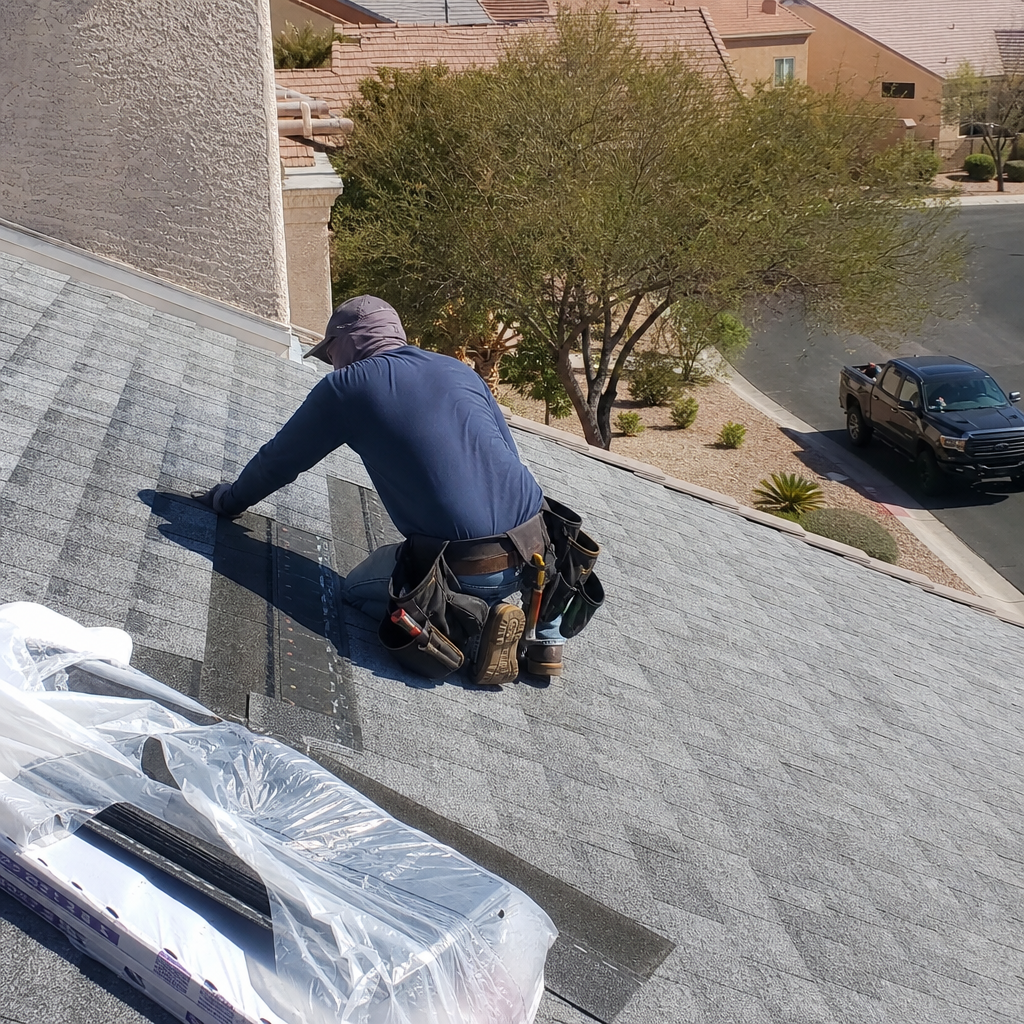
TPO is the most widely specified membrane system on Paradise’s commercial and hospitality rooftops — and also one of the most commonly misinstalled. In Paradise’s Mojave Desert climate, summer surface temperatures on a TPO membrane routinely exceed 160°F, accelerating seam fatigue and flashing separation years ahead of manufacturer projections. We install TPO from GAF and CertainTeed using heat-welded seams to manufacturer specification, with particular attention to curb flashings around the dense rooftop HVAC equipment that defines this commercial corridor. A typical TPO installation in Paradise runs $6.50–$11.00 per square foot depending on membrane thickness, existing substrate condition, and penetration count.
EPDM Roofing in Paradise
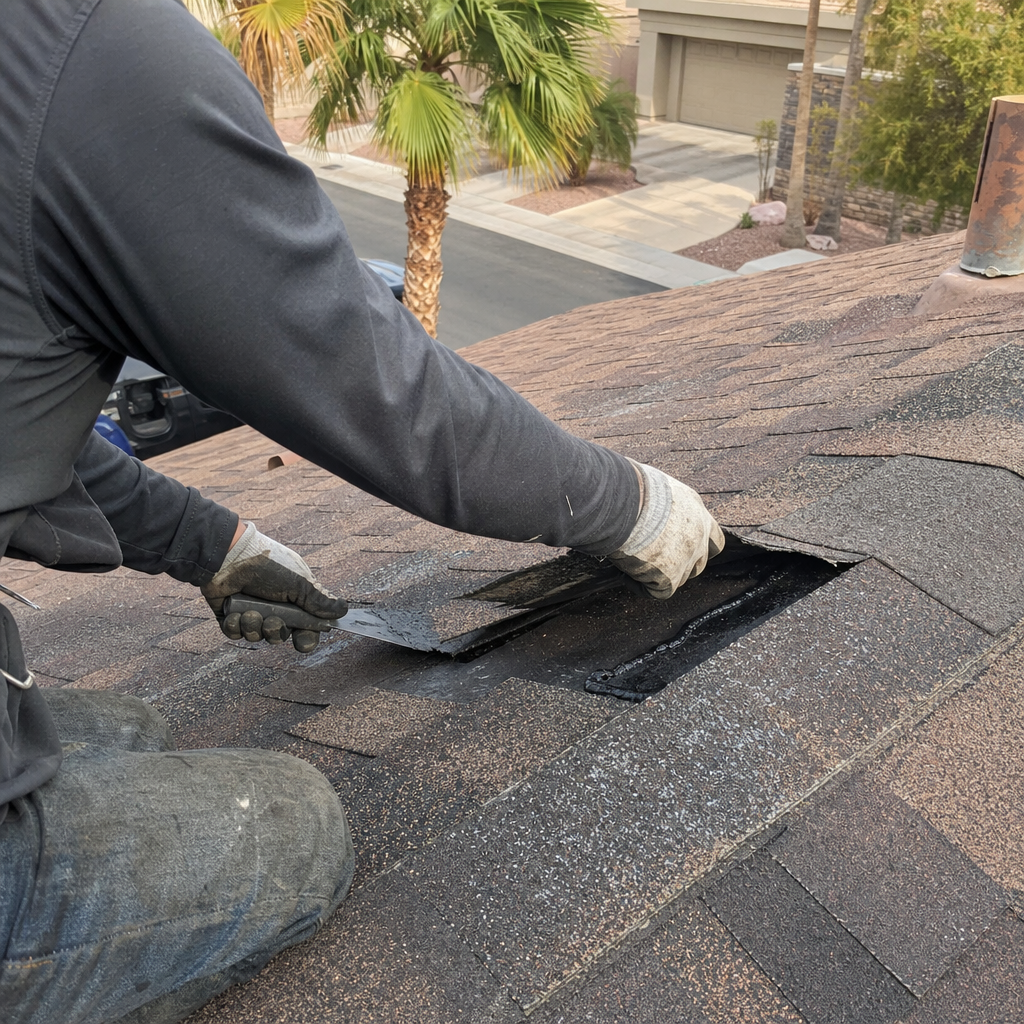
EPDM’s rubber chemistry gives it strong UV and ozone resistance — a genuine advantage in a market where the UV index regularly hits extreme levels from April through October. On the low-rise apartment complexes and mid-century motel properties spread across the 89119 corridor, we see EPDM as a durable, cost-effective alternative to TPO where drainage slopes are marginal and membrane flexibility is critical. Paradise EPDM installations typically run $5.50–$9.50 per square foot, with fully adhered systems at the higher end. We source EPDM through IKO and Atlas, two of the seven brands we’re authorized to work with.
Modified Bitumen Roofing in Paradise
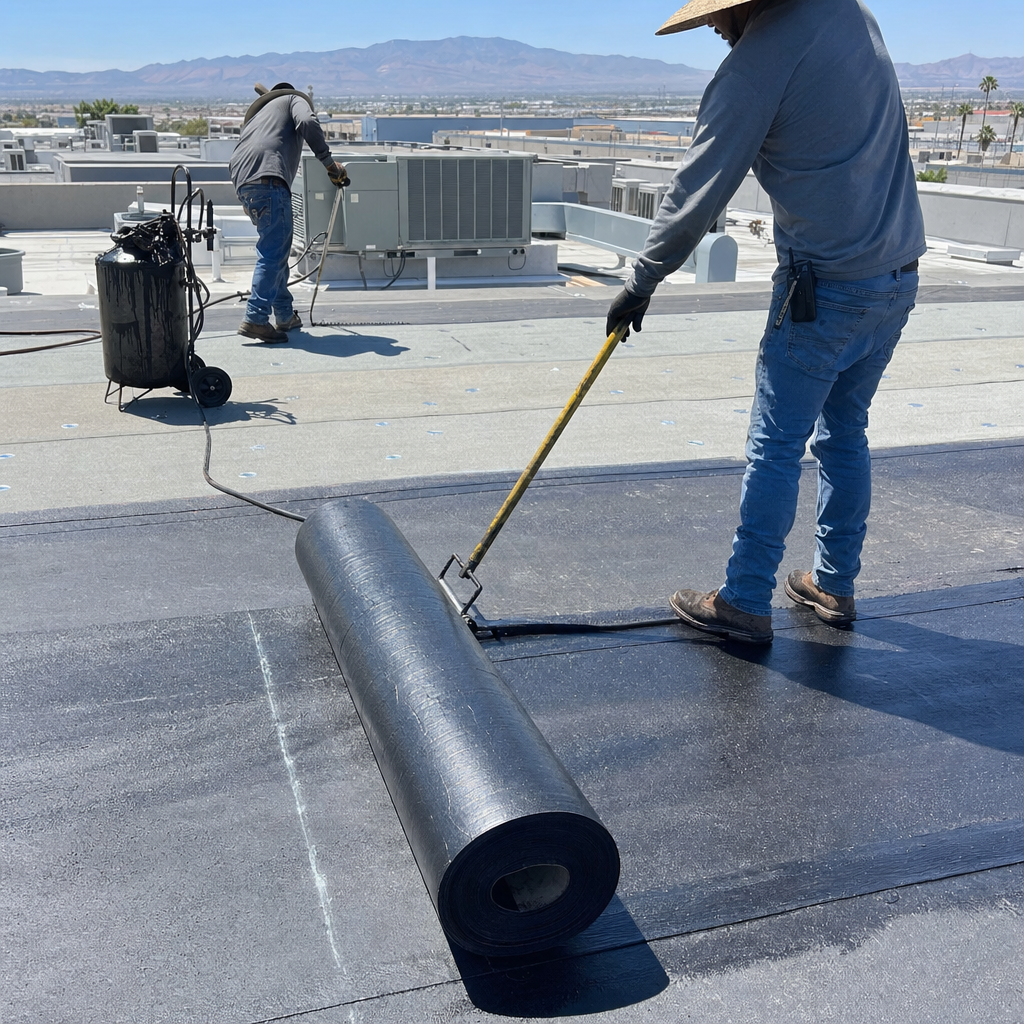
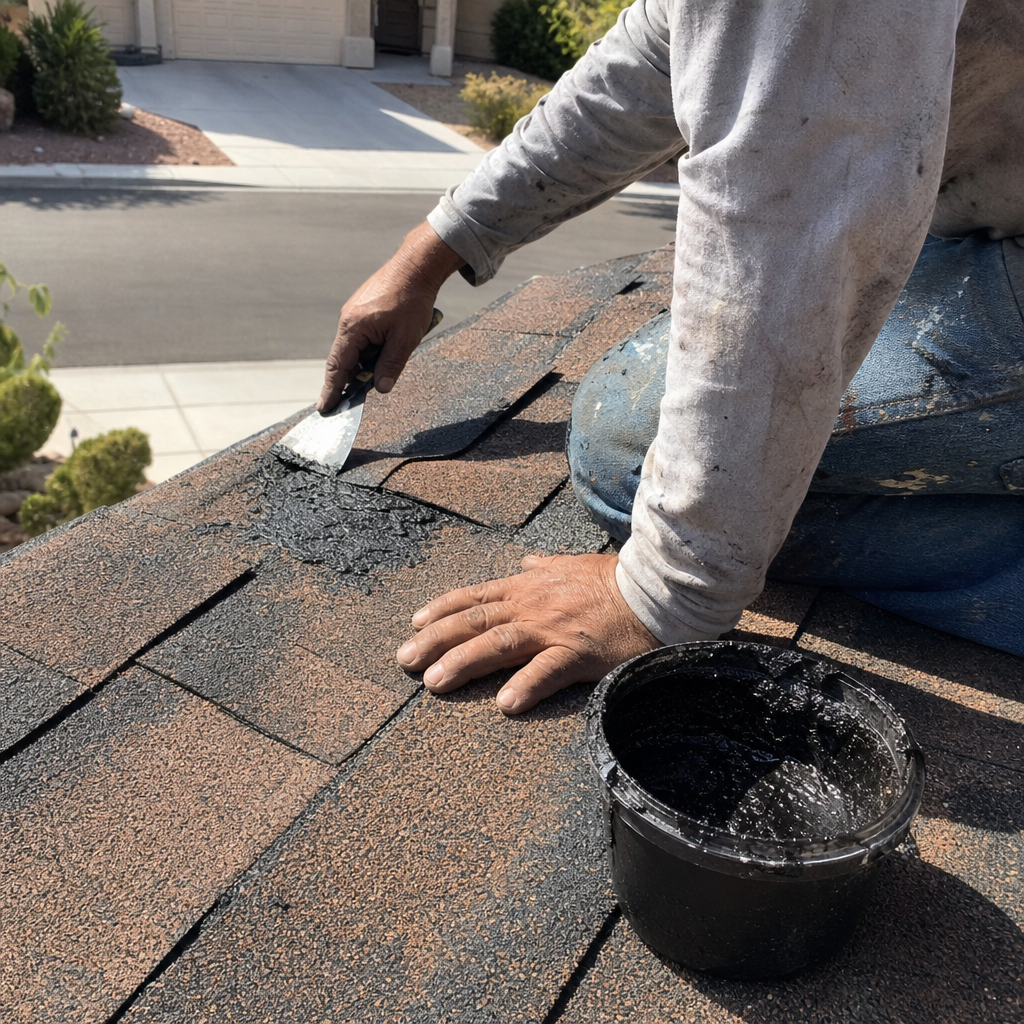
Modified bitumen remains the right call on low-slope structures where proven layered performance matters more than the latest membrane technology. On older Paradise properties — particularly the 1960s–1970s construction along the 89119 motel corridor — we often install modified bitumen as a recovery layer over a stabilized existing substrate, extending roof life without the cost and disruption of a full tear-off. Owens Corning and Tamko both produce quality modified bitumen systems we install regularly in Paradise. Pricing runs $4.50–$8.00 per square foot depending on whether it’s a recover or full replacement.
Solar Ready Roofing in Paradise
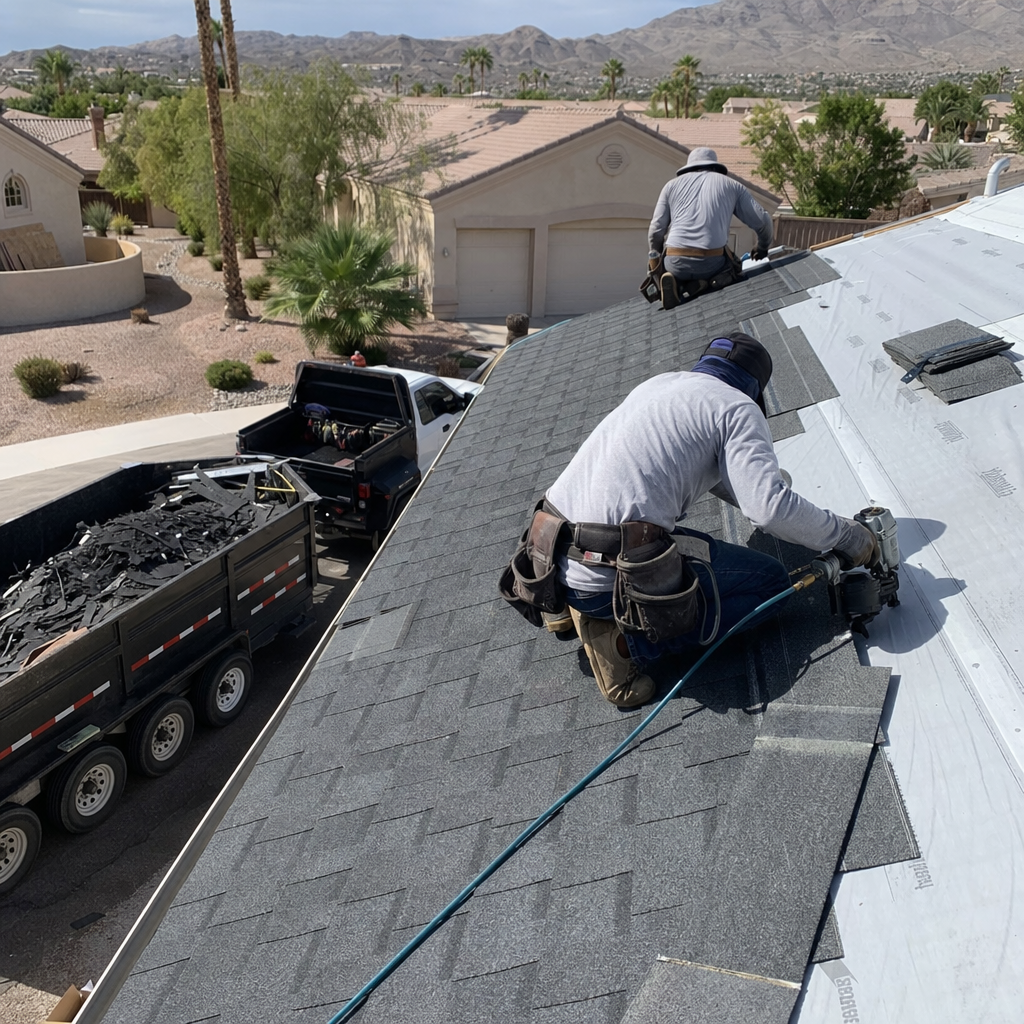
Paradise gets over 300 days of sun annually, and the economics of solar make particular sense for property owners absorbing high cooling loads in a corridor where HVAC is running at near-full capacity six months of the year. Solar ready roofing means we install or reinforce the underlying roof system — structural deck assessment, penetration pre-positioning, and membrane or shingle selection compatible with rail attachment — before the solar contractor ever sets foot on the roof. On residential parcels in Paradise with concrete or clay tile, we coordinate Boral and CertainTeed systems designed for solar compatibility from the start. Expect $3,500–$9,000 for a solar-ready re-roof on a standard residential structure in Paradise, depending on square footage and material selection.
Built-Up Roofing in Paradise
The built-up gravel roofs that still cover a significant portion of Paradise’s mid-century motel stock were installed when this corridor was being built out in the 1960s and 1970s — many of those systems are now 40 to 50 years old and deep into failure. Alligatored bitumen surfaces, delaminated felt plies, and gravel ballast that’s migrated away from ponding zones are the failure signatures we find most often on 89119 inspection calls. We evaluate each built-up roof individually: some can be stabilized and overlaid, others need full removal. A full BUR replacement in Paradise typically runs $5.00–$9.00 per square foot.
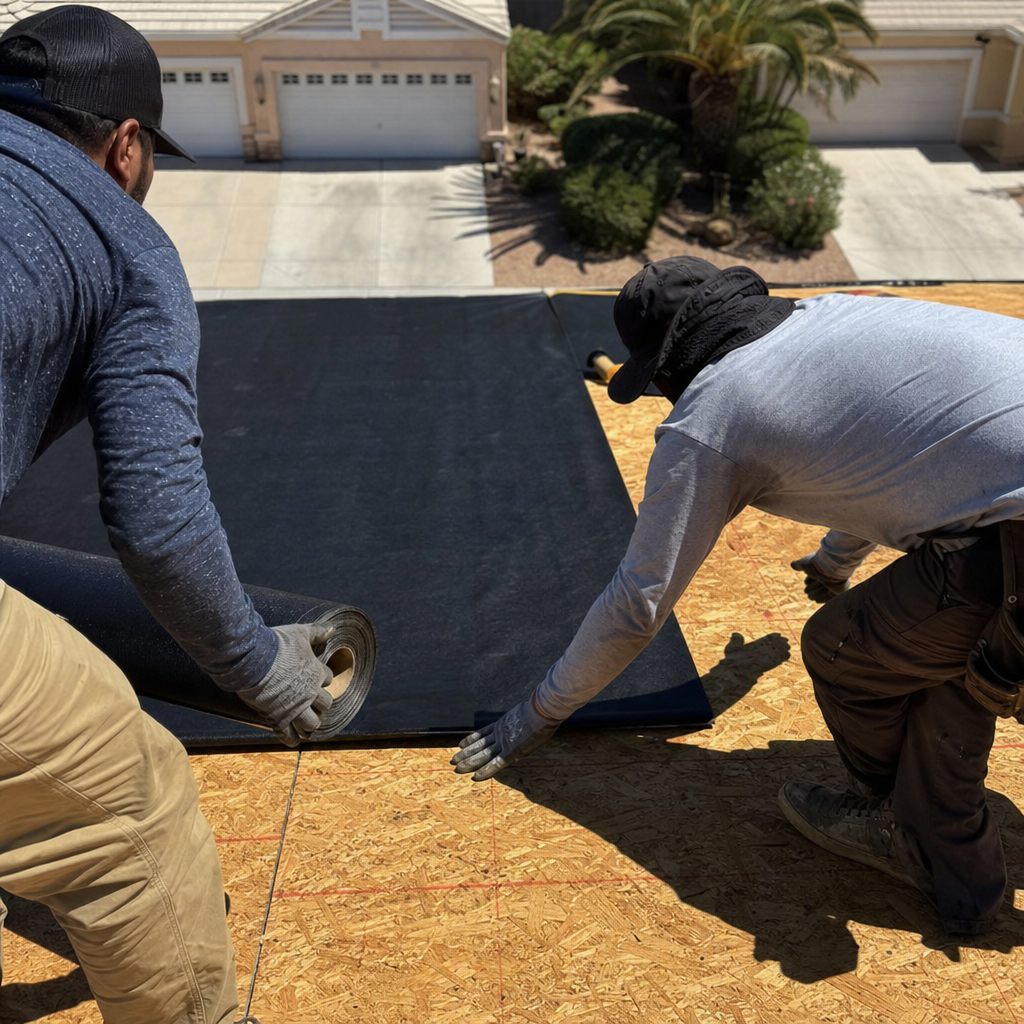
What happens when you call
- 1
A real person answersNo phone trees — you reach a local pro.
- 2
You get an upfront price rangeHonest numbers before anyone is dispatched.
- 3
A background-checked tech heads outLicensed & insured, dispatched right away.
- 4
You approve before work beginsNothing starts until you say go.
Trusted Brands We Service in Paradise
We work with seven of the industry’s leading material brands — GAF, CertainTeed, Owens Corning, IKO, Atlas, Tamko, and Boral — which means Paradise property owners get the right material for their specific roof, not just whatever happens to be on the truck that morning. That material flexibility matters in a market as varied as Paradise, where a hospitality property on the airport corridor has completely different needs than an HOA tile home a mile away. We stock common membrane components and flashing materials locally, which keeps turnaround tight after monsoon events when every roofer in the 89119 zip code is fielding calls at once.
Common Specialty Roofing Problems We See in Paradise
- Curb and boot flashing failures at rooftop HVAC penetrations: Paradise’s casino and hospitality properties run more rooftop air-handler units per square foot than almost any other commercial corridor in the country. The constant thermal cycling between 110°F summer days and cooler desert nights causes flashing collars to crack and separate, creating leak pathways that bypass an otherwise intact TPO or EPDM membrane entirely — a failure pattern you simply don’t encounter at the same frequency in residential-dominant markets like Henderson.
- Monsoon-season ponding water on flat commercial roofs: The Mojave Desert’s drainage infrastructure — including flat-roof scupper and drain systems — is sized around near-zero baseline precipitation. When July–September monsoon cells drop a half-inch of rain in 20 minutes, those undersized systems back up fast, leaving standing water on UV-degraded membranes that accelerates delamination and forces water through any existing seam weakness. We saw this pattern repeatedly during the 2024 and 2025 monsoon seasons on 89119 properties.
- Oxidized and alligatored built-up gravel roofs on 1960s–1970s motel stock: Decades of Mojave UV intensity degrade asphalt binders far faster than national norms, leaving the felt plies beneath the gravel ballast brittle and adhesion-free. When we pull back the gravel on an older 89119 motel roof, we frequently find bitumen layers that crumble at the touch — a substrate that can’t support a simple recover without stabilization work first.
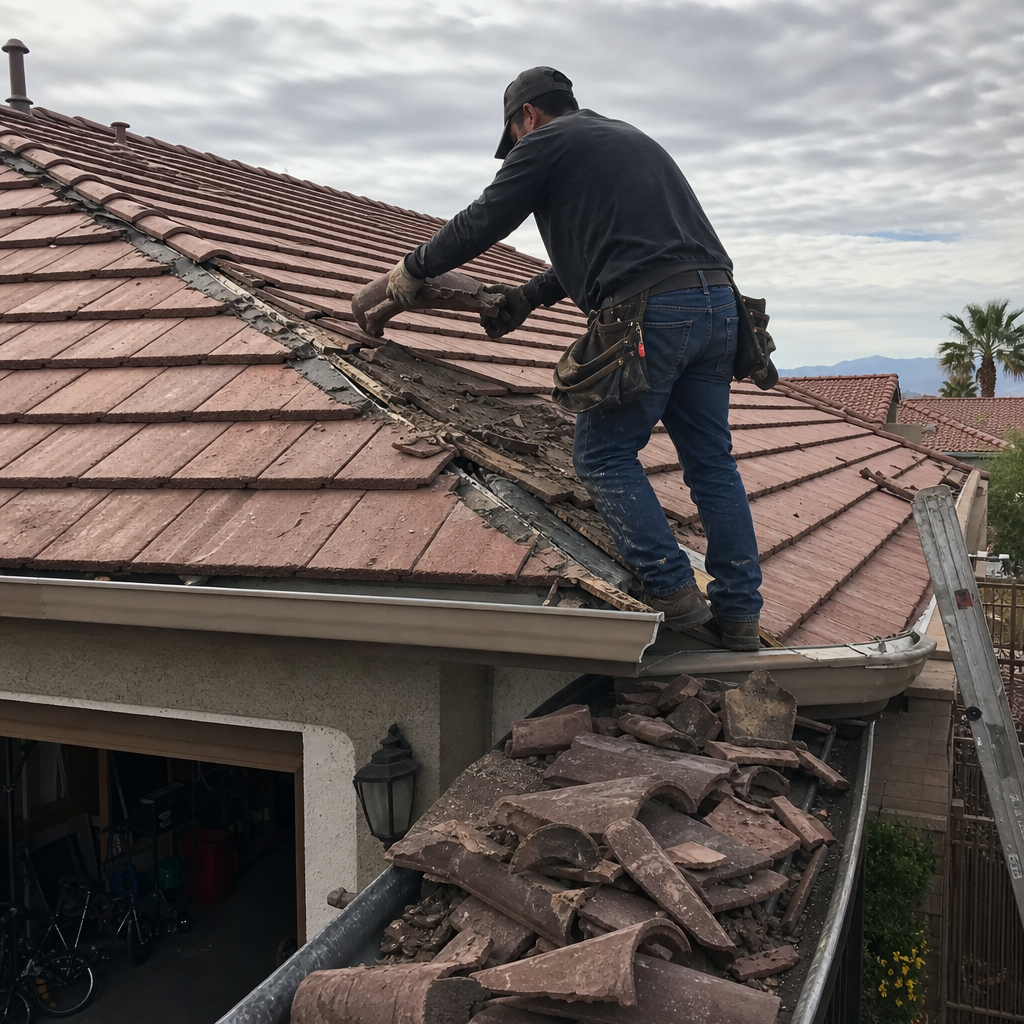
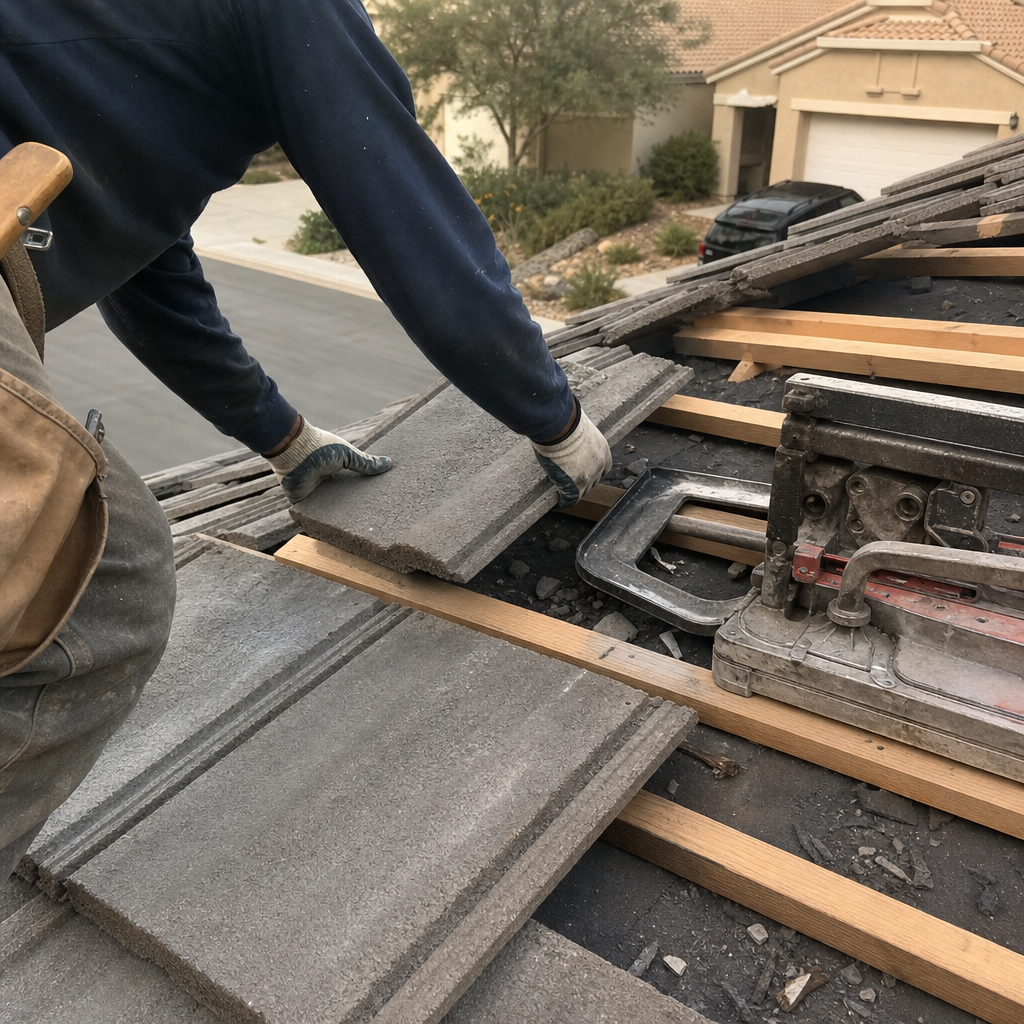
- Tile underlayment failure on HOA residential parcels: The residential side of Paradise’s housing stock tends toward HOA-governed concrete or clay tile — materials that look intact from the street while the underlayment beneath has been cooking under 110°F cycles for two decades. By the time a homeowner calls, the field tile may be structurally fine but the underlayment has oxidized to nothing, and a minor storm is all it takes for water to find the deck.
The Paradise HVAC Penetration Problem — Why Flashing Inspection Comes First Here
This is the detail that separates a roofer who knows Paradise from one who just works here occasionally. The hotel-casino and large hospitality structures that define the 89119 corridor are among the highest per-square-foot cooling consumers anywhere in the country — the thermal load of running a casino floor, hotel tower, and convention space 24 hours a day means rooftop mechanical equipment is packed onto these buildings at a density that has no parallel in residential or light-commercial construction. Every one of those air-handler units, exhaust curbs, and condenser platforms is a penetration. Every penetration is a potential flashing failure point. On a property with 40 or 60 HVAC penetrations, the open membrane surface isn’t where a leak starts — it starts at a separated curb collar or a cracked boot that’s been thermally cycling between extremes for a decade.
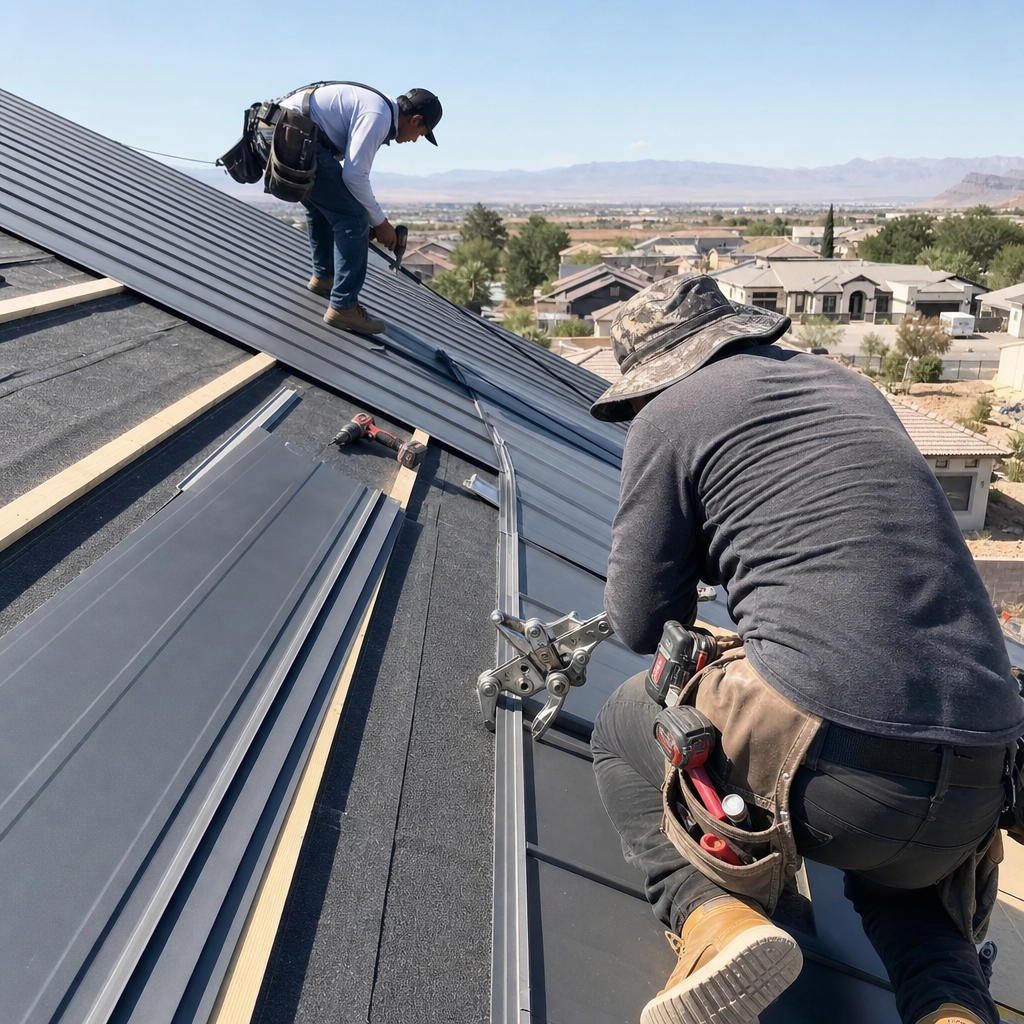
Our crew was called to a mid-rise hospitality structure on the 89119 corridor near Harry Reid International Airport after the July monsoon season sent standing water through a failed curb flashing around a rooftop air-handler unit. The aging TPO membrane had stayed intact — the leak source had nothing to do with the field membrane at all. The flashing collar had separated under years of 110°F thermal cycling. We stripped and rebuilt the curb flashing to manufacturer spec, reinforced adjacent boot flashings at three additional HVAC penetrations, and confirmed slope-to-drain clearances before the next monsoon cell arrived, eliminating the interior flooding that had damaged a guest-floor ceiling below. That sequencing — penetrations first, membrane second — is the right protocol for Paradise. It would be misplaced on a residential roof in Spring Valley or Whitney, where penetration density is a fraction of what we see here.
Pricing for Specialty Roofing in Paradise, NV
Paradise’s commercial-dominant market means specialty roofing jobs here skew larger and more complex than in surrounding residential cities — and pricing reflects that. Here’s a direct breakdown of what to expect in the current Paradise market:
- TPO Roofing: $6.50–$11.00 per sq. ft. (higher end for thick-gauge membranes with high penetration counts)
- EPDM Roofing: $5.50–$9.50 per sq. ft. (fully adhered systems at the top of range)
- Modified Bitumen: $4.50–$8.00 per sq. ft. (recover systems at the lower end; full tear-off at the top)
- Built-Up Roofing (BUR): $5.00–$9.00 per sq. ft. (depends heavily on substrate condition and ply count)
- Solar Ready Re-Roof (residential): $3,500–$9,000 total (standard Paradise residential footprint)
Flashing-intensive repairs on commercial properties — the HVAC curb and boot work that defines Paradise’s failure pattern — run $400–$1,800 per penetration depending on curb size, access difficulty, and adjacent membrane condition. Every estimate is free. Call (725) 529-9119 and Jose Diaz will give you a straight number on site.
We Also Serve Cities Near Paradise
Our specialty roofing work covers the full south Las Vegas metro. Beyond Paradise, we regularly serve homeowners and commercial property managers in Winchester, Spring Valley, Whitney, and Las Vegas — each with its own roofing stock and failure patterns. Call (725) 529-9119 regardless of which community you’re in, and we’ll get someone out fast.
Serving Paradise, NV — Our Local Coverage Area
We’re based in the Paradise area and know this community well. Use the map below to see our service coverage — if you’re nearby, we can almost certainly help.
FAQs — Specialty Roofing in Paradise
The leak starts at flashing, not field membrane, because the penetration count on a Paradise casino or hospitality roof is so much higher than on any other building type. Casino and hotel structures in the 89119 corridor run among the highest per-square-foot cooling loads anywhere — which means rooftop air handlers, exhaust curbs, and condenser platforms are packed onto these buildings at a density that creates dozens or even hundreds of individual flashing contact points. Each one of those is a potential separation point under Paradise’s extreme thermal cycling. A quality TPO or EPDM membrane can hold up well in Mojave UV conditions; it’s the curb collars and boot flashings around mechanical equipment that crack and separate first. Any inspector who starts with the membrane and works backward to the penetrations is working the wrong sequence. Call (725) 529-9119 if your 89119 commercial property is showing interior moisture after any rain event.
Monsoon rainfall in Paradise arrives as sudden, high-intensity events onto a drainage system designed around near-zero baseline annual precipitation. Flat commercial roofs in 89119 — whether hotel roofs, airport-adjacent hospitality buildings, or motel stock — typically have scupper and drain sizing calibrated for the dry Mojave norm, not a half-inch-in-20-minutes downpour. When drainage backs up, standing water sits on UV-degraded membrane surfaces that have lost elasticity, pressing water into every existing seam weakness or flashing gap. Over multiple monsoon seasons, that ponding cycle accelerates membrane delamination and substrate saturation at a rate that makes routine inspection before June critical. Call (725) 529-9119 before monsoon season hits for a pre-season flat roof assessment.
It depends on substrate condition — but on most 40-to-50-year-old BUR systems in Paradise, the honest answer is replacement. Decades of Mojave UV intensity degrade asphalt binders faster than anywhere else in Nevada, leaving felt plies brittle and adhesion-free well before the surface gravel gives any visual indication of failure. A recover system is viable only when the existing substrate is structurally sound and moisture-free; we probe and core-sample every candidate before making that recommendation. When the substrate has absorbed moisture through years of ponding — common on 89119 motel stock — a full tear-off to deck is the only durable solution. A BUR-to-TPO or BUR-to-EPDM replacement on a typical mid-century Paradise motel runs $5.00–$11.00 per square foot depending on system choice and deck condition. Call (725) 529-9119 for an honest assessment before committing to either path.
Airport-adjacent properties in the 89119 corridor face two compounding factors beyond standard Paradise conditions. First, FAA height and obstruction regulations can affect equipment placement and any rooftop structures, which means curb and equipment flashing work on these properties requires awareness of what can and can’t be modified or raised. Second, the vibration load from continuous aircraft activity adds a low-frequency stress to rooftop mechanical equipment mounts and the flashings attached to them — a factor that accelerates collar separation on curb flashings over time. We factor both into inspection sequencing and flashing material selection on airport-adjacent Paradise properties. Call (725) 529-9119 to discuss your specific property’s requirements.
Paradise’s Mojave Desert UV exposure is among the most intense in the continental United States — the UV index hits “extreme” levels (11+) routinely from April through September, and surface membrane temperatures on a dark-colored or aged white TPO can climb well above 160°F. That UV and thermal load degrades asphalt binders in modified bitumen and built-up systems significantly faster than national averages, and even TPO and EPDM — which handle UV better than asphalt-based systems — experience accelerated seam fatigue and surface chalking compared to roofs in Reno or Carson City, where UV loads are meaningfully lower. A TPO membrane that might perform for 20–25 years in a cooler Nevada climate may realistically deliver 15–18 years in Paradise without proactive maintenance. We recommend annual flashing inspections and seam checks on every flat commercial roof in the 89119 market, not the biennial schedules appropriate elsewhere. Call (725) 529-9119 to get on a maintenance cycle before the next UV season does the damage.
Reviewed by Jose Diaz, Owner & Lead Technician at Total Roof Protection Specialists, serving Paradise, NV and the greater Las Vegas metro for 18 years.